





The fear of bloat costs the livestock industry more than the condition ever does, says a well-known grazing consultant and researcher from Idaho. “I’ve seen the figures from the States, and something like two one-hundredths of one per cent of the total cattle herd dies each year from bloat,” Jim Gerrish told attendees at a

Forage expert says bloat caused by alfalfa a “self-culling trait”
Jim Gerrish says selecting for bloat tolerance is a producer’s No. 1 defence against the deadly condition

Farmer frustration mounts over delivery contracts
Producers urged to seek compensation if delivery period extended beyond 90 days
The national body for canola producers says it will press major grain buyers to address grower concerns with marketing contracts. “If grain companies are hearing it from (producers) as well as the association, hopefully they can start to make a change in this area that really frustrates farmers,” said Cheryl Mayer, director of policy development
Alta. biosecurity funding boosted under PED pressure
Alberta Farmer Express — As Alberta’s hog industry braces for the seemingly inevitable arrival of porcine epidemic diarrhea (PED), the province has announced an early opening to a program to boost on-farm biosecurity. “Even though we do have some connections with feed now, biosecurity is still our best tool in preventing the spread of PED,” said
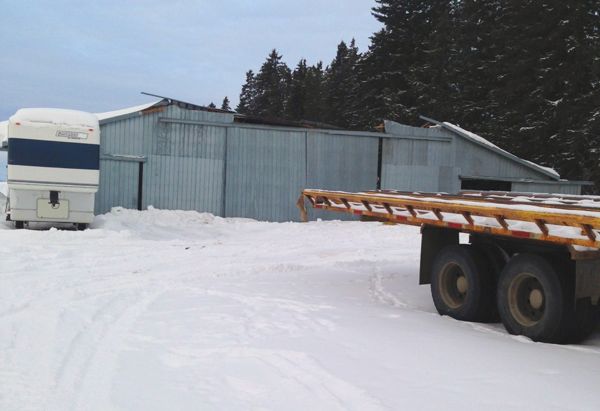
Record-high snowfalls cause over a dozen barn collapses in central Alta.
The roof on Ken Munro’s machine shed looked fine when he drove past it on his way to work one morning earlier this month. But a text from his son told a different story. “It had collapsed in the middle of the night,” said Munro, an Innisfail-area grain farmer. Since early December, more than a

Beef industry leaders urged to unite for common good
The leaders of Canada’s fractured beef sector need to work together and the rest of the industry needs to chip in more dollars for marketing and research, says a new report from a high-level task force. “We need to think as an industry, not just as sector components,” said marketing specialist Kim McConnell, one of

Measurement: The key to risk management in cattle operations
More money on the line means taking greater marketing risks for today’s cattle producers
Producers need to remove emotion from the equation to manage risk in feeding cattle. “When we talk about risk management, there are so many things that contribute to our risks as cattle feeders,” Travis Hickey, general manager of cattle strategies for Western Feedlots, said during a panel discussion at the recent Canfax Cattle Market Forum.

Wheat researcher gets 30-bushel bump from dual fungicide applications
Provincial agronomy researcher tested 48 management practices in test plots this summer and says fungicide application had the biggest impact on wheat yields
Looking for higher wheat yields? Then consider upping the budget for fungicide. That’s the advice of Sheri Strydhorst, an agronomy research scientist with Alberta Agriculture and Rural Development. This past summer, Stryd-horst evaluated 48 different management practices to determine the economic benefits of stacking agronomic practices for maximum wheat yield. Only fungicide application had a
How high can barley yields go?
The Barley 180 research project focused on plant growth regulators, nitrogen and fungicides in a bid to grow 180 bushels an acre
They didn’t reach their goal, but researchers in the Barley 180 project came pretty close. “We just said, ‘OK, let’s see if we can hit 180 (bushels per acre).’ And we hit 156,” said Steve Larocque of Beyond Agronomy, an agronomic services company in Three Hills, Alta. Alberta’s Agricultural Research and Extension Council has been
Canada’s appeal against COOL gaining U.S. support
Federal Agriculture Minister Gerry Ritz has one thing to say about country-of-origin labelling (COOL): “It’s not cool.” In the midst of an appeal at the World Trade Organization to quash COOL in the United States, Ritz has been working to gain supporters in the U.S. in an effort to halt non-science-based trade practices that could
Country-of-origin labelling appeal gaining U.S. support
Federal Agriculture Minister Gerry Ritz has one thing to say about country-of-origin labelling (COOL): “It’s not cool.” In the midst of an appeal to quash COOL in the United States, Ritz has been working to gain supporters in the U.S. in an effort to halt non-science-based trade practices that could have far-reaching implications for Canadian
Cyber-Savvy Farmer
