
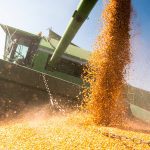
(Staff photo)

Sollio outlines pandemic recovery plan for food sector

Support sought for automation, digitization, telecommunications

Ottawa — One of Canada’s largest agri-food companies has laid out a five-point industry recovery plan for federal politicians to consider. During a meeting Tuesday of the Commons standing committee on finance, the president of Quebec-based Sollio Co-operative Group shared plans to limit consequences of the COVID-19 pandemic on the agrifood supply chain. Sollio employs

A video screengrab from the ‘It’s Good, Canada’ campaign. (ItsGoodCanada.ca)

Two national campaigns launched for food supply chains

It's good, one campaign says, but could the sector have done better, another asks

Ottawa — The Canadian Centre for Food Integrity is launching a new campaign to inform consumers on how the food system works. “It’s Good, Canada” will share personal stories of Canadians working across the food supply chain and provide information about farming, transportation, processing, retail and production on its website. “It’s natural for Canadians to


Plants at Delta 9 Cannabis’ indoor production facility in Winnipeg. (Dave Bedard photo)

Legalization lifts Canada’s net farm income in 2019

Livestock receipts up, unsmokeable crop receipts lower

A significant year-over-year increase Canada booked last year in realized net farm income rests mainly on 2019’s status as the country’s first full year in the recreational cannabis market. Statistics Canada on Tuesday released full-year data on farm income, pegging Canada’s realized net farm income for 2019 at $4.9 billion — a 10.4 per cent

(Jevtic/iStock/Getty Images)

Report links business management, mental health of farmers

Farm women, young farmers report higher levels of stress, difficulties coping

Ottawa — A new report from Farm Management Canada (FMC) calls for action after determining 75 per cent of Canadian farmers reported being moderately to highly stressed about unpredictable interference, workload pressure and financial pressures. But how a farmer plans his or her business — and associated risks — can help lower that statistic. The


An employee prepares grocery orders for home deliveries in Montreal May 2.

When a ‘status quo’ food system won’t cut it

The Second World War radically changed the Canadian food system. What can it teach us about what’s to come?

Most Canadians probably never dreamed they’d spend so much time this year in line to get into Costco. As COVID-19 shut down society mid-March, grocery stores became different places. Signage told customers to buy only one pack of toilet paper, bag of rice or jug of milk — if they were even on shelves. Headlines


(Jiraroj Praditcharoenkul/iStock/Getty Images)

Agri-food tech expected to be a post-pandemic growth industry

Ag, food sectors may seek out more e-commerce, labour-saving tools

Ottawa — A researcher at the University of Guelph says the COVID-19 pandemic will spark agility – particularly related to technology – in agriculture. “(The pandemic) has re-emphasized the need to get access to some of the technology that exists in other sectors and are not easily accessible in agri-food systems,” said Rozita Dara, an


(Lightguard/E+/Getty Images)

CFA seeks $2.6 billion in support for producers

Federal officials sought specific numbers from ag industry

Ottawa — Canada’s agriculture industry is seeking an initial $2.6 billion in COVID-19-related emergency relief funding from the federal government. Canadian Federation of Agriculture (CFA) officials put in the ask to the federal government on Thursday. According to second vice-president Chris van den Heuvel, federal officials asked the CFA “to go and put hard numbers

Hog farmer Mike Patterson walks through one of his barns at Kenyon, Minnesota, about 70 km south of St. Paul, on April 23, 2020. (Photo: Reuters/Nicholas Pfosi)

Piglets aborted, chickens gassed as pandemic slams meat sector

"We have to have less hogs somehow"

Chicago | Reuters — With the pandemic hobbling the meat-packing industry, Iowa farmer Al Van Beek had nowhere to ship his full-grown pigs to make room for the 7,500 piglets he expected from his breeding operation. The crisis forced a decision that still troubles him: He ordered his employees to give injections to the pregnant