
Native bees play a crucial role in a healthy environment but they need our help.
That’s the message an Agriculture Canada staffer had for farmers and other rural landowners meeting here earlier this month.
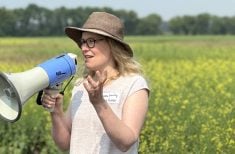
Melanie Dubois is a senior riparian and biodiversity biologist, based at Agriculture and Agri-Food Canada’s Brandon Research and Development Centre, who has been assessing the specific habitat needs of native bees.
These native pollinators play an important role in a healthy functioning ecosystem, yet we don’t give them much attention, Dubois told the Pembina Valley Conservation District.
Read Also
White mould control requires flexible timing under Prairie conditions
Fungicide timing for white mould depends on canopy development, disease risk and number of planned applications, North Dakota pathologist Michael Wunsch told growers at CropConnect 2026.
Much of that has to do with the difficulty calculating the value of native pollinators versus managed honeybees.
“They’re sometimes a forgotten part of our ecosystem,” she said.
- Read more: Operation Pollinator to create friendly spaces for bees and other pollinators on the Prairies
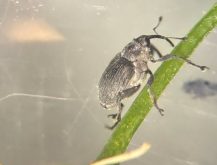
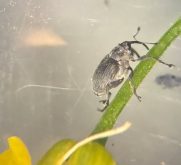
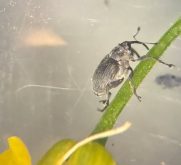
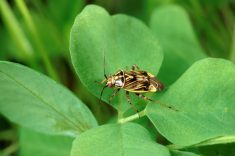
Many are even surprised to know there’s such a thing as a native bee. Across Canada there are 797 species of native bees, of which 231 are found right here in Manitoba. They range in size and colour, and some wouldn’t even be recognizably a bee to an untrained eye.
About 80 per cent of Manitoba’s native bees are ground nesters, meaning they require tracts of undisturbed soil to establish small colonies. These native bees also evolved within an ecosystem of specific floral mixes.
Both can be scarce in agro-Manitoba.
“Some of the pressures on our native bees in Manitoba and specifically agro-Manitoba have to do with habitat fragmentation and habitat loss, and pressures from tillage and pesticide use,” she said.
Dubois’ ongoing research is testing pest management and habitat enhancement practices and how these impact native pollinators. It now intersects with a new program coming to Manitoba later this year.
Last November General Mills, the Xerces Society, and the U.S. Department of Agriculture announced a joint partnership to restore and protect pollinator habitat on farmland across North America using a five-year, $4-million financial commitment between General Mills and USDA’s Natural Resources Conservation Service (NRCS).
By 2021 the aim is to establish 100,000 acres of habitat, including 3,000 here in Manitoba, through providing farmers with seed sources and technical assistance.
Naturally, the main question that raises is, ‘does it mean taking land out of production?’ said Dubois.
It doesn’t.
“Really what it all comes down to is flowers,” she said, adding that establishing habitat for pollinators can take many forms including tracts of undisturbed ground, flowering hedgerows, cover crops and filter strips.
The program is aimed specifically at oat growers and will provide seed sources for floral resources, which can otherwise be expensive and hard to find, and technical advice needed to establish and maintain these plantings.
The program will provide free flowering cover crop seed, shelterbelt plants, and native wildflower seed, free technical assistance for establishing and managing this habitat and guidance on reducing the exposure and impact of pesticides on pollinators.
Participating farmers must commit to maintaining permanent plantings for at least three to five years.
Demonstration workshops will be held here later this summer.