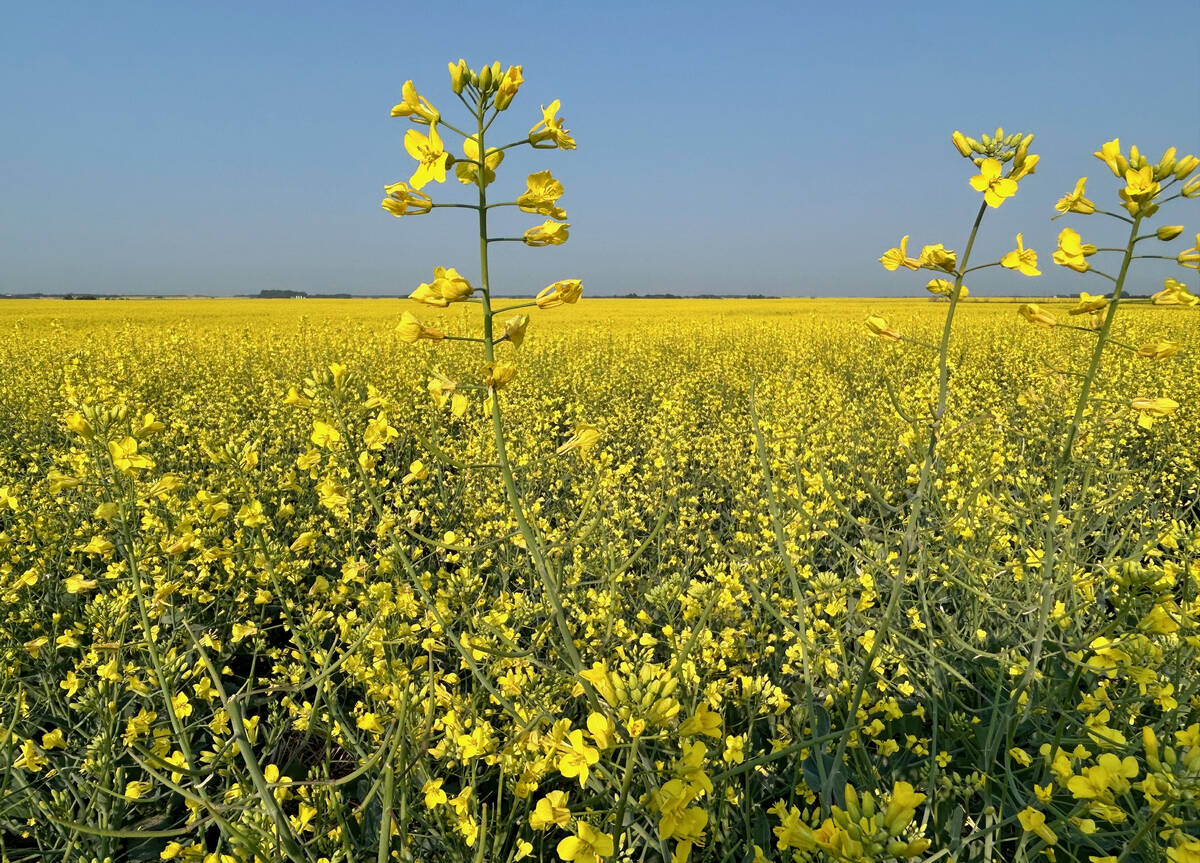
It’s been a good start to 2026 for canola futures on the Intercontinental Exchange and many have reason to believe it could get even better.
On Jan. 2, the March canola contract closed at $603.90 per tonne, after falling to $595.30 during the session. Eleven days later, the contract closed at $632.80, exceeding its 20- and 50-day averages.
Global issues weigh on canola market
Read Also
Weed resistance closes in on glufosinate
Expanded soybean acres and tighter application windows have eroded buffers that have so far protected Liberty herbicide on Prairie farms
Canola’s rise coincided with March Chicago soyoil, which moved from 49.30 U.S. cents per pound to 51.20 during the same period, with the latter just shy of its 100-day average. Rising geopolitical tensions in Venezuela and Iran also brought volatility to crude oil, which spilled over into vegetable oils.
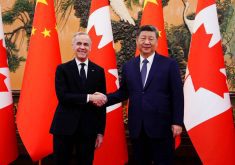
Prime Minister Mark Carney’s visit to China from Jan. 14 to 17, the first by a Canadian head of government in nearly a decade, has brought hope that China can be convinced to reduce or eliminate its tariffs on Canadian canola and other imports. Those hopes grew when it was announced that Saskatchewan Premier Scott Moe was joining Carney’s delegation.
But it will take more than promises from Beijing to optimize canola prices.
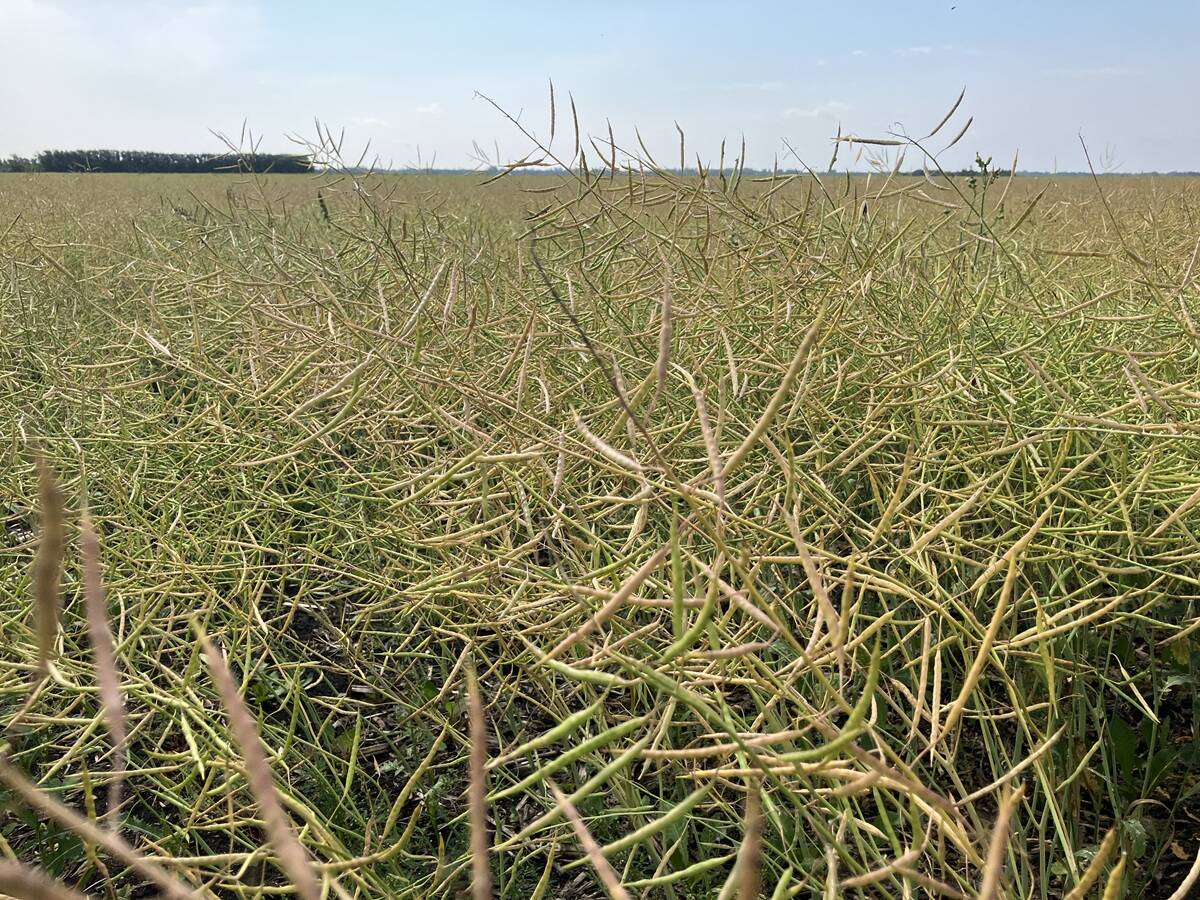
China imposed tariffs on Canadian canola seed, oil and meal, as well as other goods, last year in retaliation for Canadian levies on Chinese electric vehicles. Removing one set of tariffs would require the removal of the other, which would force Carney to choose between Prairie farmers and Eastern Canada’s auto industry.
Politically, Carney’s Liberals have much better chances at keeping seats in southern Ontario than gaining seats out west.
When China promised a few months ago to purchase 12 million tonnes of soybeans from the United States before March, China’s buying pace only ramped up recently in hopes of meeting those commitments. The same could happen to Canadian canola if a deal is reached.
Canola supplies
With or without a resolution, moving this year’s record-large Canadian canola crop remains a difficult task. The U.S. Department of Agriculture projected a 3.71 million-tonne carryout for 2025-26, 760,000 more than Agriculture and Agri-Food Canada’s December report. One analyst though said that carryout could exceed four million tonnes.
The March contract is also set to face resistance at the psychological level of $640/tonne as well as the 100-day average of about $642.
If China and Canada resolve their trade dispute, it would give canola prices a big boost, but bearish factors could dim what has so far been a bright and shiny new year.