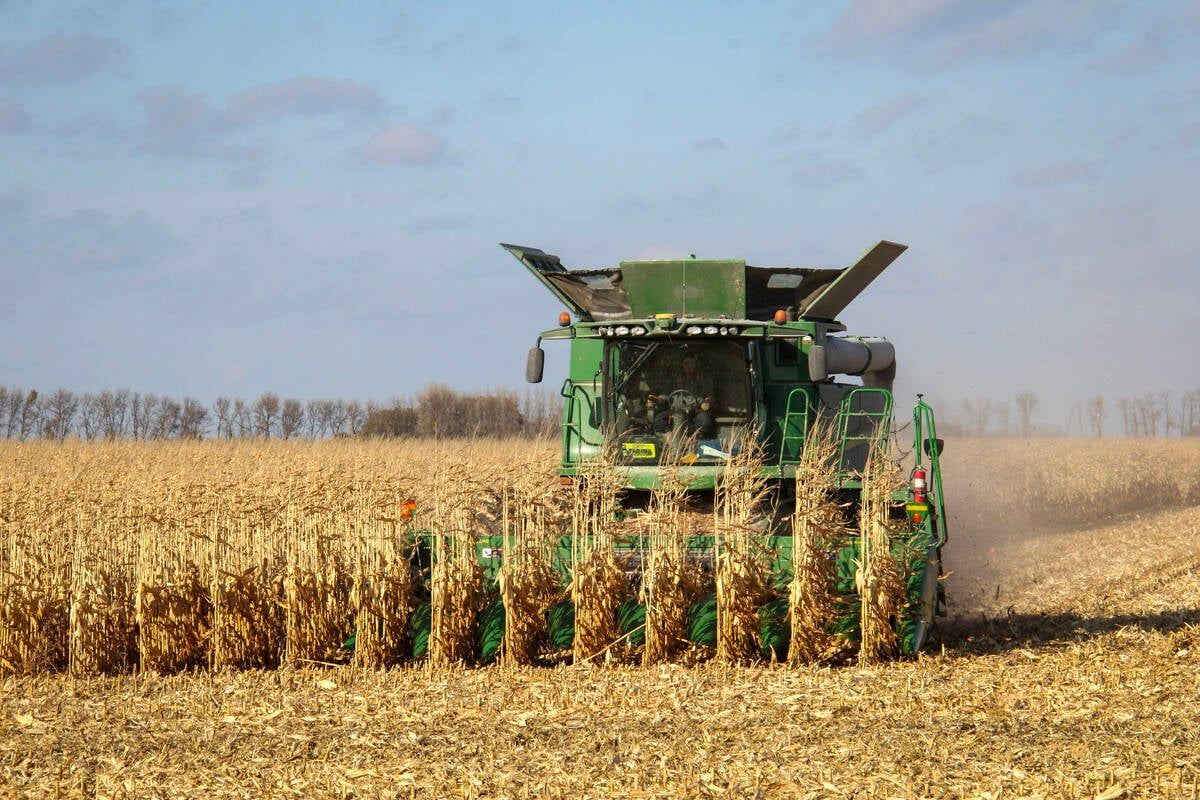
Research out of University of Manitoba is aiming to give corn growers weed-control guidance based on local conditions.
Manitoba corn growers have long relied on weed-management research from Ontario or the U.S. Midwest, even though growing conditions rarely match what farmers see in their own fields. A new set of trials by University of Manitoba researcher Loveleen Kaur Dhillon is set to change that.
WHY IT MATTERS: With most corn-based weed guidance borrowed from other regions, Manitoba growers need local research to fine-tune their spray timing.
Read Also

Mideast war driving grain markets, but fundamentals remain
The war in the Middle East has become the primary driver for nearly all major global financial and commodity markets, though its long-term effects on grain and oilseed markets remain to be seen.
Dhillon is in her first year as the University of Manitoba’s agronomist-in-residence (special crops), a five-year applied research role funded through the Manitoba Crop Alliance. Her position covers three “special crops” as defined by the program — corn, sunflower and flax — which are considered special because of their relatively low acres in the province today, despite their potential.
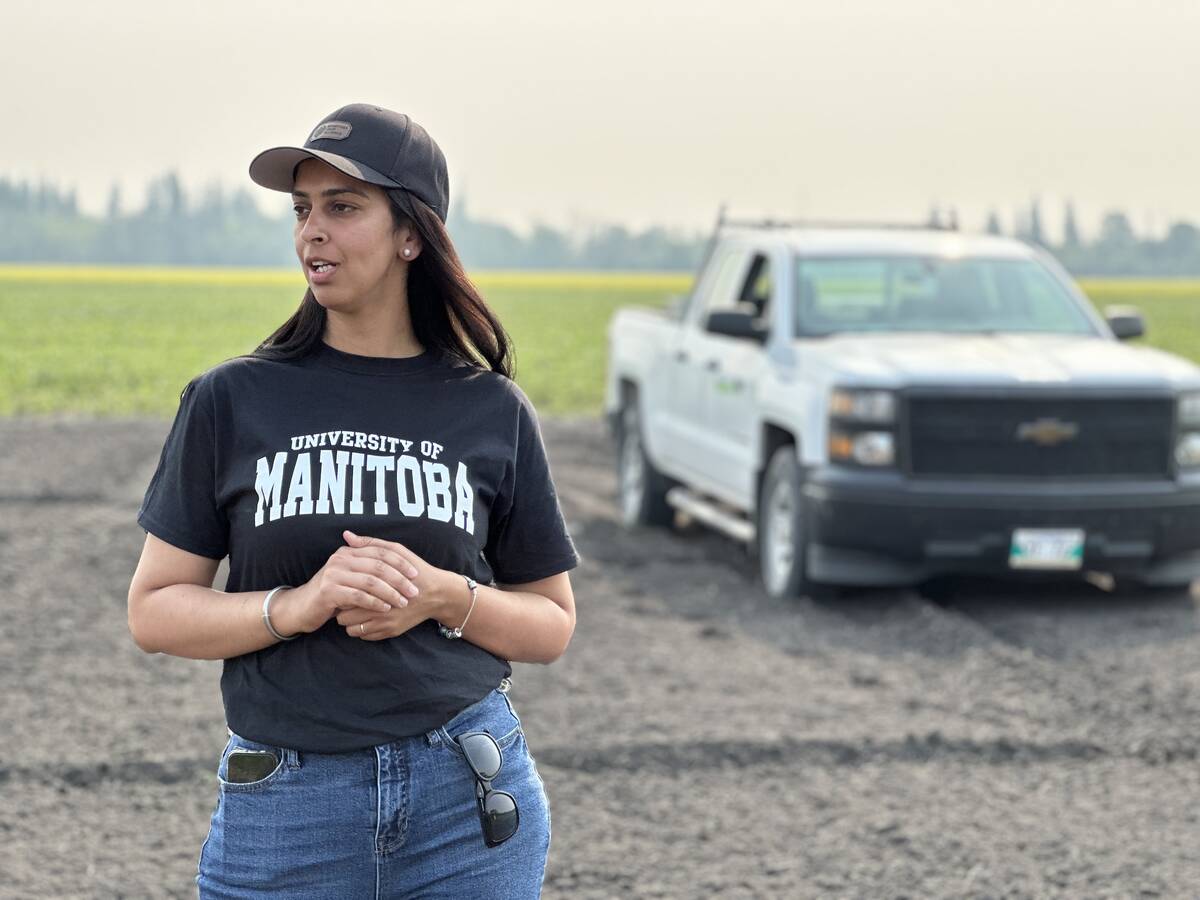
Coming into the role with agronomy and plant breeding training, Dhillon said aside from corn, which she had worked with during her master’s research in India, everything else was a fresh start.
She admitted she was nervous early on, but she settled in quickly once fieldwork began and she could see how producer-driven the program would be, allowing her to focus on basic, but essential agronomy questions.
“I get to work on all those fun projects,” she said.
That farmer-facing element is central to how she sees her role. Dhillon said the MCA partnership gives her a clear sense of grower priorities and helps her shape the work around what producers want studied.
Two corn studies across Manitoba
Among this year’s work were two corn studies, conducted at three Manitoba sites: Carman, Melita and Arborg. In the first study, Dhillon used three widely grown hybrids and planted them on different dates to see whether adjusting seeding windows might influence how corn fits into Manitoba’s shorter warm period.
The second study focused on the critical weed-free period — the window before early season competition starts to cut into yield. Dhillon wanted to see how U.S. and Ontario recommendations hold up under Manitoba conditions.
She divided the work into two complementary approaches: one that let weeds grow for set periods before removal, and one that held plots weed-free for set periods before allowing weeds back in.
She said the work is also meant to help growers spray only when it matters most, making weed control more efficient, cost-effective and sustainable over the long term.
A season of contrasts
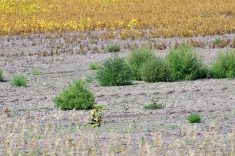
The three sites offered three distinct pictures of the growing season. Melita had favourable weather, giving clean comparisons across weed-removal timings. Carman had heavy weed pressure, which made the contrasts more obvious, even visible from the field edge and in drone images. Arborg, however, was dry for much of the season, and the crop there looked very different from the other sites.
Weed density and species composition also shifted under drought, which changed how the competition played out. Dhillon said that although the conditions were challenging, the variation itself added value. Each site contributed a different piece of the puzzle, helping her understand how Manitoba’s range of environments might influence weed timing.
Early takeaways, with more to come
She hasn’t analyzed the data yet and won’t make recommendations until she has more site-years accumulated. Even so, based on differences seen in the field, Manitoba conditions don’t appear to mirror the conditions that U.S. and Ontario recommendations are based on.
Farmers who have managed corn here for years already know some of those discrepancies from experience; Dhillon’s first-year observations simply reinforce that Manitoba’s conditions deserve Manitoba-made research.

With more data coming next year, and with all three special crops under her long-term mandate, Dhillon said she hopes to give growers clear, locally grounded guidance they can use in their day-to-day decisions.
For now, she has something just as important: proof of concept that the province’s unique conditions behave differently enough to justify a made-in-Manitoba approach — and the beginnings of a program built to deliver it.
“The differences are quite clear,” said Dhillon. “The protocol and the design of the experiment really worked.”