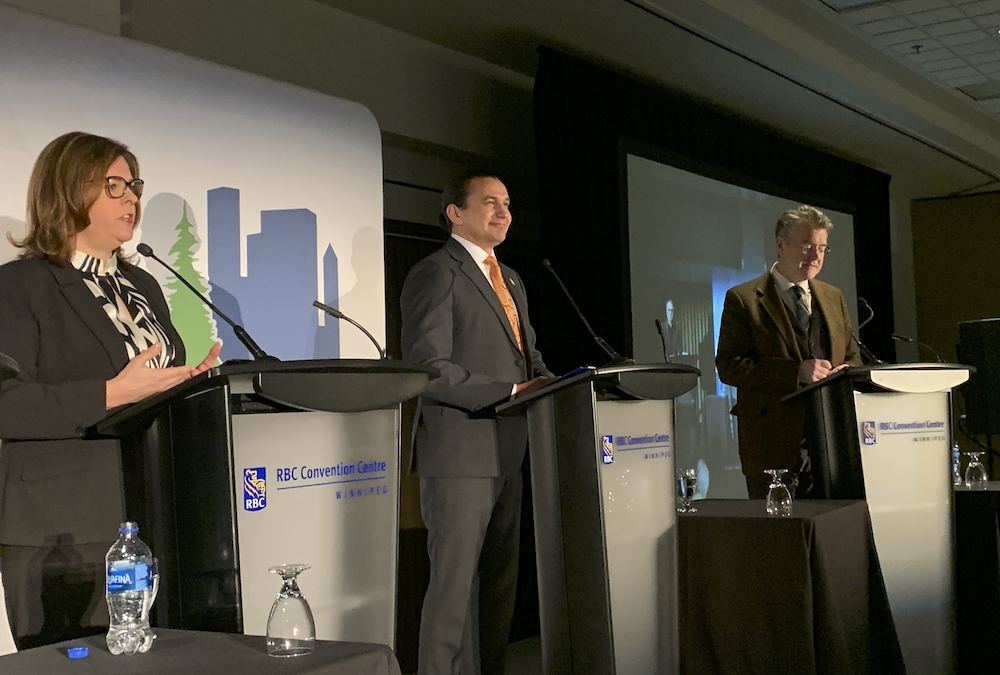
With the provincial election less than two months away, rural Manitoba could become an important battleground.
The rural/urban split falls roughly along party lines, so the provincial Tories must shore up support in their traditional strongholds of rural Manitoba if they want to remain in office. Their counterparts in the NDP will need to make inroads into rural areas if they are to form government.
Keystone Agricultural Producers and the Association of Manitoba Municipalities hope to leverage this dynamic to bring issues to the forefront that are important to rural Manitobans.
Read Also
Manitoba Hydro urges farmers to watch for power lines as spring seeding begins
Manitoba Hydro is reminding producers to apply for clearance permits and maintain safe distances from overhead lines before spring seeding.
Why it matters: Rural constituencies are battlegrounds in the upcoming provincial election, making rural issues a higher priority for the parties.
AMM members got a preview in April of what that will look like, when the organization hosted a pre-election, all-leaders debate. Health care and infrastructure took top billing at that event.
Since then, AMM and KAP have both zeroed in on issues they want addressed by both political parties.
Keystone Agricultural Producers
KAP has identified five priority areas:
- health care and rural crime;
- education and property taxes;
- labour shortages;
- infrastructure spending; and
- “right to repair” legislation.
The organization hasn’t expounded on these topics yet, but intends to launch an election website with more details at the end of August.
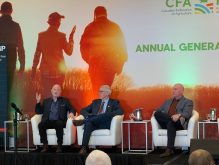
At the end of July, KAP’s advisory council meeting included a panel discussion about election issues. The panel consisted of Rosenort-area egg farmer Harley Siemens, Lac du Bonnet-area grain farmer Janice Johansson and Neepawa-area cattle producer Matthew Atkinson.
Under health care, discussions revolved around understaffed hospitals in rural Manitoba. Johansson talked about regional hospital closures and staff shortages that could see emergency rooms close unexpectedly.
“We’ve had instances on our farm where we needed emergency services,” said Johansson. But rather than calling or searching online for an open emergency room in the region, which can be frustrating and time-consuming, they drive to an ER further afield where they have certainty.
“Whether it is for stitches or a broken bone, we just go direct to the Selkirk hospital facility, which is a 45-minute drive away.”
The perennial issue of education tax was raised as well, with consensus that a tax system is needed that doesn’t require an unfair portion to be paid by farmers.
Rural connectivity also took a front seat during the discussion.
“Where my pasture is, I’m 20 minutes from a place where I can get my phone to say anything other than no service at the top,” said Atkinson. “It’s kind of funny to see places with a payphone still in the middle of town, because everybody understands there’s zero cell service.”
Johansson pointed out that it’s a safety issue as well.
“That’s something that keeps me up at night when I’m thinking about the safety of my farm staff, when sending them out to an area where there isn’t sufficient cell service to keep track of their well-being,” she said.
She also said she has technology that relies on cell reception to function properly.
“It’s highly frustrating to have invested in this modern technology and then not be able to utilize it to its full capacity.”
Issues of remote connectivity led to a discussion on the “right to repair.” Panellists complained that service providers are usually far away and frequently backed up with orders.
“I talked to a service manager yesterday afternoon who said if he didn’t get a single other call for the next two months, they’d almost be at the end of their backlog,” said Atkinson.
“Yet we’re forced to take much of our equipment there. That just seems crazy.”
The panellists also touched on labour shortages and infrastructure needs in terms of road construction and flood mitigation.
KAP will consider the points made at the panel discussion as it develops its election web page.
“There were a lot of great examples given by the panellists that brought to light the realness of the current issues,” said KAP general manager Brenna Mahoney.
She added that the five priorities KAP has established were the result of feedback from members.
“KAP has already been listening, but our panellists really helped to flesh that out more,” she said.
Association of Manitoba Municipalities
There is overlap between the priorities of the AMM and those of KAP when it comes to the election.
The AMM has identified four priority areas it sees as critical. The first is funding fairness and predictability.
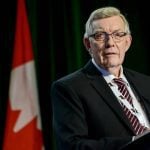
“We’re asking for a fair model that municipalities can count on going forward with a built-in escalator so that it relates to the increasing costs that municipalities and everyone else are seeing on a year-to-year basis,” said AMM president Kam Blight.
Blight is a fourth generation farmer from Oakville and the current reeve of the RM of Portage la Prairie.
AMM’s next priority is investing in people, such as ensuring health-care facilities in rural areas are fully staffed.
“We need to ensure that the smaller communities outside the city of Winnipeg have the necessary resources to continue to carry on,” said Blight. “If we do not do that, then people are going to continue to move towards the larger centres so they can get the proper care.”
The third priority is investment in infrastructure.
“Municipalities have struggled to be able to provide clean, potable drinking water to the residents,” said Blight. “There are also a lot of First Nations communities that do not have clean, potable drinking water. This is 2023 in Canada, and we still have people that do not have access to drinking water.”
Rural connectivity also falls under the infrastructure priority.
“We do not have consistent connectivity across the province of Manitoba,” said Blight. “In order to level the playing field across the province, we need to make sure that we have equal access to proper connectivity.”
Blight said this is increasingly important as the world turns toward remote access.
“In order to cut costs, you’re seeing a centralization of services by the federal and provincial governments, which sounds good,” said Blight. “But they’re not taking into consideration that there are a lot of areas of this province of Manitoba that do not have reliable connectivity. That puts us at a competitive disadvantage.
“The bottom line is that we need the province of Manitoba to step up and invest in critical infrastructure such as broadband so that our agricultural producers, industry and residents can continue to live a productive lifestyle and not have to relocate to a larger centre to get those types of amenities,” said Blight.
The final priority for AMM is public safety.
It is lobbying for legislation to ensure repeat criminal offenders are held in custody longer. It is also lobbying the province to support its call for the federal government to stop downloading policing costs to municipalities because of new federal regulations.
Blight cites examples like retroactive pay and body-worn cameras that the federal government now requires officers to wear.
“We’re also asking the province of Manitoba to step up and continue to support the community safety officer program with funding for municipalities.”
Blight said the overriding message he hears from agricultural producers is that they mostly want to be left alone but need infrastructure to be successful.
“They need the government to provide them with the necessary tools to be competitive globally, such as access to proper broadband connectivity, but otherwise, just let them do what they do best.”
The provincial election is Oct. 3. The official election campaign begins when the writ is dropped Sept. 5.