Weekly Provincial Summary
Precipitation was variable across agro–Manitoba from May 8 to 14 with values ranging from 0 to 48.9 mm. Mid-week rains brought the highest observed precipitation to the Northwest and Southwest regions.
Climate normals for total accumulated precipitation from May 1 to May 14 range from 13.1 to 29.2 mm and are based on 30-year historical data. Areas of the Northwest near Drifting River, and the Southwest along the U.S. border have accumulated more than 100 per cent normal precipitation. The majority of the central and eastern regions have received less than 70 per cent normal precipitation.
Read Also
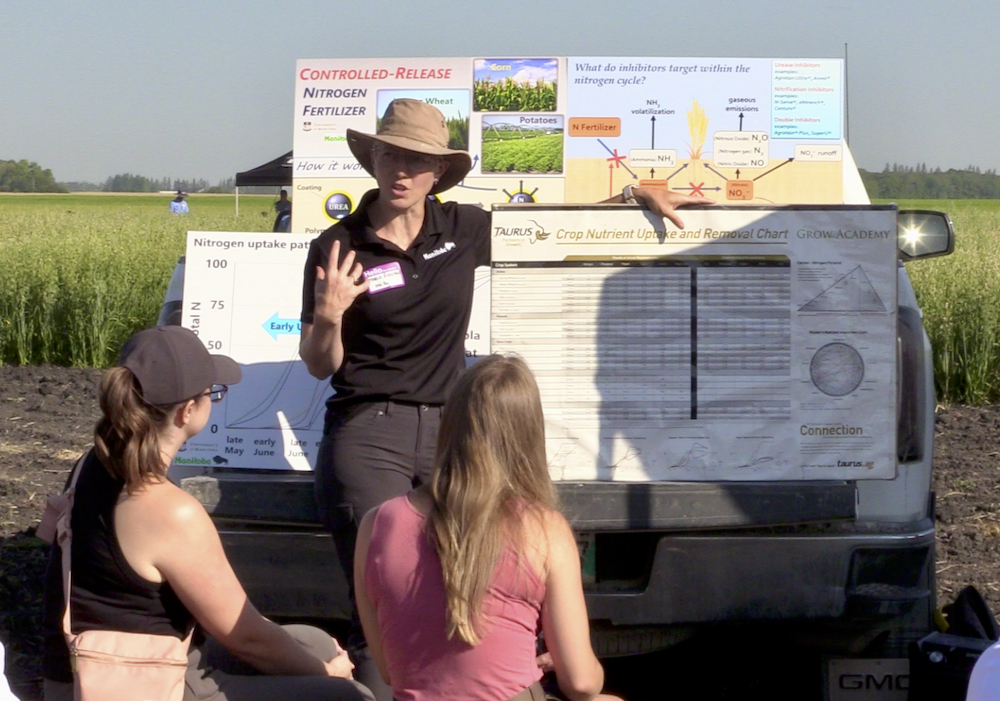
THROWBACK: Targeting your fertilizer needs using the 4Rs
Marla Riekman with Manitoba Agriculture talks about the 4Rs and the effective use of fertilizers when growing crops.
Total Accumulation of Growing Degree Days shows the accumulated growing degree days (GDD) for the period of May 1 – May 14. Much of agro-Manitoba has accumulated more than 100 GDD. Central and Eastern regions have accumulated the most GDD. Much of the province has accumulated more than 125 per cent of normal GDD.
Overall, producers were able to make significant progress over the last week with field work and seeding. Warm soil temperatures and adequate soil moisture mean crops will be emerging rapidly in the coming days and weeks.
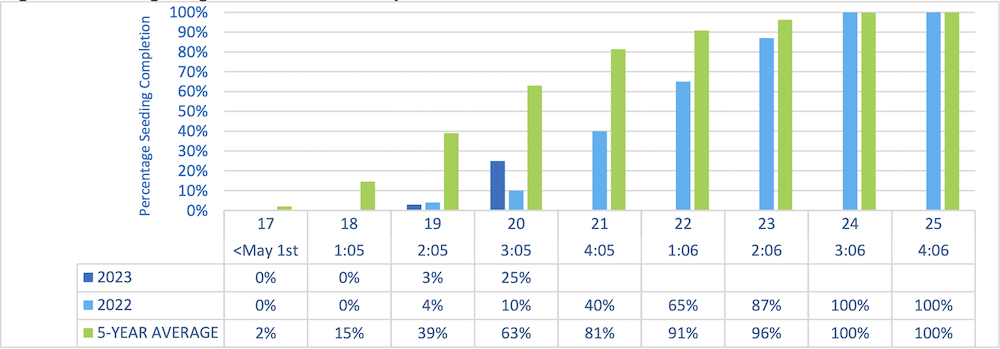
Provincial seeding progress sits at about 25 per cent completion, behind the 5-year average of 63 per cent for Week 20 (Figure 1 at top). All regions of the province have started seeding. Crop reporting areas range from 24 to 30 per cent complete for all crops.
To find interactive soil temperature/moisture and air temperature information see Agri-Maps Current Weather viewer.
Overview
Seeding progress across the province is moving at a rapid pace with the recent warm weather. Producers are able to seed most fields, unlike the previous week where producers were more selective on which field to plant due to wet soil conditions. The weather forecast is looking favorable for continued seeding progress over the next week. Cereal plantings are expected to wrap up towards the end of the week and soybean and canola seeding is expected to increase. Corn planting is at 15 per cent complete and is expected to increase as the week progresses.
Cereals
Winter cereal crops are tillering and are in good to excellent condition with very little winterkill. Fertilizer applications were completed except for fields or field areas where access was still an issue.
Producers made rapid progress on spring cereals over the last week with some already finished seeding. Some early seeded spring wheat is emerging with seed rows becoming more apparent every day. Most fields emerging in 7-10 days.
Corn planting has begun in the Red River Valley, approximately 15 per cent of intended corn acres are in the ground.
Oilseeds
Very few canola acres have been planted to date, as producers concentrate on longer-season crops, or those more sensitive to seeding date – peas, wheat, and corn.
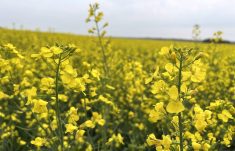
Canola planting across the province sits at approximately 8 per cent complete. This will change over the next week as growers finish up planting cereals.
Sunflower planting has begun and is currently sitting at 15 per cent complete.
Canola acres are expected to be down slightly from previous years, with Statistics Canada estimating 3.25 million acres.
Pulses
Field pea planting is at 64 per cent complete across the province. The south west and northwest region are the furthest advanced sitting at 80 per cent complete.
Good emergence has been noted on fields planted during the first week of May.
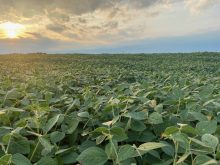
Soybean planting has started with 9 per cent of the projected acres planted.
Soybean acres are expected to increase with Statistics Canada projected acres to be 1.5 million acres.
No dry edible beans have been planted to date.
Forages & Livestock
Forages
Top-dress fertilizer applications have been made on some hay fields.
Fertilization of hay fields, particularly those receiving hog manure, in parts of the region has begun.
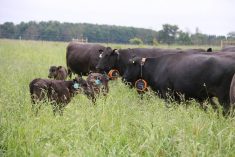
Pastures are approximately one week away from supporting grazing livestock. Moisture conditions are adequate across the region, dugouts are full, and the grass/alfalfa is growing nicely.
Hay and pasture is growing well, taking advantage of warmer weather and spring moisture.
Livestock
Cattle remain in their winter feeding areas, though some are beginning the move to pasture or have opened smaller paddocks adjacent to corrals; allowing animals access to dryer conditions and more space. Hay supplies are adequate with some producers expecting to have carry-over for next year. Hay is available in the area for purchase if a producer finds they are running short. Some farms are supplementing cattle with grain to increase the energy content of their diet.
Caution not to turn cattle out too early so it does not set forages back. Feeding cattle on a sacrifice pasture paddock gets them out of the yards and onto cleaner ground without impacting the entire system.
Herds require supplementation on grazing sites unless sufficient stockpiled forage is present.
Availability of livestock water is rated as adequate.
Nearly all creeks, streams, dugouts, and sloughs have refilled to capacity.
Regional Comments
Southwest
Seeding progressed rapidly during last week, with most producers seeding cereals. Spring wheat is 45 per cent complete, with barley at 30per cent, and oats at 20 per cent complete. Many producers are waiting until they finish cereals before starting on canola. Currently canola seeding progress is in the 5-10 per cent range. In addition, they are waiting for low spots to dry out; this recent rain has pushed intentions back a few days in some areas. Field pea seeding is at 75-80 per cent complete. Peas seeded at the beginning of May are starting to emerge. Soybean seeding also started in some southern areas, with approximately 10 per cent seeding complete. Seeding of grain corn has also started.
Northwest
Warm and windy week across the region with the exception of a storm that rolled through parts of the region mid- week. Dauphin and Ste. Rose area received approximately 30 mm of rain with Drifting River station receiving 48 mm in a short period. Hail also occurred in Ste. Rose, Dauphin and Gilbert Plains. Planting in these areas were slowed while conditions dried up. Areas that did not receive precipitation from the storm are starting to see dry conditions in the topsoil. Spring wheat seeding progress is well underway across the region. Approximately 90 per cent complete in Roblin area; 65 per cent complete in Swan Valley and Dauphin; 50 per cent complete in The Pas. Earliest seeded spring wheat in Roblin and Swan Valley is emerged. Overall good winter wheat survival. Canola seeding was started across the entire region over the weekend and is approximately 10 per cent complete. Field peas are 80 per cent complete across the region. Soybean seeding is underway in the Dauphin region.
Central
Most farms in the central region have started field operations including soil testing, dry fertilizer spreading, spraying pre-seed herbicides/dribble banding fertilizer, anhydrous ammonia applications, and harrowing/cultivating. For the most part seeding is continuing at a fast and steady pace. Carman / Roland areas are further advanced in seeding than regions on the escarpment and heavier soils around Altona and along the Red River. Due to recent rains, many producers in these areas have yet to start seeding. Over the coming week most are hoping to make a start and if the weather remains favorable, some are even expecting to be finished planting in the coming days.
The first spring cereals have emerged and are looking healthy. Emergence on spring wheat is 7 to 10 days. Flea beetles have appeared and are consuming volunteer canola. Weeds are quickly appearing in fields including kochia, volunteer canola and wheat, other brassicas, fleabane, redroot pigweed, millet, lambs quarters, thistles and dandelions.
Eastern
Rain stayed away from the region after Wednesday and air temperatures, both daytime highs and nighttime lows, stayed above normal for the rest of the reporting period. This allowed producers to have a productive week in terms of field work and seeding. Soil temperatures moved into an acceptable range for all crop types during the past week allowing producers the flexibility to plant various crop types if field access was an issue on some of their land.
Winter cereals are tillering and in good to excellent condition with very little winterkill. Fertilizer applications were complete except for fields or field areas where access was still an issue. Fertilizer application will be completed this week if the weather holds.
Approximately 50 per cent of spring wheat and barley acres along with 30 per cent of oat acres were seeded. Producers made rapid progress over the last week with some already having completed their spring cereals. Some early seeded spring wheat is emerging.
Corn planting progressed quickly over the last week with approximately 35 per cent of acres now seeded. Some growers have completed their corn and moved on to other crops.Approximately 25 per cent of sunflower acres have been planted, while 10 per cent of canola and soybean acres are complete.
Interlake
Seeding is well underway in the Interlake region. Areas in the south are further along than in the Arborg region. Seeding progress has been slowed in the Arborg region due to passing showers but with the recent warm weather should pick up soon. Most growers have started with field peas and cereals with seeding of the majority of the cereals completed by the end of this week. Soybean planting has started, however the majority of the acres will be planted towards the end of this week and into next. Seeding of canola has also started with approximately 10 per cent planted.