
Broad swings in global energy and financial markets in the first week of July led to erratic activity in grains and oilseeds. Many commodities saw large amounts of speculative money flushed out as concerns over a possible global recession sparked a round of long liquidation.
ICE Futures canola fell to its weakest levels in more than five months but was showing signs of stabilizing.
The managed-money net long position in canola dropped from more than 70,000 contracts in January to only about 3,000 by the end of June, according to data compiled by the U.S. Commodity Futures Trading Commission. Activity in early July likely shifted the net position to the short side for the first time in two years, but it remains to be seen if bearish speculators will build up a larger short position, if the market will stabilize and consolidate for a period, or if a new long position will build again.
Read Also
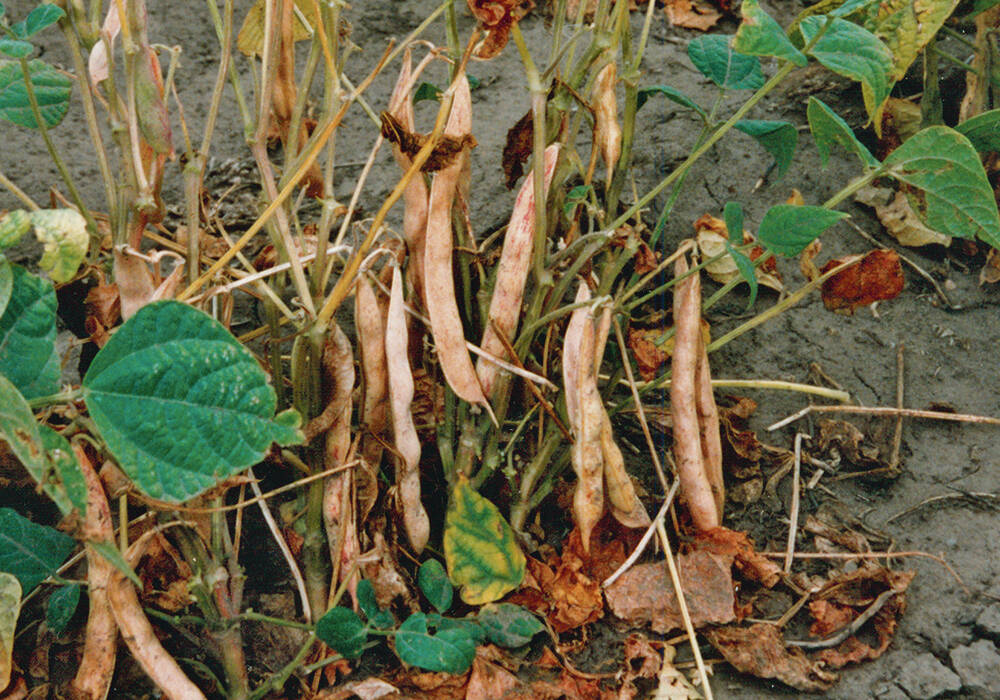
Manitoba farmers must be flexible on white mould control
Farmers should watch their bean and soybean canopies and disease risk, not the calendar, when choosing when to spray fungicide against white mould.
Such large fund positions can easily sway the futures and exaggerate price moves, but with the big speculative money out of the canola market for now, it will likely take an outside catalyst to determine where values go.
From a chart standpoint, the November canola contract dipped below $800 per tonne on two occasions during the week, but always managed to close above the psychological support level. While crush margins have backed away from their highs, they are still relatively solid and bargain-hunting at the lows was thought to be coming. On the other side, a move back to $900 would likely trigger renewed farmer selling.
In the U.S., soybean, corn and wheat futures all found themselves caught up in the ‘risk-off’ sentiment that saw speculative money bail out of commodities in search of firmer ground. However, much like canola, the U.S. grains and oilseeds also found support and stabilized.
The U.S. winter wheat harvest is more than half complete and progressing north, which should start to curb seasonal harvest pressure. Meanwhile, spring wheat in the northern states and Canada still must get through the growing season, leaving room for possible weather-related rallies.
The ongoing conflict in Ukraine, together with shifting news on exports out of the region, also remains a factor to watch in the background of the wheat market.
For row crops, most eyes are focused on U.S. Midwestern weather forecasts as soybeans and corn go through key stages of development. The crops are generally in good shape, but hot temperatures and varied rain could easily sway the futures.
The broader macroeconomic influence of mounting recession fears, and what that means for energy and currency markets, should also have an influence on the direction of agricultural commodities.