
After three years of drought, Australia will see its crop production spike in 2020-21, according to the Australian Bureau of Agriculture and Resource Economics and Sciences (ABARES).
In ABARES’s June report, it noted that average to above-average rainfall has greatly assisted Australia’s main winter crops of wheat, barley, canola and chickpeas. However, the report said Queensland and Western Australia didn’t receive enough rain in May and planting intentions weren’t fully met in those states.
Total winter crop production in 2020-21 was forecast to jump 53.0 per cent compared to the previous year, for 44.52 million tonnes. In the last decade, only two other years provided more production, 45.67 million tonnes in 2011-12 and 56.68 million tonnes in 2016-17, which was the year prior to the drought.
Read Also
Fertilizer industry optimistic as Ottawa commits to cutting red tape
Federal ministers and bureaucrats are now willing to modify or eliminate unhelpful regulations, including a rule that required complex bilingual labels on fertilizer delivered to Canadian farms. The CFIA extended the bulk fertilizer labelling deadline to July 2027.
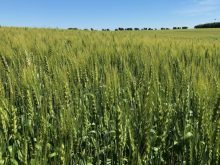
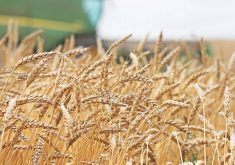
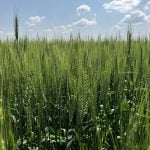
Wheat, the country’s largest crop, is expected to see its production jump by almost 76.0 per cent to 26.67 million tonnes in 2020-21, according to ABARES. Barley production is set to rise by 17.3 per cent to 10.56 million tonnes.
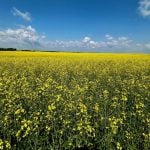
Canola production is forecast to vault 39.5 per cent to 3.25 million tonnes, while oat production is to leap 86.0 per cent to 1.6 million tonnes. Also Australia has forecast chickpea production to skyrocket by 135.2 per cent in 2020 to 661,000 tonnes.
In terms of area, ABARES estimated a 23.0 per cent increase overall to 22.48 million hectares in 2020-21. Western Australia leads the way at 8.32 million hectares for a gain of 4.9 per cent from the previous year. New South Wales was forecast to have 5.87 million hectares planted, up 90.4 per cent. It’s followed by South Australia with 3.56 million hectares, up 2.8 per cent, and 3.37 million in Victoria for an increase of 8.7 per cent. Queensland was to have a 103.3 per cent jump in area to 1.34 million hectares.