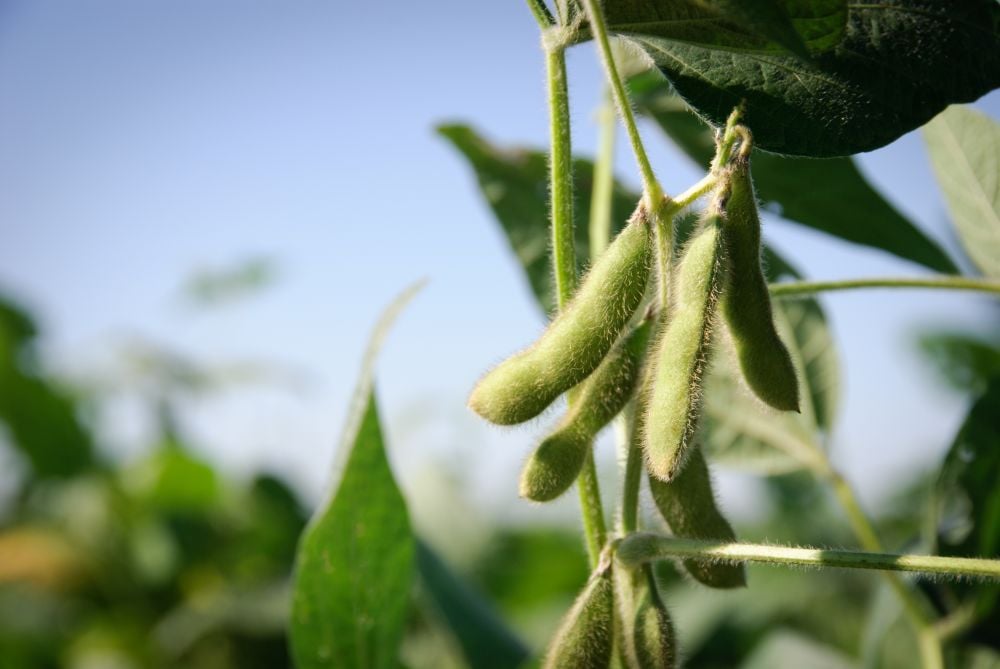


Waterhemp peeks out among soybeans.

Waterhemp on the rise

Manitoba’s list of affected municipalities keeps growing

Manitoba’s ag sector is trying to hold the line against big yield-killing threats like waterhemp and Palmer amaranth. Unfortunately, the number of municipalities where waterhemp has been found just grew by two. “Waterhemp and Palmer amaranth are Tier 1 weeds regulated under the Noxious Weeds Act. They must be destroyed when they’re found,” said Manitoba Agriculture weed extension specialist Kim

Neale Heinrich stands in front of the Redekop Seed Control Unit at its booth at Ag in Motion on July 18, 2023. (Braedyn Wozniak photo)

At Ag in Motion: Herbicide resistance fight needs integrated seed management

'Those seedlings we don’t manage to kill (are) probably the most herbicide-resistant'

Harvest weed-seed control takes aim at reducing herbicide-resistant weeds that western Canadian farmers find more and more every year. At the Ag in Motion outdoor farm show this week, field residue management manufacturer Redekop won the Innovations Award for Environmental Sustainability for its harvest Seed Control Unit, which destroys more than 95 per cent of


Originally a tow-behind unit that attached to the back of the combine, the newer iteration of the Harrington Seed Destructor is a mill that can be integrated with the combine. (Photo: deBruin Engineering Pty Ltd.)

At Ag in Motion: Harvest weed control still in the mix

'You’re not going to spray your way out of this'

It’s a relatively new solution to the age-old problem of trying to get rid of weeds without broadcasting the seed or using increasingly less effective herbicides — mechanical separation and pulverization of weed seed. Harvest weed seed control might not be a golden bullet to tackle glyphosate-, fluroxypyr- and dicamba-resistant weeds, but according to Agriculture

“Monarchs as a species are not about to go extinct, but the fascinating long-distance migration of monarchs from Manitoba and other parts of central and eastern North America is under threat.” – Jeffrey Marcus, University of Manitoba.

The tricky question of milkweed and monarchs

Milkweed species, the sole food source for the larvae of monarch butterflies, are reappearing in Manitoba farm fields, leading to a conservation balancing act

The reappearance of milkweed in crops across the province is giving farmers a tough choice between weed control and conservation. In Canada, there are 14 species of native milkweed that are the sole food group for monarch butterflies. Two of those species are listed on Manitoba Agriculture’s noxious weed list: common milkweed and showy milkweed.


Quick adapting and designed to spread, kochia seems biologically primed to pick off the punches farmers throw at it.

On the ropes against kochia

Growers face a formidable foe. Fast mutations and efficient seed spread are a tough one-two combination

Kill it with fire. That was the gist in 2018, after a photo of post-spray kochia in Saskatchewan made the rounds on social media. The image showed a swath of dead, brown plants. That made the single, green plant right in the centre stand out even more. There was a collective recoil from farmers in

Field patches where kochia is dominant are candidates for mowing or, in the case of herbicide resistant plants, hand-weeding before it sets seed.

Strike early when fighting kochia in canola

Kochia has few means of control, so know the options

Glacier FarmMedia – Kochia is one of the fastest-spreading and most resistant weeds common in canola. The key is to control it before it sets seed, experts say, and that means striking when it’s small. Herbicide resistant kochia has been a management headache for growers across the Prairies. Pre-seed burnoff is the first tool in


Growers need to understand their seed technologies and the weed spectrum they’re dealing with.

Keeping your herbicides on target

Herbicide resistance, seed technologies add complexity to spray decisions

Glacier FarmMedia – Off-target movement of herbicides carries a risk to your crops, the neighbour’s crop and insurance premiums. With the arrival of Group 4 and Group 9 herbicide technologies, growers may think weed management is simpler. But resistant weed biotypes confound that notion and challenge growers and their advisors with tank-mix solutions and application

milkweed

Milkweed a problem in some areas of rural Manitoba

Traditionally only seen in ditches, milkweed is moving in-field

Milkweed is appearing in many Manitoba fields. “For the longest time, we’ve really only seen it in ditches,” said Manitoba Agriculture weed specialist Kim Brown-Livingston. “But now we are seeing a lot more of this in fields.” It has cropped up particularly in central Manitoba, she added. Why it matters: Milkweed is critical for the


Figure 1: Seeding progression in 2023 compared to previous years.

Seeding progress behind five-year average, soybean, canola seen lagging

Manitoba Crop Report: Issue 1 (week 20)

Weekly Provincial Summary  Precipitation was variable across agro–Manitoba from May 8 to 14 with values ranging from 0 to 48.9 mm. Mid-week rains brought the highest observed precipitation to the Northwest and Southwest regions. Climate normals for total accumulated precipitation from May 1 to May 14 range from 13.1 to 29.2 mm and are based

Is the water in your sprayer neutering your herbicide?

Is the water in your sprayer neutering your herbicide?

Calcium, magnesium, sodium, iron and potassium cations in sprayer water will bond with herbicide molecules, such as glyphosate, making them ineffective

Clint Jurke had never, not once, tested the quality of his sprayer water until a colleague said it would make a good topic for an article. “I like to think I’m pretty good at agronomy,” said Jurke, agronomy director for the Canola Council of Canada and farmer from Lloydminster, Sask. “I scout, follow labels’ rates,