
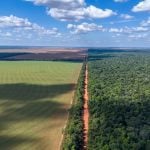
Half-moon holes produce crops in the sub-Saharan desert

An innovative water-trapping technique is making the desert bloom in one of the most inhospitable regions of sub-Saharan Africa. Demi-lunes — holes in the shape of a semi-circle — are used to capture and store run-off rainwater. It’s a simple low-tech water-harvesting method which enables crops to grow in a hostile climate. The water conservation

Multi-toxin biotech crops not silver bullets

When pests developed resistance to Bt crops such as corn, potatoes and cotton, seed companies had an answer: two-toxin varieties. But new research suggests it may be the wrong one. Bioengineered crops with genes taken from bacterium Bacillus thuringiensis have been widely grown since 1996. The genes produce Bt toxins, reducing the need for pesticide


Register now to be an Open Farm Day host

Manitoba’s farm families have until April 30 to register as hosts for the fourth annual Open Farm Day Sept. 15. Manitoba Agriculture, Food and Rural Initiatives Minister Ron Kostyshyn says the event gives a chance to interact with non-farmers in ways that foster a better understanding of food origins and agriculture. “Farming is an important

Spring seeding well underway in Europe

Reuters / Spring seeding is in full flow in western Europe with a sharp rise in area expected in Britain after wet weather wrecked autumn plantings, but a significant drop is anticipated in Germany due to much more favourable conditions. In France, the EU’s top grain producer, conditions were generally satisfactory, with mild, dry weather


Dairy farmers ask for delay of GM alfalfa registration

Registration of genetically modified alfalfa should be delayed until next year so a “coexistence” plan can be completed, says Dairy Farmers of Canada. Roundup Ready alfalfa has become a cause célèbre for anti-GM groups, which say its cultivation will make it impossible for growers of organic alfalfa to stay in business because their crops will

Report calls for new soil vision

Our soil is a great resource, and we need to change our vision of how we manage it.” This is one conclusion from a roundtable held by Gord Miller, the environmental commissioner of Ontario, which brought together experts and stakeholders to discuss the opportunities and challenges of increasing soil carbon and building healthy soils. The


Prospect of a wet spring has some reconsidering their seeding plans

Farmers are starting to think about Plan Bs, but there is 
no sign yet of a major shift in seeding intentions

Wet conditions across the Prairies and the increasingly likelihood that planting will be delayed this spring have some farmers starting to think about “Plan Bs.” “I think what a lot of farmers are probably doing is looking at the Plan Bs because they’re thinking they might have to use them later on,” said Bruce Burnett,

Avoid losing half your crop before you start

On average, only 40 to 60 per cent of canola seeds put in the ground actually survive to become plants. If a grower spends $50 an acre on seed, typically only $25 of that seed survives to contribute to the success of the crop. Growers can use the following tips to increase seed survival, achieve


Ready? Set! – GO over this checklist before seeding

The first step in growing a profitable crop is getting a good plant stand established. There’s nothing worse than a poorly seeded crop, so it’s worth the time to make sure that equipment is ready to perform when it’s time to seed. Things to check before going to the field to seed: Hydraulic rams If

Beekeepers ask courts to ban controversial pesticides

U.S. environmental regulators are failing to protect honeybees and should immediately suspend use of some toxic insecticides tied to the widespread deaths of bees, charges a new lawsuit. “It is a catastrophe in progress,” said migratory beekeeper Steve Ellis, who maintains 2,000 hives for pollinating crops from Minnesota to California. “We have an ongoing problem