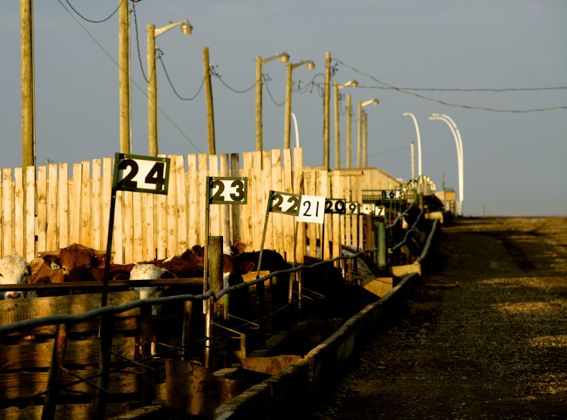
(Photo courtesy Canada Beef Inc.)

Klassen: Feeder market remains under pressure

Pre-election commodity trading in 'risk-off' mode

Compared to last week, western Canadian feeder cattle markets traded $2-$5 lower on average; calves under 650 lbs. appeared to trade $3-$8 lower with significant pressure on the weight category between 550 and 650 lbs. Moderate demand surfaced on quality yearlings but major operations appeared to back away from the cattle in the heavier weight


(Photo courtesy Canada Beef Inc.)

Klassen: Yearling market holding value

Compared to last week, western Canadian yearling prices were relatively unchanged while calves traded $3 higher to $3 lower on average. The yearling run is well underway and there was no shortage of buying interest. Finishing feedlots were very aggressive on quality packages coming fresh off grass. Once again, buyers focused on local cattle, causing


(Photo courtesy Canada Beef Inc.)

Klassen: Yearling prices on fire

Canada's cattle herd remains in contraction stage

Compared to last week, yearlings coming off grass traded $3-$5 higher; backgrounded yearlings were $1-$3 higher on average while calf markets were relatively unchanged. February and April live cattle futures closed marginally lower for the week; however, fed cattle basis levels from U.S. packers are very strong for winter and spring. This appears to be

(Photo courtesy Canada Beef Inc.)

Klassen: Yearling demand remains firm

Compared to last week, western Canadian yearlings fresh off grass traded steady to $2 higher; backgrounded yearlings were relatively unchanged. The calf market was too thin to quote. Major feedlot operators set the price structure and were once again very aggressive. While many feedlots are backed up with market-ready supplies of fed cattle, some feedlots


CME September 2020 feeder cattle with 20-, 50- and 100-day moving averages. (Barchart)

Klassen: Strong demand underpins yearlings

Compared to last week, yearlings traded steady to $4 higher on average; calves traded $2-$4 lower, although light volumes made the market hard to define. All eyes were on feeder cattle futures, which closed up nearly $4 for the week. This set the direction in Western Canada. Auction barns in Manitoba and Saskatchewan remain in