
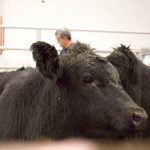
Even pure-looking water might harbour a problem that could hurt your cattle.

Check water quality before turning out livestock

Checking and monitoring water quality can help guard your 
livestock’s health and productivity

Your pond or dugout water might look fine, but it could just as easily be compromised by concentrated levels of salts, minerals and bacteria, which can compromise livestock health. “We recommend that livestock producers test water quality prior to livestock turnout,” North Dakota State University Extension Service livestock environmental stewardship specialist Miranda Meehan says. Poor
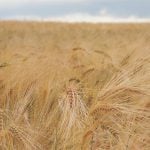
A pea/oat/tillage radish cover crop seeded in early August, pictured on October 17.

Cover crops breaking out of livestock niche

Benefits of cover crops shown to accrue to grain portion of mixed operations, causing some without livestock to consider them

Cover crops could be a game changer for Manitoba, and not just for mixed crop and livestock operations. Typically those farms have been the earliest adopters of this new technique, said Michael Thiele, who works with the province’s grazing clubs through a Ducks Unlimited program. “These guys growing cover crops are finding that using and


North Dakota producer, Gabe Brown spoke on cover crops and soil health strategies at the Ducks Unlimited grazing club event  in Lenore on April 6.

Taking grazing-management tips from Mother Nature

Gabe Brown says his success in cover cropping has come through 
observing and mimicking nature’s processes

North Dakota farmer and cover crop and soil health expert Gabe Brown says if farmers give the techniques he advocates an honest try they’ll be hooked. “Take one field and promise yourself that for five years you will focus on the principles of soil health,” said Brown. If you stick with it for those five

Michael Thiele (r), grazing club co-ordinator with the Manitoba Forage and Grasslands Association spoke on the importance of organic matter in pasture soil at a recent grazing workshop.

Tired pasture? The solution is in the soil

To create a healthy pasture, grazing expert says to start with ground cover, 
plant a diverse mix and avoid disturbing the soil

To get more pasture growth above ground, start by looking below the surface, says Michael Thiele, grazing club co-ordinator for the Manitoba Forage and Grassland Association (MFGA). “Nutrient levels in the soils across Canada have been greatly depleted since conventional agriculture began and the same nutrient depletion can be seen in the foods we are


Brian Harper discusses his high stock density grazing program during a summer field tour on his operation last year.

Hit the grass fast and hard, and then move them out

Brian Harper says high stock density grazing has allowed him to 
double his pasture’s carrying capacity

Move the cattle through small paddocks fast, and then give the grass a good rest. That’s the theory behind a high stock density grazing system, and Brian Harper says it’s paid off. “High stock density is a management system where you have a high number of cattle in a small area for a short time.

Ron and Janice Apostle received the 2014 Intermountain Conservation District award after implementing a number of conservation efforts on their cow-calf operation.

Bale grazing for a healthier pasture and wallet

Conservation Champions: A Gilbert Plains producer says switching to a bale-grazing system has saved money, 
labour and created positive changes in pastures

Ron and Janice Apostle run their second-generation cow-calf operation on the outskirts of Gilbert Plains with the intent of leaving the land better than they found it. “Everything starts with the environment,” said Janice. “We used to have our corrals right by the creek and we wanted to apply to move them. During that process


“Research in the dairy industry shows that cows eat more forage that is higher in sugar content. Researchers are also seeing a corresponding increase in milk production, up to eight per cent,” said Bill Houston, senior range and forage biologist with AAFC.

Industry updated on research efforts in forage and grassland sector

Agriculture and Agri-Food Canada presented the details of its forage research project that began last October

Awareness of the role forage plays in a healthy agricultural sector has grown over the past six years since the formation of the Canadian Forage and Grassland Association (CFGA), speakers told the group’s annual meeting here. “Just as recent as two years ago the dairy industry had no interest in investing in the research and

Clayton Robins opened his farm for a tour in mid-August to explain the benefits of his high-energy forage grazing system.

Putting grazing theory into practice

Clayton Robins suggests a grazing system of high-energy 
forage can hone the best gains while regenerating pastures

Following years of research and the publication of a Nuffield study, Clayton Robins is now seeing the results of implementing a high-energy forage system on his own farm. “The greatest hurdle to the forage-fed beef enterprise lies in the difficulty in providing an adequate level of diet energy, especially in the form of a low-cost


Doug Wray is among several Alberta cattle producers experimenting with adding a variety of forages to feed his cattle. The mix adds important nutrients to the cattle’s diet, but also increases the diversity on the land.

Editorial: Increasing your farming options

Even in June, you could feel a drought in the making as we tramped across the bone-dry paddocks of Doug Wray’s ranch north of Calgary. Far from the lush, succulent feel of the pastures here in Manitoba, the grasses there rustled and crunched underfoot. Conditions haven’t improved — in fact, the situation out west has

(Photo courtesy Canada Beef Inc.)

Sask. to open protected grasslands for grazing

Crown-held native prairie and other grasslands held for wildlife conservation in Saskatchewan will be opened up to ranchers needing grazing land for cattle in dry areas. Environment Minister Herb Cox announced Tuesday the province will make about 90,000 acres of Fish and Wildlife Development Fund (FWDF) land available to cattle producers. The same grazing lease