
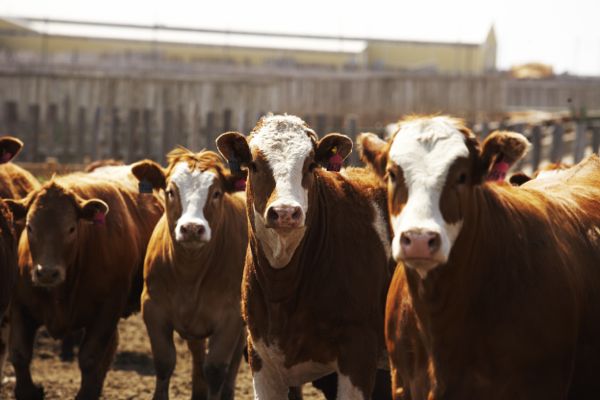
(USDA.gov via Flickr)

Southern Plains drought slows U.S. cattle herd growth

Chicago | Reuters — Encroaching drought in the U.S. southern Plains contributed to the smallest rise in the nation’s cattle population in three years, analysts said after the government’s semi-annual cattle inventory report on Wednesday. Insufficient moisture in parts of Texas and Oklahoma, along with areas of persistent dryness in the northern Plains, hurt winter


(Photo courtesy Canada Beef Inc.)

Klassen: Feeder market grinds lower

Compared to last week, western Canadian feeder cattle prices traded $4-$6 lower; however, yearlings and heavier calves experienced a week-over-week decline of $4 to as much as $8 with significant weakness noted in the eastern Prairie regions. Finishing feedlots continue to sit on their hands. Order buyers were active on a scale-down basis and surprised


(Photo courtesy Canada Beef Inc.)

Klassen: Fed cattle market leads feeders higher

Alberta packers were buying fed cattle in the range of $280-$282 delivered on a dressed basis, which equates to $168-$171 on a live basis. Yearlings bought last summer are bringing back $150-$180 margin, which has reinforced buying enthusiasm. Western Canadian yearlings traded $3 to as much as $8 above week-ago levels; calves were relatively unchanged


(Photo courtesy Canada Beef Inc.)

Klassen: Feeder market remains firm into 2018

Western Canadian feeder cattle markets experienced limited activity over the past week because most auction barns were closed for the holiday season. There was some reported activity in certain regions such as central Alberta and prices were relatively unchanged from seven days earlier. Frigid temperatures tempered buying activity. Feedlots in the nearby area of the