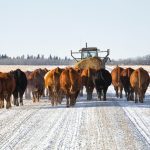
(Photo courtesy Canada Beef Inc.)

Klassen: Feeder market remains firm

Canada's feeder exports down off year-ago levels

Compared to last week, western Canadian feeder cattle prices were steady to $2 higher on average. Strength was noted in the mid-weight categories as lighter calves and yearlings (900 pounds-plus) were relatively unchanged. Major feedlots were dominant buyers, with little demand surfacing for grassers. Feeding margins are in positive territory and recent rains have enhance

(Photo courtesy Canada Beef Inc.)

Klassen: Feeder market heating up

Wholesale beef prices climbing

Compared to last week, quality yearling packages were $2-$5 higher while calf values were unchanged to $2 higher. A surge in buying interest surfaced for yearlings last week as fed cattle prices continue to trade near 52-week highs. Alberta packers were buying fed cattle in the range of $162-$165 delivered and breakeven pen closeouts are


(Photo courtesy Canada Beef Inc.)

Klassen: Feeder cattle divorce from futures’ direction

Compared to last week, western Canadian feeder cattle prices were relatively unchanged. Higher-quality yearlings and calves were steady to $4 higher in Alberta and Saskatchewan; in Manitoba, yearlings traded $2-$4 lower while calves were $3-$5 higher. Domestic cattle markets appeared to divorce from feeder and live cattle futures. June live cattle futures finished the week


(Photo courtesy Canada Beef Inc.)

Klassen: Feeder cattle markets experience volatility

Beef prices encourage slaughter pace

Compared to the previous week, western Canadian feeder cattle markets traded $3-$4 on either side of week-ago levels. Prices were quite variable across the Prairies with four main factors influencing buyer sentiment. First, the eastern Prairie regions experienced adverse winter weather. Auction barns in Manitoba and eastern Saskatchewan had smaller volumes on offer. Buyers shied

(Assnat.qc.ca)

Set-aside funded for Quebec hog, cattle, big game producers

Feds, province pledge $21.8 million AgriRecovery plan

Farmers tending feeder hogs, fed cattle and big game animals such as elk, red deer, bison and wild boar in Quebec can expect $21.8 million in AgriRecovery to compensate for COVID-19’s drag on the province’s slaughter capacity. Federal Agriculture Minister Marie-Claude Bibeau and her Quebec counterpart Andre Lamontagne on Thursday announced their governments’ respective 60-40


CME August 2021 feeder cattle (candlesticks) with Bollinger bands (20,2) and 100-day moving average (black line). (Barchart)

Klassen: Stronger demand drives feeder market

Compared to last week, western Canadian yearling prices were $3 to as much as $6 higher, but calf prices were relatively unchanged. Major feedlot operators were very aggressive on heavier calves and yearlings weighing 700-850 lbs. Yearlings over 850 lbs. were also well bid but not as strong as their lighter-weight counterparts. Feed barley prices

The USDA building in Washington, D.C. (Art Wager/iStock/Getty Images)

Klassen: Feeder market digests USDA acreage report

Compared to last week, western Canadian feeder cattle markets were relatively unchanged. Lower flesh yearlings appeared to trade $2-$3 higher in certain pockets of Alberta but replacements carrying excessive butter experienced severe discounts of $6 to as much as $10 in some cases. October and December live cattle futures made fresh contract highs, which underpinned