
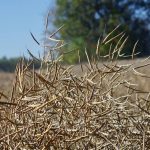
wheat field

Plants may run out of time to grow under climate change

Canada is among the few regions that could see increased production under global warming

A key potential ‘benefit’ of global warming — namely, that plants at northern latitudes will thrive in a warmer world — is challenged by a new study released by University of Hawaii’s scientists. The prevailing assumption ignores the fact that plants in the North will remain limited by solar radiation, curbing positive effects of warming



non GMO sign

Politics and the revenge of the food consumer

The USDA has decided to act on growing pressure and establish a voluntary program 
to label food products with non-GMO content

What was unthinkable a few years ago is now happening. In an unprecedented move, the United States Department of Agriculture has established a voluntary program to label food products with non-GMO content. Non-GMOs already exist in the marketplace, but none of them are sanctioned by the government. At the request of a global food company,

processing fish for caviar

Amidst an oil boom, North Dakota produces premium caviar

There is only a limited number of paddlefish that can be caught per year

North Dakota is known globally not just for prolific oil production, but also, it turns out, for caviar. A distinctly American version of the salty delicacy prized for centuries by Russian czars gets its start each May in the cool waters where the Missouri and Yellowstone rivers converge, the same spot where explorers Lewis and


soil erosion

Human security at risk as depletion of soil accelerates, scientists warn

Change is needed so that valuable, non-renewable fertilizers are recycled

Steadily and alarmingly, humans have been depleting Earth’s soil resources faster than the nutrients can be replenished. If this trajectory does not change, soil erosion, combined with the effects of climate change, will present a huge risk to global food security over the next century, warns a review paper authored by some of the top

Robin on nest

Why do some songbirds warm eggs longer than others?

Birds with a short lifespan put more effort into incubating their young

The amount of care parents provide their young varies greatly across the animal kingdom, particularly among songbird species, who spend anywhere from 20 per cent to nearly 100 per cent of daylight hours warming eggs in their nests. A team of researchers led by Thomas Martin, senior scientist and professor at UM’s Montana Cooperative Wildlife


weeds growing in soil

Glyphosate resistance: Change now or pay later

A USDA-ERS report shows managing glyphosate resistance is more cost effective than ignoring resistance and farmers need to work together

The United States Department of Agriculture Economic Research Service recently published the results of a study into the economics of glyphosate-resistance management on U.S. corn and soybean farms. Through surveys and computer models it determined the relative costs of ignoring the problem versus taking action to address it. The following is an excerpt from that

chalkboard promoting restaurant items

Eat better, live longer and reduce greenhouse gas

British study says ‘minor’ adjustments would include fewer animal products, especially red meat, fewer savoury snacks and more fruit, vegetables and cereals


Eating a more healthy diet could extend the British lifespan, lower health-care costs and reduce greenhouse gas emissions, according to new research led by the London School of Hygiene & Tropical Medicine (LSHTM). The findings are based on two papers. The first, published in Climatic Change, estimates the greenhouse gas emissions associated with current U.K.


tomato being injected with a syringe

The cognitive science behind opposition to GMOs

Anti-GMO messages resonate with human intuitions about meddling with nature

A team of Belgian philosophers and plant biotechnologists has turned to cognitive science to explain why opposition to genetically modified organisms (GMOs) has become so widespread, despite positive contributions GM crops have made to sustainable agriculture. In a paper published April 10 in Trends in Plant Science, they argue that the human mind is highly

soil blowing across a farm field

Editorial: What’s it going to take to stop soil erosion?

Soil erosion still alive and (not) well in Manitoba

You could have mistaken Co-operator reporter Lorraine Stevenson for a coal miner, coated as she was with black dirt, after she ventured out across southern Manitoba during those 70- to 90-kilometre-per-hour winds April 15. But for the modern farm equipment and steel granaries in the background, her photographs of airborne and drifting soil could have