


compost

The importance of composting

Understanding how to make and use compost important as problem of waste disposal continues to grow

Compost is decomposed organic material, such as leaves, grass clippings, and kitchen waste. It provides many essential nutrients for plant growth and therefore is often used as fertilizer. Compost also improves soil structure so that soil can easily hold the correct amount of moisture, nutrients and air. It improves the texture of both clay soils
organic food logo

Federal government pledges $1.2 million to help expand organic farming

Western Economic Diversification funds will help western organic growers compete in lucrative global organic food market

A new program aimed at expanding the number of organic farmers in Western Canada has received $1.2 million from the federal Western Diversification Program (WDP). The cash will be put towards the Prairie Organic Grain Initiative (POGI), a four-year $2.2-million program being rolled out this spring by western Canadian organic associations that also have pledged


healthy groceries, lettuce, cherry tomatoes and vegetables

Editorial: Demand pull nature of organic foods can’t be ignored

The market for organic foods continues to grow in spite of naysayers

Imagine farming in a world in which you could control your production costs, receive a premium for what you produce, and where demand exceeds the supply. That might seem like the impossible dream in a year like this one, when it appears it doesn’t matter what crop a farmer grows, there are very few opportunities

soil

Editorial: They brought in plows?

When a consortium of Canadian non-government organizations funded by the Canadian government arrived in the Benishangul-Gumuz state in Western Ethiopia five years ago, their primary goal was to help smallholder farmers boost productivity and food security. They came in with “modern” farming methods. In this context, that meant oxen and plows, showing farmers how to


man standing on crop research project field

Will it be chess or checkers?

A researcher explores different ways of sustainably playing the farming game

It was standing room only in the University of Manitoba’s Carolyn Sifton Lecture Theatre Jan. 21 for a seminar entitled “Conservation agriculture, organic farming and agro-ecology: the three musketeers of a sustainable food system.” “I try to do this every year because I want to give the graduate students permission to ask tough questions and

truck being filled with grain

Conflicting ideologies cloud debate on farm chemicals

Chemical farmers view the notion that organic is more profitable as just plain wrong

Anti-organic: Why do some farmers resist profitable change? Why do some farmers who use farm chemicals resist a conversion to organic methods even when it can be more profitable? A new study in the Journal of Marketing suggests it may be because making that change feels like switching belief systems. “The ideological map of American


Michelle Carkner is an M.Sc. candidate in the University of Manitoba’s department of plant 
science conducting soybean varietal trials under organic production.  PHOTO: LORRAINE STEVENSON

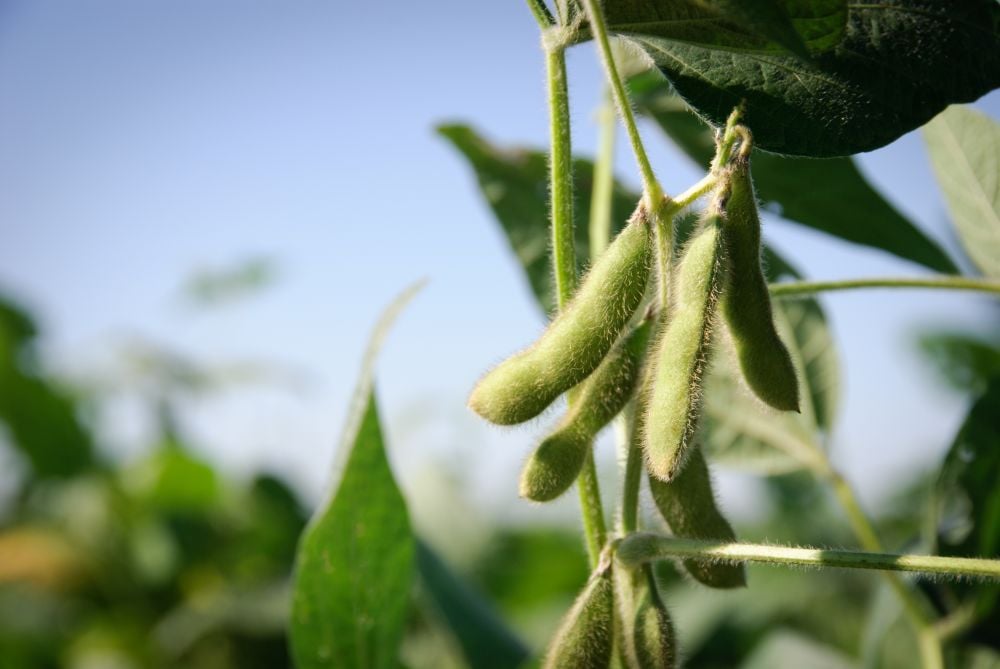
Evaluating soybean varieties for suitability in organic production systems

Organic growers in Manitoba have limited options right now

At $25 a bushel, organic soybeans could be a highly lucrative crop for organic farmers. But right now that market is out of reach for most due to the limited number of varieties suitable for organic production systems. A student researcher at the University of Manitoba is hoping to change that. She is evaluating conventional

Province, city recognize UN International Year of Family Farming

Province, city recognize UN International Year of Family Farming

A flag honouring the family farm was raised at Winnipeg City Hall July 30

Provincial and municipal leaders gathered at Winnipeg’s City Hall July 30 to raise a flag honouring the United Nations declaration of 2014 as the International Year of Family Farming. Manitoba Agriculture, Food and Rural Development Minister Ron Kostyshyn joined Brian Mayes, city councillor for St. Vital, to highlight the significance of family farming on a


Editorial: Who is confused? How consumers view agriculture

Editorial: Who is confused? How consumers view agriculture

The final report to Agriculture and Agri-Food Canada from a series of consumer focus groups it commissioned last year is enlightening, but not because of what it tells us about how domestic customers view this country’s agriculture sector. Rather it speaks volumes about the people asking the questions. The final report “Modern agriculture and agricultural

Conservation not a hippie delusion

Small-scale farmers can implement conservation agriculture and improve soil health 
in developing areas, often by using a mix of science and local knowledge

The damaging effects of tillage on soils is well documented on Europe and North American soils. So why is that approach still being exported to developing nations, proponents of conservation agriculture asked the recent World Conference on Conservation Agriculture. “We’re taking that paradigm to developing countries, so one has to ask, what is actually going