While forest tent caterpillars are high in number this year, they are not a direct a threat to most crops.

Cutworms growing larger, stripe rust detected

Manitoba Insect & Disease summary for June 8

Insects Cutworms are getting larger and have been an issue in some fields. The highest level of damage appears to be in the Northwest, where there has been some reseeding because of cutworm feeding. Flea beetle feeding continues, although foliar use of insecticides for flea beetle management has not been widespread. In many fields plants are now getting to stages more tolerant to feeding by flea beetles. Plant Pathogens Stripe rust has been detected

Canola under pressure from cutworms, flea beetles

Manitoba Insect & Disease Update summary for June 1

Insects Cutworms and flea beetles on canola continue to be the insects of greatest concern. The cool, damp weather from the last few days would have slowed cutworm feeding, and the soil moisture, where not excessive, may help the plants compensate for feeding. Cutworm levels are quite variable, hard to find in some fields, more


Cutworms, flea beetles a concern for canola growers

Cutworms, flea beetles a concern for canola growers

Manitoba Insect & Disease Update for May 25

Insects Cutworms and flea beetles on canola are the insects of greatest concern currently. Seed treatments should still be effective against flea beetles in most canola fields, although scouting for feeding damage is encouraged, especially in the earlier seeded fields where seed treatments may soon start losing effectiveness. Cutworm levels are quite variable, hard to

Bringing out the ‘wild side’ of fruits and veggies

Bringing out the ‘wild side’ of fruits and veggies

It might be a cheaper alternative than developing new methods

The natural ability of plants to fend off pests is falling through the cracks in our modern quest for fruits and vegetables varieties that have larger sizes, better colour and a longer shelf life, researchers with Newcastle University in the U.K. say. A study published recently in the academic journal Agronomy for Sustainable Development said


diamondback moth

Replacing insecticides with sex in pest control

Genetically engineered male moths prevent females from reproducing

Cornell University researchers are combining two biotechnologies to control diamondback moths with sex instead of insecticide. The pesky feeders on crucifer crops, including canola, mustards and vegetables, have developed resistance to many insecticides as well as Bt (Bacillus thuringiensis), a soil bacteria that has been genetically engineered into corn and cotton to help control such

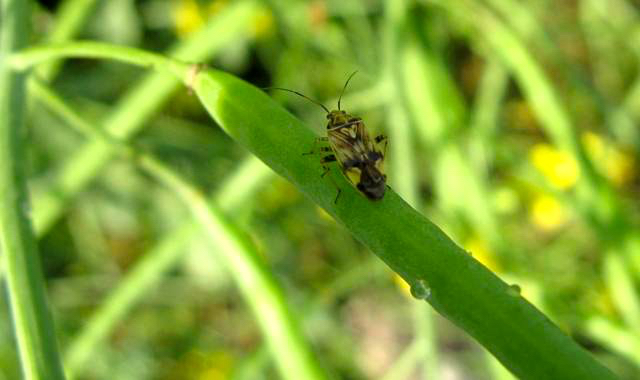
Lygus bug on a canola pod

Fusarium levels low, soybean aphid numbers increasing

Manitoba crop insect and disease update for August 4, 2015

Plant Pathogens: Levels of fusarium head blight are being reported as low in many areas. Increased levels of mycosphaerella are being reported in later seeded field peas in the southwest as a result of the cooler and wetter conditions. Some soybean fields are showing increasing damage due to excess moisture and subsequent root rots. Weather conditions have been conducive for


Genetically modified diamondback moth offers pest control hope

Genetically modified diamondback moth offers pest control hope

The modified moths can mate as well as any other but they only produce male offspring


Scientists in Britain say they have developed a way of genetically modifying and controlling an invasive species of moth that causes serious pest damage to cabbages, kale, canola and other similar crops worldwide. In what they said could be a pesticide-free and environmentally friendly way to control insect pests, the scientists, from the Oxford University

White head from wheat stem maggot (l), and larva of wheat stem maggot.

Manitoba crop insect and disease update

Summary of conditions as of July 28, 2015

Plant Pathogens: At the Crop Diagnostic Lab there are canola plants coming in with blackleg and sclerotinia. Some soybeans have been showing root rot – rhizoctonia and fusarium. Some sunflower fields are showing basal and mid-stalk sclerotinia. Some flax fields are showing pasmo lesions on stem and leaves. Insects: Levels of armyworms are starting to decline in some fields as


Manitoba crop insect and disease update

Manitoba crop insect and disease update

Conditions as of July 21, 2015

Levels of armyworms are starting to decline in some fields as they turn to pupae. Currently, scout for grasshoppers around field edges. In corn, now is the time to be scouting for European corn borer. Also consider scouting for aphids in cereals and pulse crops. Pulse Crops Soybean aphids: Soybean aphids have just started to show up in