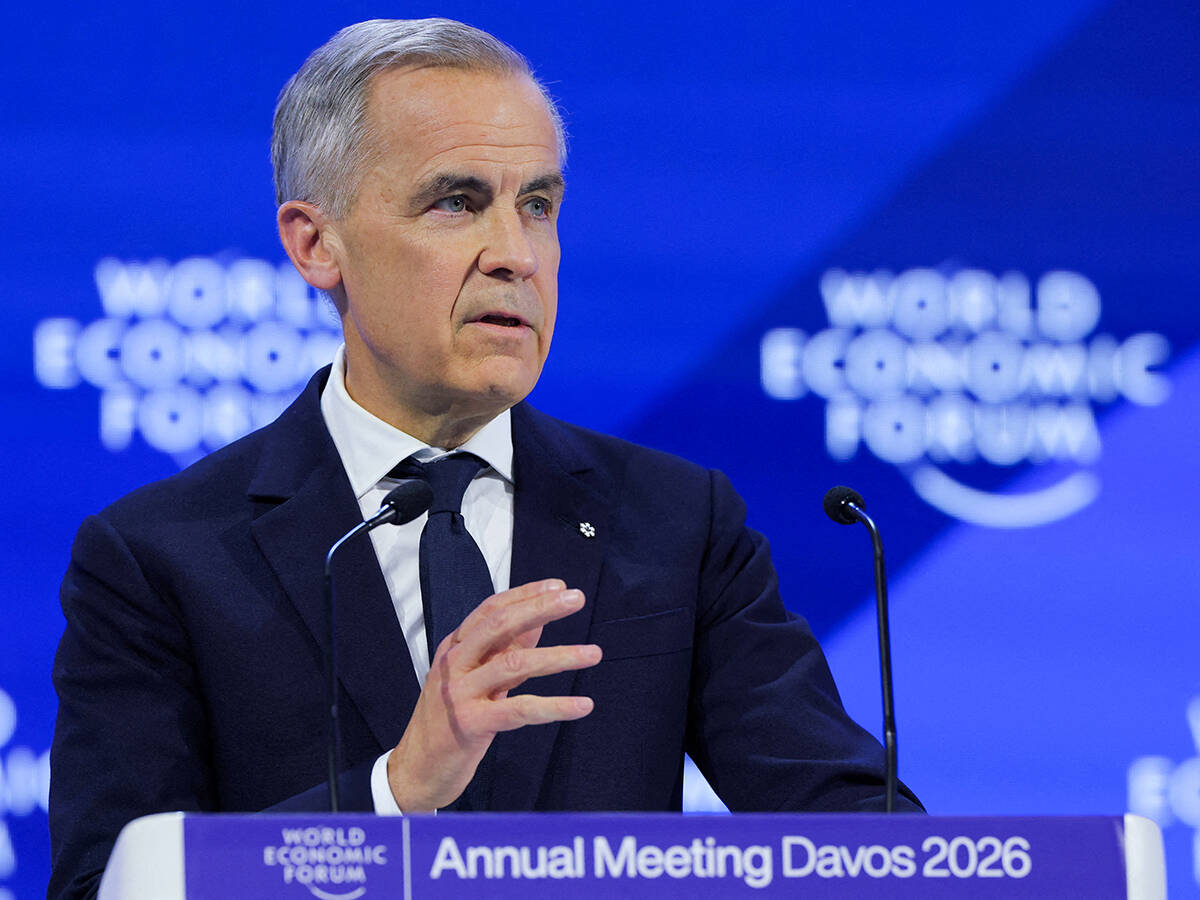
Farmers and industry focused on the tangible deals that emerged after Prime Minister Mark Carney met with People’s Republic of China President Xi Jinping last month.
To be sure, the sought-after relief from crippling tariffs imposed on canola, peas, and seafood — in exchange for reversing Canada’s tariff wall against Chinese electric vehicles — were significant gains for Canadian farmers.
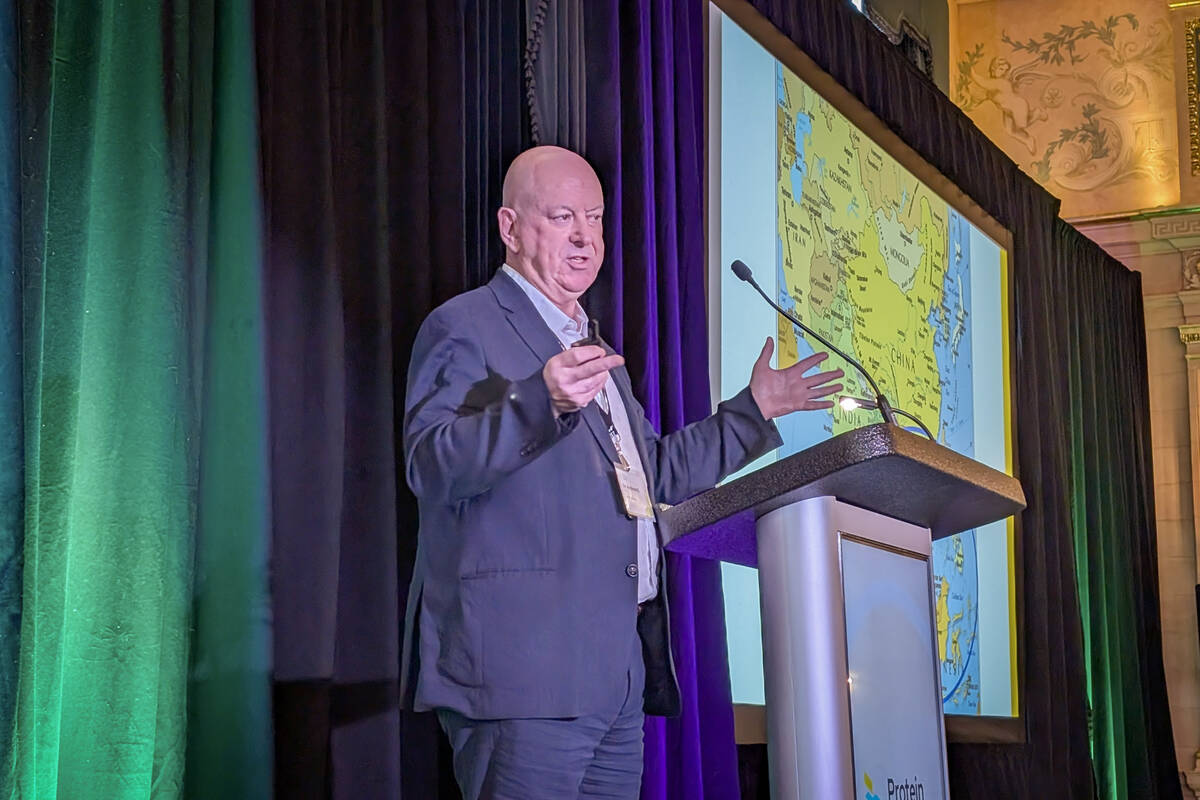
But for Chris White, the Beijing-based president and chief executive officer of the Canadian Meat Advocacy Office (CMAO) the fact that the leaders’ working lunch ran longer than scheduled was equally significant. A scheduled 20-minute meeting last October in South Korea ended after 43 minutes.
Read Also

OPINION: Agriculture needs to lead its own solutions
Cam Dahl argues Canadian agriculture must break out of commodity silos and present united policy solutions to government.
From his vantage point, watching as a steady stream of foreign politicians seek an audience with the Chinese president, meetings that extend beyond the scheduled time “is quite unusual for the Chinese.”
“Not every world leader who has that opportunity to meet with President Xi gets both a working lunch and then (have) that extended,” White told a recent Canadian Agri-Food Policy Institute webinar.
It signifies that Canada is resetting its working relationship with China in line with how the world has changed, which can lead to the type of progress the industry saw last month.
White has been the Canadian meat sector’s boots-on-the-ground in China for less than a year, leading a $577,000 government and industry partnership representing Canadian meat interests in that market. His appointment underscores a growing recognition among industry leaders that having a physical presence in key markets matters — even more so when the relationships are complicated.
The January meeting yielded major gains for the agricultural sector. China agreed to lower tariffs on canola seed from 84 per cent to 15 per cent as of March 1. Also removed are tariffs on canola meal, lobsters, peas and crabs. A ban on imports of Canadian beef, imposed after a BSE case in 2021, will be lifted.
Notably absent from these announcements, however, was relief for the Canada pork sector, which is suffering under 25 per cent tariffs.
White said he wasn’t surprised. His communications with local officials made it clear going in that this meeting would be about settling the tit-for-tat dispute over EVs and canola, and there would be only so much movement on the tariff front. Settling the beef access wasn’t related to the recent tariff wars.
White believes the stage is set for more gains down the road, provided Canada delivers on its promises so far.
“They’ve almost put Canada on probation,” he said. “They are somewhat skeptical that the reset is as significant as we might think it is.”
The Chinese are also watching closely to see what emerges from the Canada-U.S.-Mexico Agreement review, underway this year, and how that might affect Canada’s dealings with China going forward.
Canada isn’t the only trade-dependent economy attempting to strategically navigate political power plays since the second Trump administration took office.
“For every meeting I’ve had in the last year with Chinese officials, they are beyond perplexed as to why the U.S. is treating Canada this way,” he said. “If the U.S. is treating Canada like this … what are they doing to the other countries? And then the key point, what is the leverage that China has with all of these other countries?”
Businesses have always dealt with uncertain times, but this era is different, said Carlo Dade, director of international policy at the University of Calgary’s School of Public Policy.
The notion of “deliberate weaponized uncertainty in trade” surfaced as a tool to advance U.S. interests during the first Trump administration. It has been executed with force during Trump 2.0.
“The issue we face is not the normal uncertainty that we have with business,” Dade said. “We’re seeing systematic uncertainty in global markets, uncertainty as U.S. policy.”
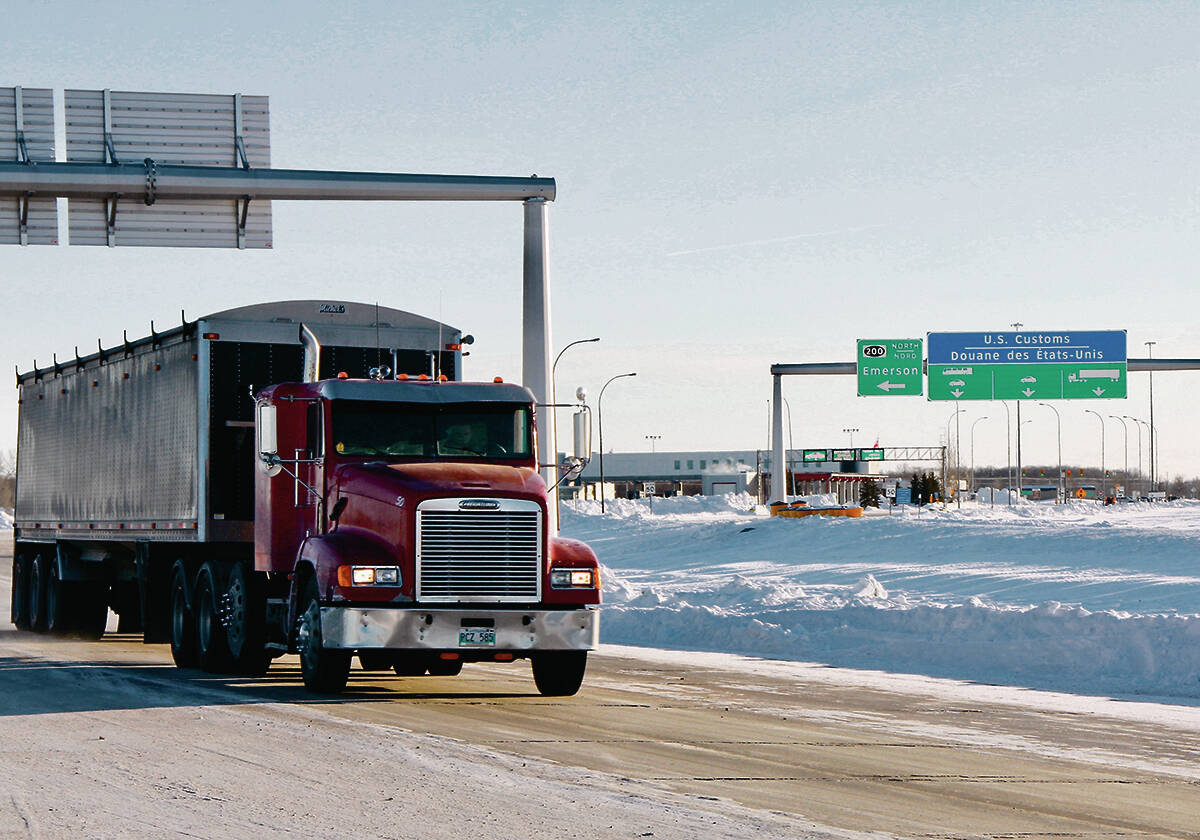
Dade said that uncertainty, which he believes is a generational shift, is going to dramatically increase the cost of exporting.
“Bottom line for business, especially with the U.S., the cost of trade is increasing,” he said.
“The Americans handed us and everyone else an unbelievably great deal — easy, cheap access to the U.S. market,” he added. “That’s come off the table. The Americans are renegotiating.”
He questions whether agriculture is prepared to invest what it takes to build lasting relationships with customers and the infrastructure needed to support emerging supply chains.
Despite the political noise and daily social media announcements about Canada’s troubled relationship with the U.S., Dade noted Canada-U.S. trade has increased over the past year and is currently ahead of the 10-year average.
That’s good news and bad news. Canada can’t completely divorce from its U.S. trading relationship. In this environment though, it also can’t afford to remain utterly reliant.
“There’s so many things that tie us to the U.S. — geography, gravity, sunk cost in infrastructure, sunk cost in supply chains — that the aspirational goals of government don’t match the business reality,” Dade said. “And we’ve got to keep front of mind that business trades, not the government.”
While governments can open the door to increased trade, it’s agribusiness that needs to develop and maintain those markets.
Trade missions or issue-specific delegations aren’t good enough. The value of having a presence in important markets is that it sends a message that those markets are important. There is also the cost associated with ensuring the infrastructure and supply chains are in place to service those customers.
“Time and time again, I see an unwillingness of producers to pay the cost,” Dade said.
He also sees agribusinesses pulling back from collaborative market development efforts rather than leaning in, he said.
“You’re going to have to step up,” he said.