Researchers at Michigan State University crop rotation with legumes and other soil-management practices have increased Malawian crop yields by 50 to 200 per cent compared to monoculture.
Trials at one village have been so successful that children have gained weight and height to the point where they now meet international norms for healthy children.
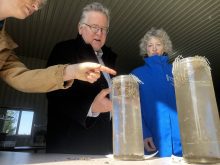
MSU ecologist Sieglinde Snapp described the initiative’s success at the annual meeting of the American Association for the Advancement of Science Feb. 14-18 in Boston.
She said crop model simulations, long-term field trials and on-farm experimentation highlight which combinations of legumes, cereals and soil management are best at using resources efficiently. Rotating corn with pigeon pea mixtures (a shrubby legume) keeps the soil from being stripped of nutrients, such as nitrogen, while increasing nutrient-rich grain productivity.
Read Also

Manitoba, Ottawa sign deal to fast-track projects like Port of Churchill expansion
Manitoba and Ottawa have signed a regulatory streamlining agreement that names the Port of Churchill expansion as a priority infrastructure project.
“Participatory action research combined with access to new seeds of bushy food legumes has helped spread a mantle of green across the countryside and help achieve greater food security,” Snapp said in a release. “There have been notable gains in dietary diversity and increased child health in hundreds of farm communities of Northern Malawi — a truly sustainable project.”
Corn yields increased from 50 to 200 per cent, when comparing rotating crops to monoculture. Soil improvement supported reduced fertilizer use and a 20 per cent improvement in yield stability, supporting communities’ ability to cope with drought.