
Manitoba’s highways need a transport-focused revamp.
That’s according to a delegation of students from the University of Manitoba’s agriculture diploma program. The students pitched a successful resolution during the Keystone Agricultural Producers annual meeting in Winnipeg Feb. 3.
The resolution called on the farm group to lobby government to expand Roads and Transportation Association of Canada (RTAC)-rated roads, particularly in high-production areas where heavy equipment and full loads cannot be moved year-round.
Read Also
Meat sector shrugs at raised cap for rural temporary foreign workers
Federal moves to relax restrictions is unlikely to change much for agriculture or meat processing, where the real ask is permanent residency pathways.
The diploma student group argued that gaps in RTAC-designated routes (which are rated for heavier traffic, even during conditions like the spring melt) increasingly limit farm efficiency, safety and competitiveness.
Bryce Visscher, Carter Driedger, David Pauls, David Wiebe and Francis Sundell made up the delegation.
WHY IT MATTERS: Limited RTAC road access can force longer hauls and partial loads, raising costs and safety risks for Manitoba farmers.
The students cited the yearly headache of seasonal weight restrictions. During that window, when normal hauling corridors are curbed, gaps in RTAC access often force farmers to haul partial loads or take longer routes. That means more fuel cost, more labour time eaten up and even increased safety worries during busy seasons, they argued.
Visscher and Pauls pointed to challenges moving grain and fertilizer during spring weight restrictions, while Driedger said the lack of continuous RTAC routes can mean travelling miles out of the way to reach approved roads. Wiebe described detours caused by weak or restricted bridges that prevent modern seeding and hauling equipment from using direct routes.
North-south routes lacking
Concerns about RTAC access, particularly on north-south routes, are not new. During spring flooding in 2022, the lack of unrestricted north-south corridors in parts of southwestern and central Manitoba forced loaded trucks into long detours, increased shipping costs and, in some cases, temporarily cut off practical access to export markets altogether while east-west routes were closed.
“Between Brandon and Portage, between Highways 1, 2 and 3, there’s nothing for north-south roads,” said Driedger.
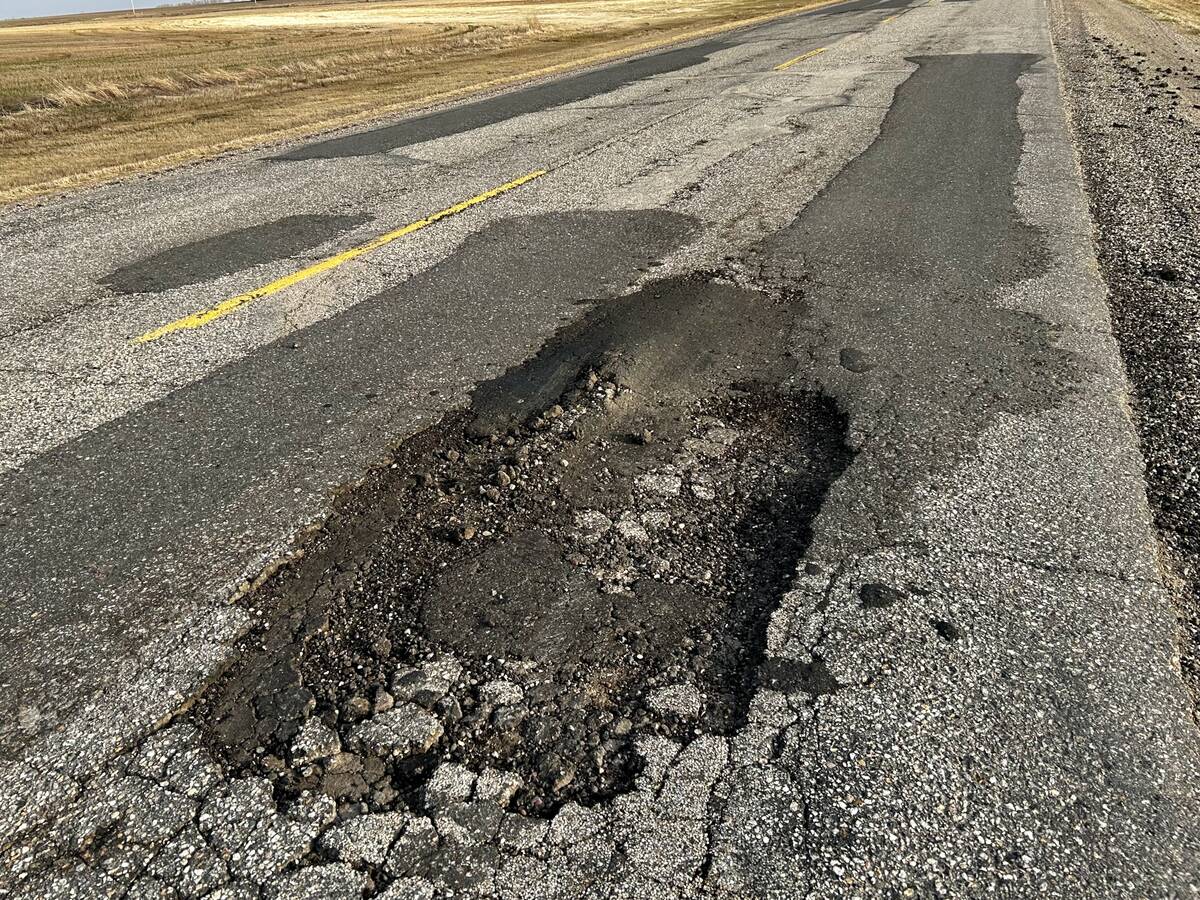
Sundell said the problem will not be solved through one-off repairs or short funding cycles, arguing instead for a long-term infrastructure strategy.
“It’s not going to be one year of funding,” Sundell said. “It’ll be continuous funding to build roads in the future. You’re not going to build four or five RTAC roads in one year in Manitoba. It has to be a long-term plan.”
He added that, while upgrading roads to RTAC standards carries higher upfront costs, ongoing repairs, grading and patchwork maintenance on underbuilt roads can add up over time. Long-term investment is more cost-effective.
During discussion on the floor, delegates noted that Manitoba already has an RTAC network in place, but that gaps remain and that road designation and approved access can be as much a challenge as construction itself.
Speakers also cautioned that, without clear priorities, upgrades may not always occur in the areas most critical to agricultural hauling.
Young voices at KAP
The student presentation aligned with KAP’s broader emphasis on youth engagement and member-driven policy.
KAP leadership has pointed to increased student participation as part of efforts to connect long-term infrastructure and policy challenges with the next generation of producers and agricultural professionals.