To combat high inflation during the 1970s, the federal government had introduced wage and price controls. While they did not apply to farm products directly, Wage and Price Control Board chair Jean-Luc Pepin and vice-chair Beryl Plumptre had indicated they would have a look at the operation of farm marketing boards. Pepin said he “had a hunch” that something was wrong with their operation. In our Oct. 23 issue, Agriculture Minister Eugene Whelan, “obviously disturbed” by the comments, said he was going to discuss the matter with them.
Speaking of inflation, the first full-blooded Salers sale in North America was held in Calgary, bringing $348,000 for two bulls and six heifers. The top bull drew $146,000.
Read Also
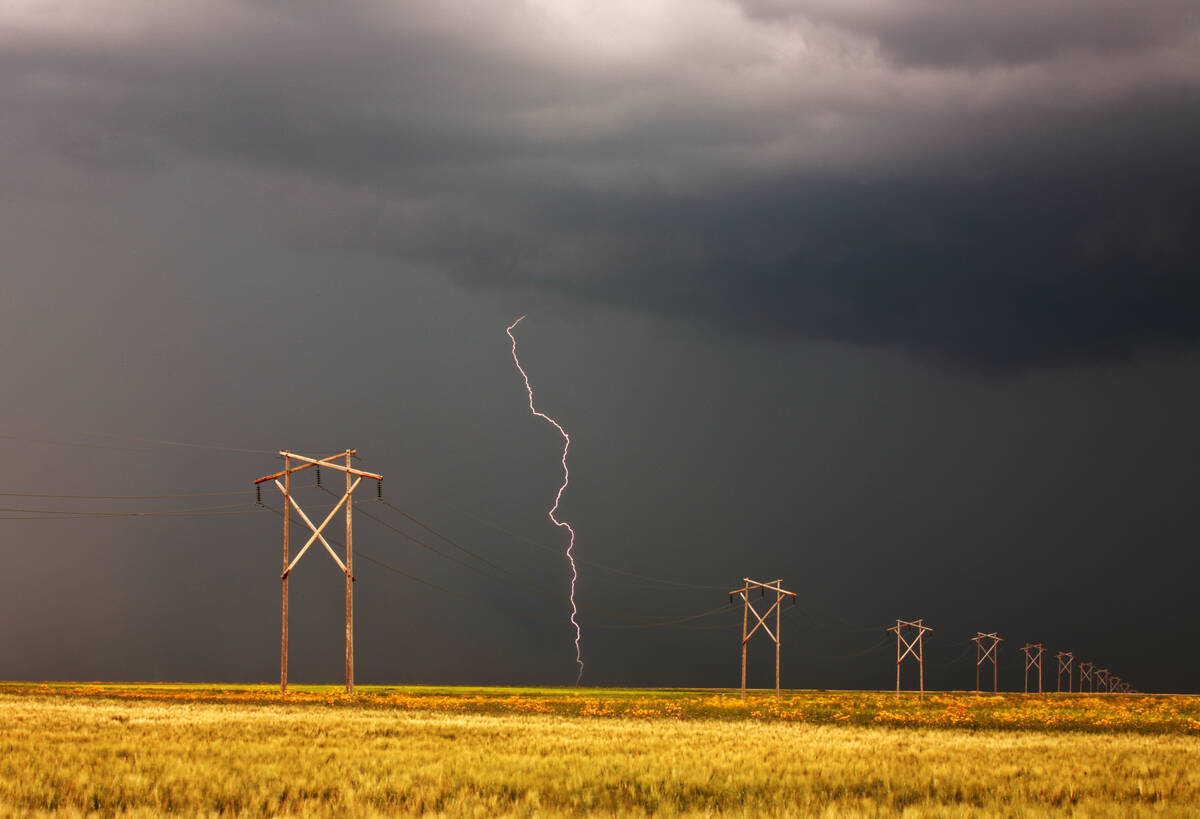
Manitoba Hydro urges farmers to watch for power lines as spring seeding begins
Manitoba Hydro is reminding producers to apply for clearance permits and maintain safe distances from overhead lines before spring seeding.
A commission to examine the viability of Prairie branch lines was underway, headed by former Supreme Court justice Emmett Hall. CN president Robert Bandeen used the occasion to blast the Crow freight rate. Meanwhile CN vice-president A.R. Williams said it would be unrealistic to abandon all the lines into Swan River.
U.S. Agriculture Secretary Earl Butz, probably still smarting from the 1972 “Great Grain Robbery” in which the Soviet Union had cleaned out U.S. wheat supplies, had signed a long-term agreement to sell it six million tonnes. However there was an escape clause if domestic supplies fell below 225 million tonnes.