A new phosphate fertilizer trade corridor is being created to service farmers in Western Canada.
V6 Agronomy and the Port of Johnstown have reactivated a long-dormant section of the St. Lawrence Seaway to create a modern trade corridor connecting western Canadian farmers to eastern Canadian and international markets.
WHY IT MATTERS: Prairie farmers use a lot of phosphate fertilizer.
Read Also
Iran war to disrupt urea and sulphur supplies
For Prairie farmers in need of spring fertilizers, ongoing war in the Middle East will have the biggest impact on urea and sulphur prices, an Argus market analyst says.
V6 is a Canadian developer of compound and specialty fertilizers. The company was founded in 2012 and has been operating an inland fertilizer terminal in Wilcox, Sask., since 2020.
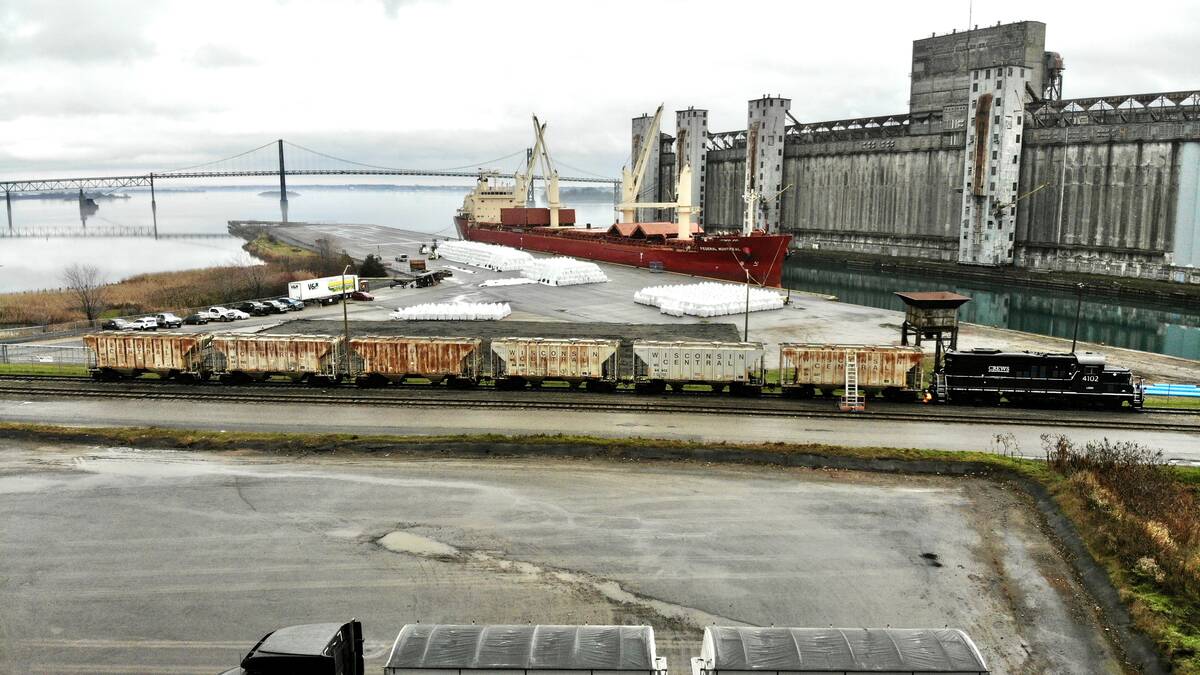
The firm is in the process of building Odyssey Terminal, a new marine fertilizer terminal at the Port of Johnstown, 100 kilometres south of Ottawa on the St. Lawrence Seaway.
The port, which was built in the early 1930s, is owned by the Edwardsburgh Cardinal Township.
It has an old grain terminal that services about 1,200 farms in eastern Ontario. The terminal is busy from the fall until the close of the river in early January.
Phase 1 of the Odyssey Terminal project includes construction of a 20,000-tonne fertilizer storage building that can accommodate a full Handysize bulk carrier vessel.
The terminal will have infrastructure capable of loading 14 rail cars per day that will transport the fertilizer to Western Canada.
The facility will also be capable of loading trucks for the local market.
The engineering work for Phase 1 is complete. Construction will begin in April and is expected to be complete by July 2026.
Phase 2 will add another 50,000 tonnes of storage to accommodate the loading of rail cars all winter. That phase is scheduled for completion in late 2027 or early 2028.
Phase 3 will be a potash export facility to be used by various players in that part of the fertilizer business. It would require “significant investment.” The goal is to complete that phase in 2029.
“That will be kind of a pressure release valve for the existing (potash) supply chain as that market grows as well,” said Ryan Brophy, chief executive officer of V6.
Trade connections
The new corridor will link inbound fertilizer with outbound grain, pulses and other agricultural products through a marine-rail pathway.
In late November 2025, the Federal Montreal arrived at the port, the first bulk vessel carrying fertilizer cargo to dock there in ages.
“This moment marks the renewal of a corridor that has been dormant for nearly three decades,” Brophy said in a December 2025 press release.
“By reactivating this gateway, we are creating a reliable, efficient and globally competitive route that benefits farmers from the Prairies to the Great Lakes. It is a major step forward for Canada’s agricultural sector.”
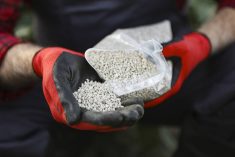
That first shipment was a small trial run containing 3,000 tonnes of the company’s proprietary Eleven Superstart granular compound fertilizer shipped in bags.
Once the terminal is constructed, it will be able to receive, store and distribute a range of products, including enhanced efficiency fertilizers and commercial phosphate fertilizer.
Brophy said an estimated 85 per cent of the phosphate used by Canadian farmers is U.S. produced or sourced product that is barged up the Mississippi River from New Orleans.
V6 will be sourcing its bulk phosphate from Morocco, Egypt and Algeria. The goal is to be receiving 480,000 tonnes of non-U.S. origin phosphate per year by 2029-30.
“We aren’t subject to water levels on the Mississippi River or if a hurricane happens to shut down production in Florida,” he said.
The company will also be importing its Eleven Superstart fertilizer in bulk from manufacturers in the European Union and North Africa. It had been importing that product by container for 10 years.
The fertilizer products will be shipped to distributors at multiple discharge points in Alberta, Saskatchewan and Manitoba.
V6 will also continue shipping its proprietary products direct to farmers.
Outbound phosphate shipments from the port will be paired with return Canadian National Railway loads of pulses, potash, grains and sulphur that will be transported to markets in the European Union, Middle East, North Africa and Asia.
The company is working with Prairie-based grain brokers who purchase crops from Canadian growers.
“Our biggest focus is going to be durum and canola because those are the commodities that are going to best fill full Handysize vessels,” said Brophy.
However, the company will also handle other crops such as flax, pulses and special crops. The port can stuff containers.
“We’re looking to be able to move 100,000 tonnes (of grain) through that elevator,” he said.