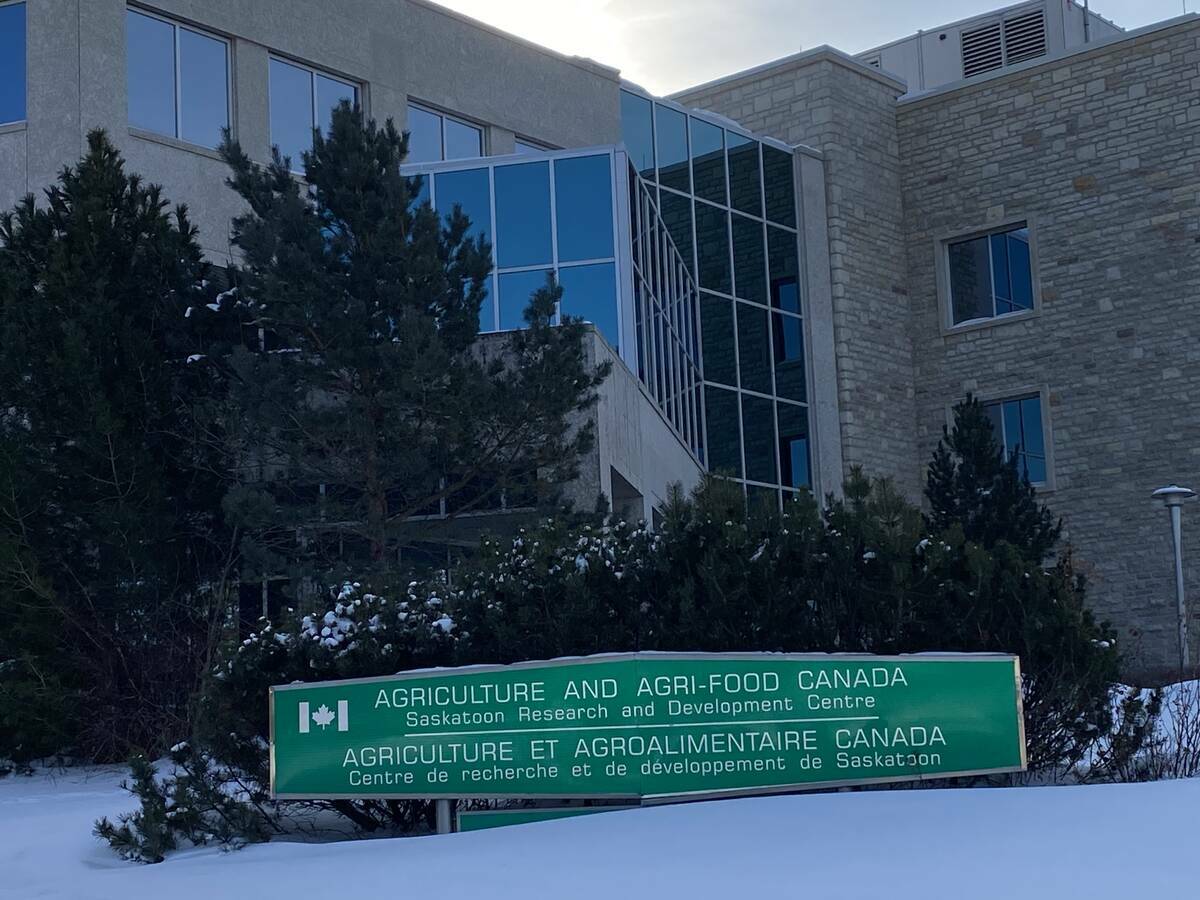
In the next three years, Agriculture and Agri-Food Canada (AAFC) will eliminate about 665 positions.
Most of those job losses, possibly 494, will be in the department’s science and innovation branch.
Those figures come from Agriculture Canada’s 2026-27 departmental plan, which was released in March.
Read Also

In defence of eating oats
Forget any social media fear mongering about oats — Oats are a healthy, nutritious, Prairie-grown option to add more whole grains to your diet.
WHY IT MATTERS: Deep AAFC cuts and closures, including the announced closure of AAFC Portage la Prairie in Manitoba, sparked sharp concern over the future of farm research in Canada earlier this year, although others have said there’s nothing wrong about trimming fat, if there was fat to be trimmed.
The 494 estimate comes from the Agriculture Union, which represents department employees.
Agriculture Canada is planning the following cutbacks, the plan says:
• 2026-27: $112,248,000
• 2027-28: $80,083,097
• 2028-29: $154,721,097
“It is anticipated that these spending reductions will involve a decrease of approximately 665 positions by 2028–29.”
The job losses are part of budgetary reductions at Agriculture Canada announced in late January.
At first glance, it seems like a high percentage of the job losses are directed at the science and innovation branch. The jobs being eliminated include lab/field technicians and the other staff who support the work done at the department’s research centres and farms across Canada.
Milton Dyck, national president of the Agriculture Union, confirmed that the majority of reductions are happening within the science division, but there’s a reason for that.
“Science and technology, by far, it’s the biggest group. It’s the largest holder of people in the branch.”
Therefore, if the federal government wants to cut costs at Agriculture Canada, it must reduce the number of employees working on science, research and innovation.
In 2024-25, Agriculture Canada employed 5,134 full time staff, says the departmental plan. Those people worked in four sectors:
• Domestic and international markets (563 staff).
• Science and innovation (2,621).
• Sector risk (412).
• Internal services (1,538).
By 2028-29, Agriculture Canada plans to have 2,125 people working in science and innovation, a loss of 496.
Most of the affected people will be support staff rather than scientists. The jobs eliminated will include technicians and field staff.
“(By) axing them, you’re ensuring that there’s no more science being done (in specific programs or locations),” Dyck said.
“You get rid of that middle group.… They’re not doctors, but they do a lot of the lab work and technical work and do the work for the scientists.”
As for cutting managers and administration and bureaucratic jobs, a bit of that is happening at Agriculture Canada.
The department plans to reduce the workforce in internal services from 1,465 this year to 1,297 in 2027-28, a loss of 168.
Cuts to international marketing?
The workforce reductions, closures of research stations and termination of other programs will allow Agriculture Canada to trim more than $650 million from its annual budget from 2025-26 to 2027-28.
Of those cuts, about $265 million will come from international and domestic marketing of Canadian agriculture and agri-food products.
Those cuts contrast with comments from Prime Minister Mark Carney, who frequently says Canada must diversify its trade away from the United States.
An Agriculture Canada spokesperson said the $265 million reduction can be attributed to a $131 million decrease in the Dairy Direct Payment Program, the Poultry and Egg On-Farm Investment Program and the Youth Employment and Skills Program.
As well, another $135 million decrease is from the end of Wine Sector Support Program and the Local Food Infrastructure Program, along with planned reductions to the Supply Management Processing Investment Fund.
The spokesperson said the government remains committed to trade diversification.
“The Indo-Pacific Agriculture and Agri-Food Office (IPAAO) was opened in Manila, Philippines, in February 2024 and is a sign of our long-term commitment in the Indo-Pacific, along with the importance we place on building upon Canada’s reputation as a stable and trusted supplier for agriculture, agri-food and seafood products. The IPAAO will continue to operate.”