The first talk of farm groups merging began in 2013 when Halbstadt-area farmer Danny Penner circulated a letter calling on commodity groups to merge nationally to save farmers money.
At the provincial level groups began exploring the idea quietly in 2014 with discussions between staffers at the various organizations.
Some of the interest stemmed from the formation of the Manitoba Wheat and Barley Growers Association. As a new organization it wanted to keep costs down, and in the end it contracted some of its administration to the corn growers. The two agreed later to share a general manager.
Read Also
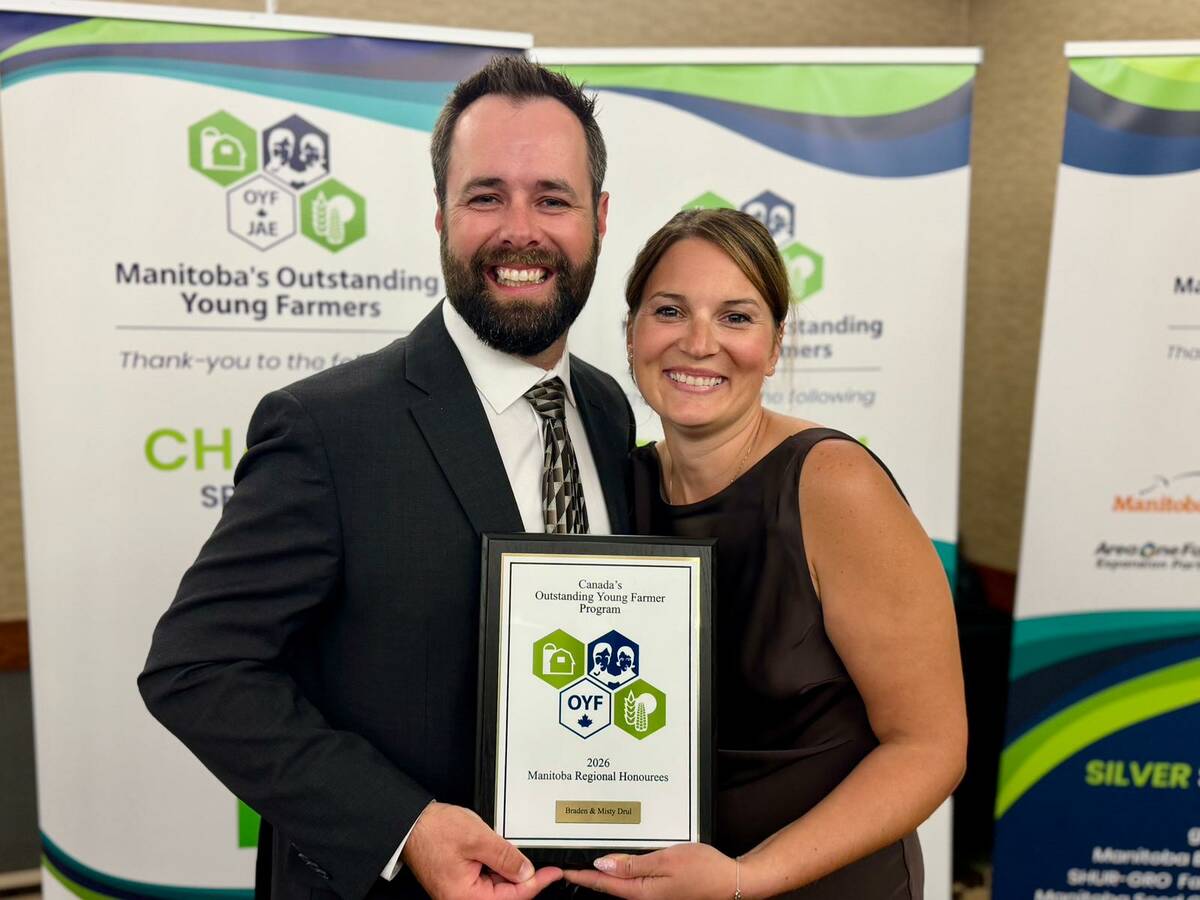
Manitoba’s Outstanding Young Farmers built success through diversification
Braden and Misty Drul of Oakburn, Man., earned Manitoba’s Outstanding Young Farmers 2026 award for building a multi-generational operation through diversification. With land prices rising, they launched an equipment assembly business and Pioneer seed dealership to create revenue streams that support two families.
- Read more: Commodity groups exploring merger
- Read more: Grain Farmers of Ontario an example of commodity group merger
In April 2015 money from Manitoba Agriculture’s Growing Actions program funded a study on the “Operational Challenges of Manitoba Growers’ Associations,” conducted by Scott Wolfe Management. Wheat, barley, corn, pulse crops, soybean, canola and sunflowers were part of the initial discussions.
The project identified common challenges, best practices and opportunities for more formal collaboration. A provincial roundtable was formed and oat, flax and winter cereals joined the discussions bringing the total number of groups to eight.
Interested organizations have met monthly to discuss collaboration, which led to the MOU.
The need for collaboration was raised by several groups at CropConnect in 2016, but leaders tiptoed around the word “merger.”
But at the 2017 CropConnect, merging was openly discussed by Kelly Dobson, a Fairfax-area farmer and consultant hired to consult farmers on the issue.
In part at least some of the smaller groups admit they’re interested in the option because they’re struggling financially as plantings decline and their revenues follow.
It’s obvious from their financial reports some of the smaller commodity groups, such as sunflowers and flax, are struggling as plantings decline and revenue follows.
“The reality is for… small commodities, is if you want to do some useful work you have to make sure that you don’t just spend your whole budget on administering the organization,” flax association president Eric Fridfinnson told reporters Feb. 16 following the association’s annual meeting.
When it comes to mergers, members must not be indifferent, Canadian National Sunflower Association president and Virden farmer Mark McDonald told the association’s annual meeting Feb. 15.
“These are big decisions and they could have large ramifications going forward so we want to be your voice and get across what the grassroots wants,” he said.