

A lot of people want to talk about what kind of stick Manitoba can bring to the fight if the U.S. actually does impose blanket 25 per cent tariffs on Canada. Premier Wab Kinew, meanwhile, says his government is opting for a more measured approach.
“I think the first thing that we’re focused on is this effort to make the case to the incoming administration and to Americans generally that we need to preserve and build on this really great trade relationship that we have right now,” he said.
Kinew’s comments were made to reporters following his Manitoba Ag Days 2025 address in Brandon Jan. 21, one day after U.S. President Donald Trump took office. Trump had initially promised to impose tariffs against both Mexico and Canada right after his inauguration.
Read Also
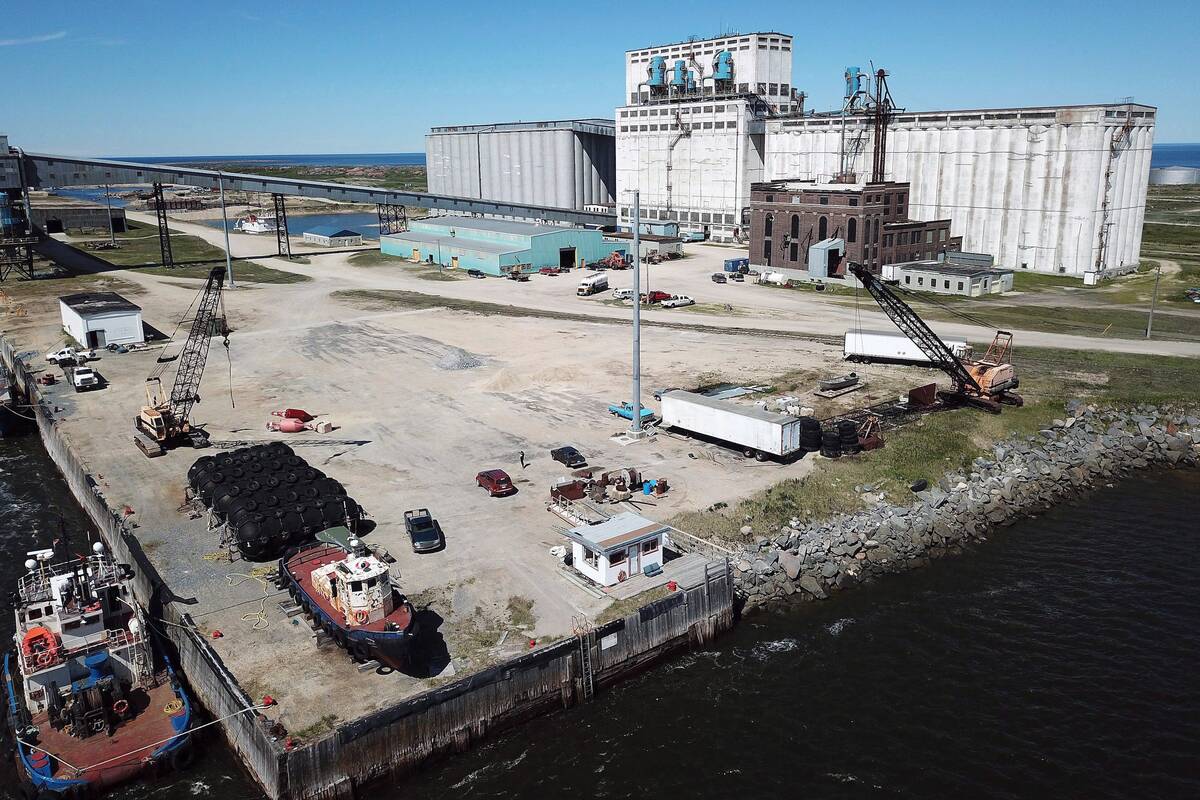
Making way for Port of Churchill expansion
Rail car limits, climate research and marine planning will determine if the Port of Churchill actually can grow beyond its four-month shipping season into year-round trade.
As the day arrived however, reports suggested that timeline would be rolled back. Trump later said those tariffs would come into play Feb. 1.
Why it matters: Trump tariffs were a major topic for speakers and farmer attendees alike during Manitoba Ag Days 2025. The farm show runs Jan. 21-23 at the Keystone Centre in Brandon.
Manitoba won’t be caught flat-footed, Kinew told Ag Days attendees.
In December 2024, Kinew announced a Manitoba trade office based in Washington, D.C. He expects that office to officially open within the next few months.

Manitoba Premier Wab Kinew speaks to farm show attendees after his Manitoba Ag Days address on Jan. 21, 2025, in Brandon. PHOTO: ALEXIS STOCKFORD
Trade missions to the U.S. have been another move since Donald Trump’s November 2024 election win. States with strong existing trade with Manitoba have been a focus.
Previous messaging from the Manitoba government noted states like Wisconsin, North Dakota, Pennsylvania, Illinois, Minnesota, Georgia, Tennessee and Texas. The Manitoba Pork Council, meanwhile, has pointed to their strong relationship with Iowa.
Kinew and Canada’s other premiers are headed back to the U.S. for another trade trip Feb. 12, he added.
“Obviously, there’s a ton of instability at the federal level in our country right now, but I can reassure you that the premiers are stepping up,” he said during his Ag Days address.
During his follow up with reporters, Kinew also referenced “quick responses” being looked at to protect the Manitoba economy should the trade relationship with the U.S. deteriorate or tariffs become reality.
He argued that the focus needs to be on a mix of shorter-term supports for Manitoba business and longer-term preparation for the new economic normal.
“If you look at what’s happening around the world right now, a return to the status quo, of like the NAFTA free trade era of decades past, that’s not going to happen,” he said. “So what we need to do right now in this current environment is to give ourselves the time and the space to prepare our economy here in Manitoba for the way things are going to be in the decades to come.”
Kinew did not offer details of what the provincial quick responses would entail.
RELATED
Speaking to reporters after his address, Kinew said Manitoba’s fortunes at the trade table will be about leverage.
There are things the province has going for it, including the Port of Churchill, he said, adding that the presence of that deep sea port flies under the radar for many Americans.

The U.S. takes more of Manitoba’s agricultural products than any other country. SOURCE: AGRI-FOOD EXPORT PERFORMANCE IN 2023/MANITOBA AGRICULTURE
For agriculture, the stakes are high. Manitoba’s agri-exports were enjoying a growth trend as of the end of 2023. The province posted a whopping $9.39 billion in ag and agri-food exports that year. That export category was growing faster than non-ag exports. Just under half of those ag and agri-food products headed to the U.S.
With the province’s next largest export destination (China) accounting for just under 17 per cent of agri-exports, the U.S. is by far the Manitoba farm sector’s largest trading partner.
Some sectors, such as canola, are expected to take the brunt of any U.S. tariffs. The U.S. is a big buyer of Canadian canola and canola products.
“Lurking in the background is this simple fact: Nobody wins in a trade war between the U.S. and Canada except the Chinese Communist Party,” Kinew told Ag Days attendees.
For more Ag Days news, video and more, stay tuned to our Manitoba Ag Days 2025 landing page. For deeper coverage of threatened U.S. tariffs and Manitoba’s response to them, pick up your next Manitoba Co-operator or go to the Manitoba Co-operator website.