

Keystone Agricultural Producers (KAP) welcomes a new bill currently in front of the Manitoba Legislature as a possible first step toward a meaningful right-to-repair framework for farm equipment.
If passed, Bill 15 would change the province’s Consumer Protection Amendment Act. Suppliers of certain consumer goods would be required to make repair tools, manuals, diagnostic software and replacement parts available to buyers, for a reasonable period and price, according to the bill’s wording on the Legislative Assembly of Manitoba website.
That could spill into farm machinery, although the specific scope of the legislation is not yet clear.
WHY IT MATTERS: Farmers have long held the line on right-to-repair, arguing that they must be able to fix their own equipment rather than constantly relying on costly technician visits. The issue has become more heated as farm technology has gotten more sophisticated.
Suppliers could require confidentiality agreements where trade secrets or proprietary information are involved, according to the bill, but they could not charge excessive fees for providing repair information. The act also allows regulations to designate which goods are covered and under what circumstances.
Read Also
From farm gate to Grade 4: CALM celebrates 15 years in Manitoba classrooms
Canadian Agriculture Literacy Month marks its 15th year with 159 volunteers visiting 436 Manitoba classrooms to connect students with agriculture.

Farming welcome
The farm community broadly supports the move, said Jake Ayre, a farmer near Brandon, Man., and KAP vice-president.
“All of us as farmers … want to have the ability to repair our farm equipment, absolutely,” Ayre said.
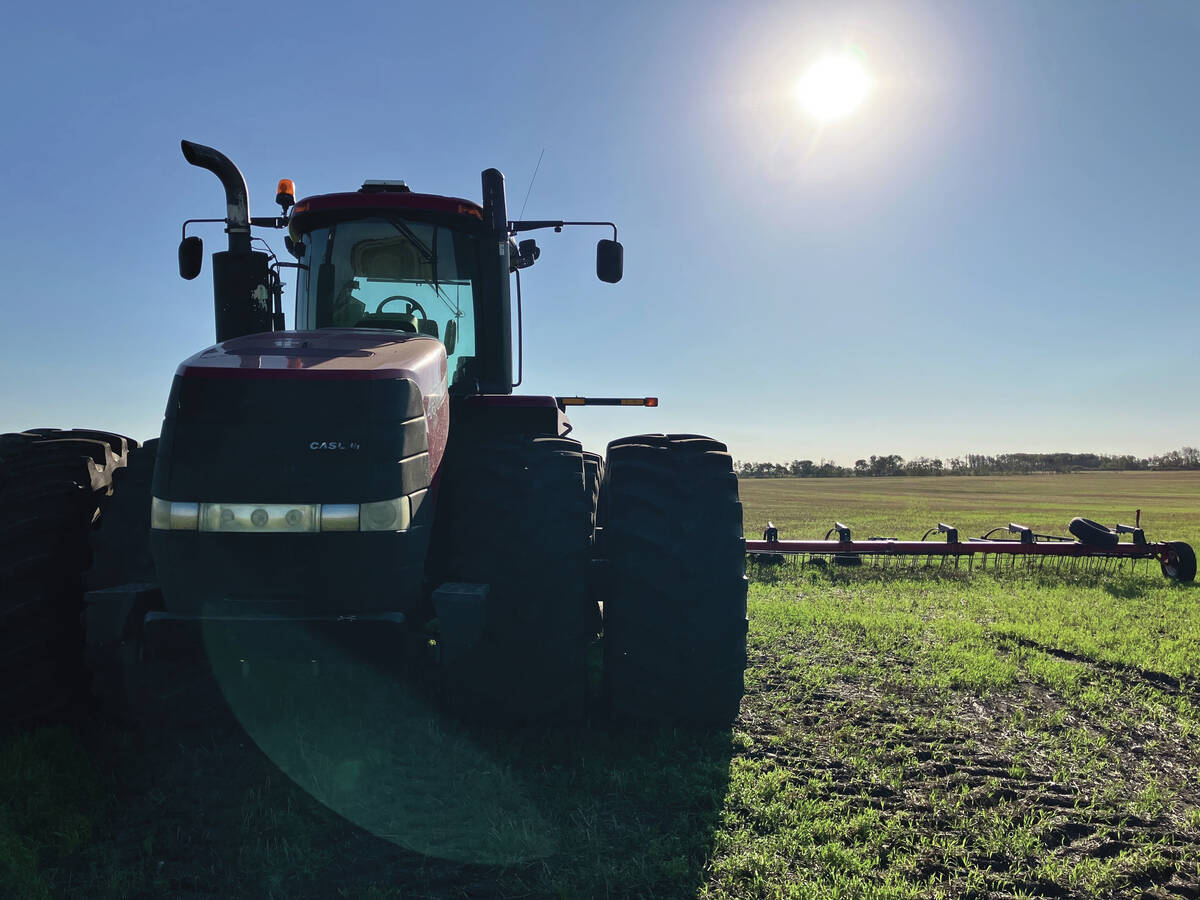
Modern agricultural machinery, increasingly driven by electronics and sensors and fit with digital connectivity, has made self-repair more difficult, Ayre said. Farmers now deal with complexities, like one sensor not talking to another or voltage issues, much different than decades past.
“Previously, it was, ‘OK, well, you know, the bearing’s cooked or a belt’s gone,’ it’s much more physical, tangible things you can see,” Ayre said.
Outside agriculture
The auto sector has also praised the bill. Speedy Glass and Belron Canada issued a press release March 11 applauding the legislation.
“Right to repair is about empowering consumers with choice while strengthening the communities where we live and work,” said Corinne Lagueux, vice-president of corporate and legal affairs at Belron Canada.
Delays and access key concerns
Today’s machines often have producers needing to call up dealerships and bring in authorized technicians to diagnose issues.
“Unless you have a dealership close by or have a relationship, it can be tough to diagnose that problem on your own,” Ayre said, adding that delays can be costly, particularly during planting or harvest.
Access for independent repair shops, particularly in remote areas with limited dealership support, will be key, he added.
“Just being able to have access to the resources and information readily … improves competition in the marketplace.”

Ayre expects the legislation could influence neighbouring provinces as well.
The issue has already come up nationally on Parliament Hill. In fall 2024, Ottawa passed two right-to-repair bills: one which softened rules around accessing diagnostic software and one that eased copyright law to help push interoperability. This January also saw Manitoba commit $25,000 to help the Prairie Agricultural Machinery Institute to improve interoperability across different brands.
“Other provinces are definitely pushing too, especially … Saskatchewan, where … the nearest dealership can be two, three hours away, depending on where you are,” he said.
Key Takeaways
- Legislative Shift: Bill 15 proposes changes to the Consumer Protection Amendment Act to include “certain consumer goods.”
- Access to Tech: The bill would require suppliers to provide repair manuals, diagnostic software, and parts at a reasonable price.
- KAP Support: Farmers advocate for the bill to avoid expensive technician visits and long downtimes during critical windows.
- Software vs. Iron: Modern repairs often involve electronics and sensors rather than just physical mechanical failures.
- National Context: This move follows federal efforts in late 2024 to ease copyright laws around diagnostic software.