The Manitoba government has promised less red tape — including how the Keystone Agricultural Producers (KAP) collects membership fees.
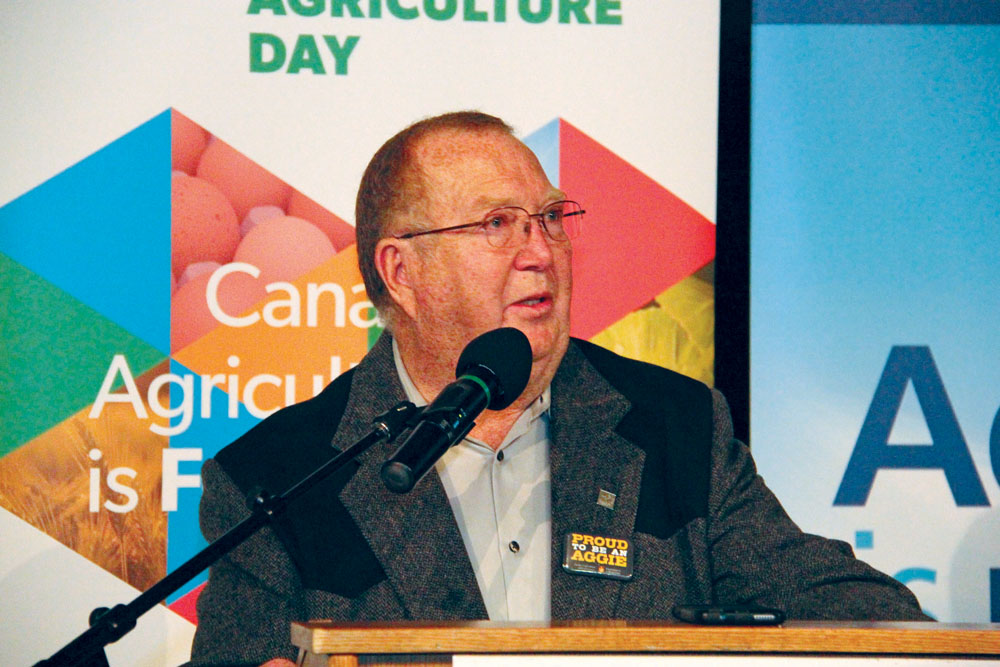
“The current funding structure creates needless and excessive administration costs for farmers and KAP and purchasers of agricultural products,” Agriculture Minister Ralph Eichler said while speaking at Ag Days Jan. 17. “A review of the system is something that the industry has been requesting for a long time. This government is committed to doing just that. Consultations will begin immediately on how to implement those changes to what the government considers a more efficient alternative system.”
KAP, which has long complained the current legislated, but refundable, membership checkoff is flawed, welcomed the news.
“There is an enormous administrative headache associated with our existing membership checkoff program,” KAP general manager James Battershill said in a telephone interview.
Meanwhile, the National Farmers Union (NFU) wants the same access to stable funding as KAP. However, under the current Agricultural Producers Funding Act, stable funding legislation applies to just one general farm organization (GFO). That is, and has been KAP, since the act came into force in 1988 — four years after KAP was founded.
The designation, which GFOs apply for from the government-appointed Farm Products Marketing Council, runs for two years at a time.
The NFU is also a GFO, it said in a Jan. 18 news release.
Manitoba’s checkoff model is cumbersome and not free of corporate influence, the NFU said.
“Most costly of all is the inability of a diversity of farm voices to be fairly supported by Manitoba’s current stable funding model. There is no choice of voice.”
There’s stable funding for various GFOs in Ontario, Prince Edward Island and New Brunswick, the NFU said.
Read Also
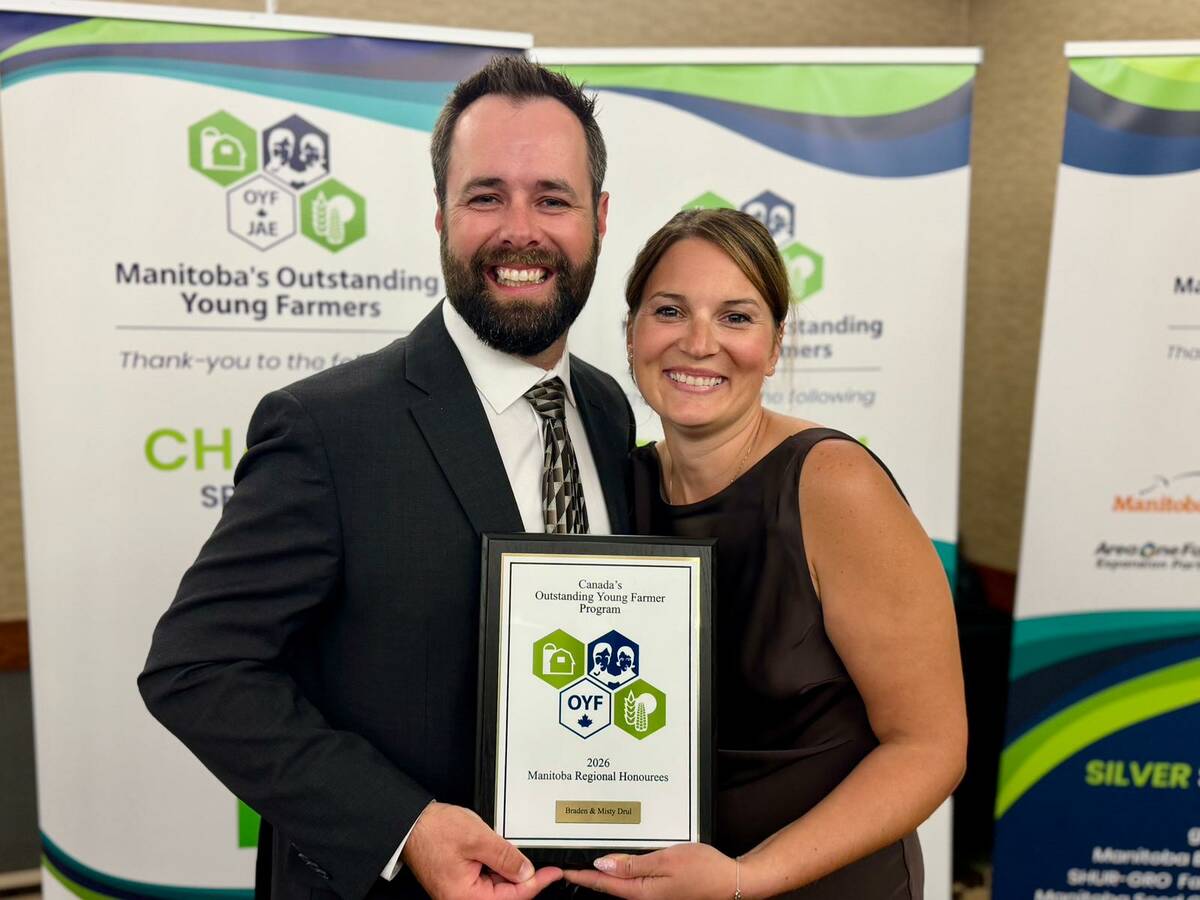
Manitoba’s Outstanding Young Farmers built success through diversification
Braden and Misty Drul of Oakburn, Man., earned Manitoba’s Outstanding Young Farmers 2026 award for building a multi-generational operation through diversification. With land prices rising, they launched an equipment assembly business and Pioneer seed dealership to create revenue streams that support two families.
“Some farmers belong to more than one GFO and the Manitoba government should allow for this option.”
It’s too early to comment on specific legislative changes, Eichler said in an email Jan. 19 when asked about the NFU’s request.
“However, our announcement on Jan. 17 was a commitment to work specifically with KAP on reviewing the checkoff funding structure under the Agricultural Producers Funding Act,” he wrote.
Unlike most commodity groups, also governed by the funding act, KAP’s annual membership is capped at $210 (including GST). Designated buyers — mainly elevators, processors and feed mills — are legally obliged to deduct at the point of sale agricultural products 0.75 per cent of the gross selling price and remit the money to KAP.
Farmers have to sell $28,000 worth of product before KAP collects $210.
Nevertheless, some buyers refuse to collect checkoff, Battershill said. Some collect the checkoff on farmers who pay KAP memberships by cheque up front and some keep collecting after hitting the cap.
KAP is obliged to refund to farmers all the money collected if it doesn’t reach the $210 cap.
“For every dollar farmers are paying to KAP through this checkoff system 40 cents has to go back out unfortunately,” Battershill said. “It’s not because of opt-outs, it is because of overpayments of memberships unfortunately. The purchasers are quite frustrated as well.
“There is no way for us to improve it significantly. We have worked with them (buyers) over the past two years to try and find solutions to these challenges, but unfortunately it is just a poorly designed system for an organization structured like ours.”
KAP has looked at other options, including programs in British Columbia and the Maritimes tying membership fee payments to government services.
“It is essentially a reverse onus system,” Battershill said. “Producers are responsible to pay up front into those provinces’ general farm organizations, in order to be eligible for certain benefits and to be able to access some programming.”
Usually there’s a refund system for those who want to opt out, he added.
“It is essentially a way of proving that you are an active farmer by participating in your industry group to qualify for some of the benefits that government programming offers.”
For example, farmers might have to pay up before being eligible to use coloured (cheaper) fuel or to get certain farm tax deductions.
If farmers paid KAP membership fees directly KAP expects it would earn more, farmers and buyers would be less frustrated and KAP would save time and money.
“We have an audit fee that is higher than it needs to be by about $3,000 related to the amount of time our auditor needs to go through our purchasing records,” Battershill said.
KAP’s database and banking fees are all higher too.
“In 2015 we spent just over $3,500 on postage and the majority of that was refunding money to members.”
Farmers’ money can be better spent on their policy issues, he said.
Battershill said he isn’t sure whether KAP’s funding system can be changed through regulation or if it requires legislation. Either way the timeline is up to Eichler, he added. Battershill hopes an improved system is ready for KAP’s next fiscal year starting Dec. 1, 2017.
Despite the checkoff’s shortcomings, KAP’s membership is relatively high currently, at 4,650, Battershill said. He believes that represents a significant portion of Manitoba’s active farmers, which have been declining in number as farms get bigger.
KAP estimates every paid member, on average, represents another half through partnerships and incorporated farms. If so, KAP says that’s almost 7,000 farmers. Industry observers estimate there are about 10,000 farmers in Manitoba.
KAP membership peaked in 1997 at 7,500, but there were 26,000 “census” farmers in the province in 1996.