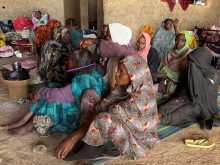
Apersistent dry spell and an army worm outbreak in Malawi have destroyed about 35,000 hectares of crops, threatening the food security of 123,000 families so far, a senior government official said Jan. 18.
Army worms have attacked nine districts and destroyed 5,000 hectares of crops, while 30,000 hectares of maize have been damaged due to the dry spell, information gathered from the country’s eight Agr icul ture Development Divisions showed.
“The army worm situation is now under control and in some areas people have replanted,” Andrew Daudi, principal secretary in the Ministry of Agriculture said.
Read Also
Meat sector shrugs at raised cap for rural temporary foreign workers
Federal moves to relax restrictions is unlikely to change much for agriculture or meat processing, where the real ask is permanent residency pathways.
Army worms, which can grow to around five centimetres (two inches) in length, are moth caterpillars and when present in large numbers can destroy swathes of vegetation and crops.
The Farmers Union of Malawi (FUM) said hunger was looming in the poor southern African country. It called on the government to act urgently.
“There are signs of widespread hunger because of the dry spell and the damage caused by army worms,” FUM president Abel Banda told Reuters.
“When Parliament meets next week, this issue should be top of the agenda because the crop is not good out there.”
In recent years, Malawi has enjoyed bumper harvests following the introduction of a fertilizer and seed subsidy program.
The country harvested a hefty 1.3-million-tonne maize crop last year, its fifth consecutive surplus of the staple.
An El Nińo weather pattern developing in the Pacific Ocean was expected to bring drought to much of southern Africa starting last year, hitting crop and livestock production and damaging wider economies.
Experts said long-range forecasts suggested South Africa, Lesotho, Swaziland, Zimbabwe, Botswana, Namibia, and most parts of Mozambique, Malawi, Zambia and the southern half of Angola would have below-average rainfall in the summer rainy season, which runs from October to March.
El Nińo, meaning “little boy” in Spanish, is driven by an abnormal warming of the eastern Pacific Ocean, and creates havoc in weather patterns across the Asia-Pacific region and beyond.