
Farmers are learning that environmental stewardship can pay dividends.
During a recent field day, the Seine Rat River Watershed District highlighted two of the four projects in which farmers were able to take advantage of Alternative Land Use Services Canada (ALUS) funding to incentivize environmental upgrades to their land.
The district entered a partnership with ALUS in 2019, but the funding expanded to include the option of regular payments to farmers in some cases.
Read Also
Who pays for plant breeding? A renewed push for farmer levies
With fed support on the decline, grain sector faces tough choice: pay more out-of-pocket or fall behind global competitors.
“Prior to 2021, we couldn’t give an annual payment as a supplement to a project,” says district manager Joey Pankiw. “We would just be paying for the establishment costs, and then the land would be taken out of production, and the farmer wouldn’t get any compensation.”
However, in 2021, the funding arrangement was amended so farmers could receive annual payments, which has helped encourage program uptake.
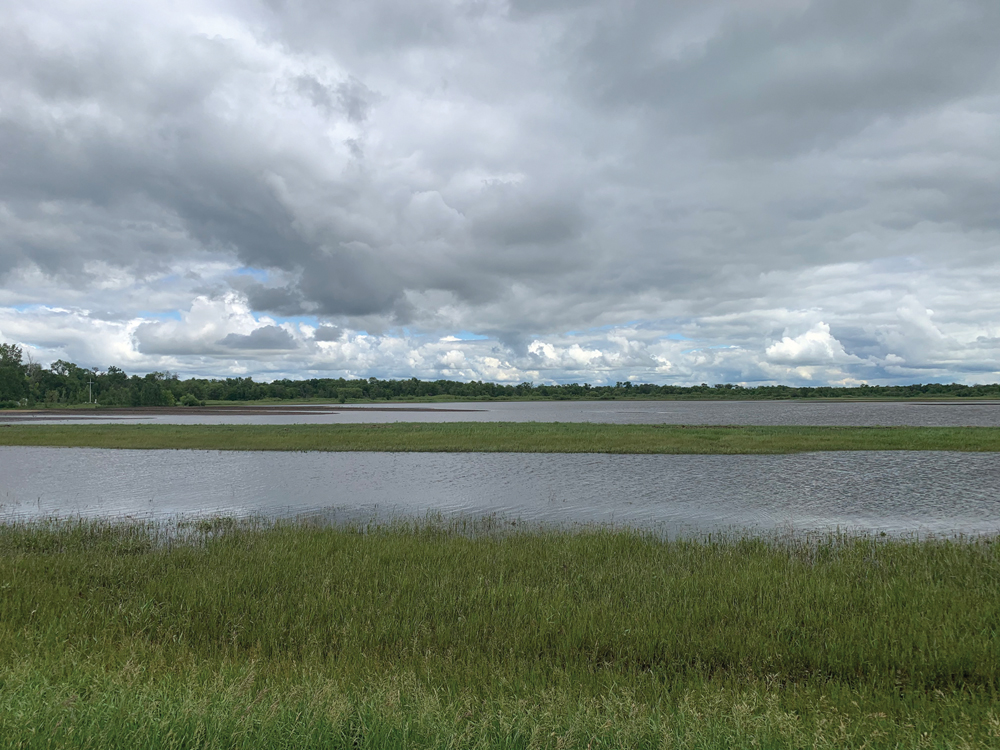
“We didn’t have that many projects in the Red River Valley, but now we’re able to help producers out with some of that more marginal land that they have,” said Pankiw. “It’s been a real boost to us to get different areas of the watershed district involved.”
The first of the ALUS-funded projects highlighted on the field tour was on land owned by Ron Vermette, who farms along the Rat River in the RM of De Salaberry.
Vermette signed up to participate in the watershed district’s field erosion control program. He had a drain going across his land that had become severely eroded. To address the issue, the drain was regraded and a control structure built at the outlet end of the drain.
The upgrades will slow the flow of water down the drain, reducing the possibility of gully erosion. Vermette has committed to planting perennial grasses along the drain. This quarter-mile stretch will reduce soil erosion and siltation along the waterway.
Vermette says he is pleased that his work with the district will solve his drain issue while also contributing environmental benefits such as nutrient and sediment reduction in waterways downstream of his drain. He will be eligible for ALUS funding once he has planted the perennial grasses.
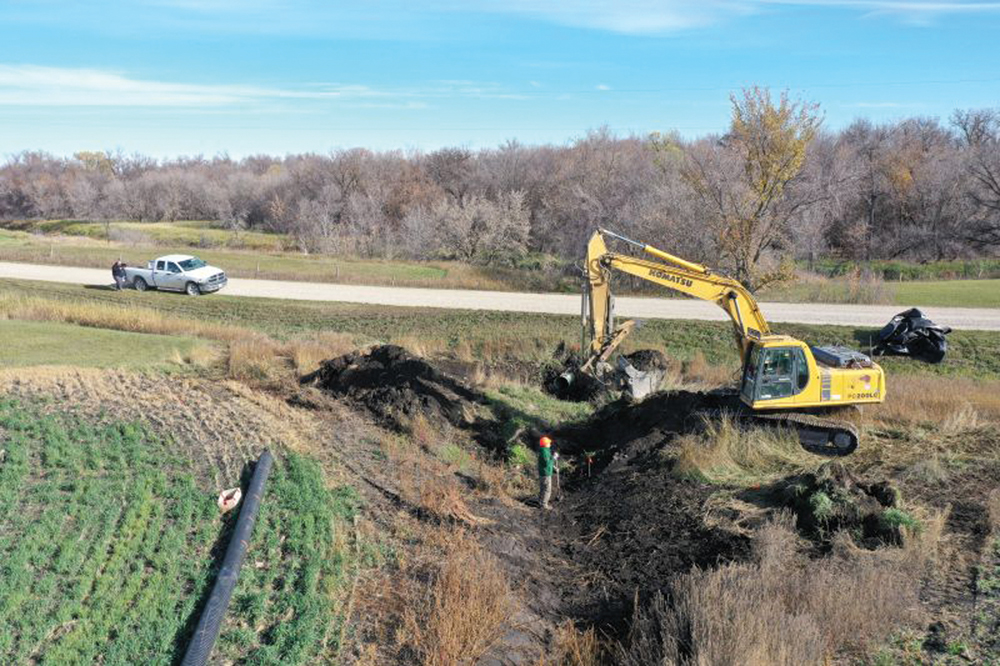
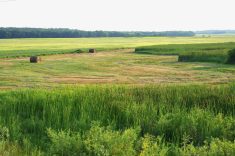
The second ALUS-funded project is sandwiched between the Rat River and the St. Malo Canal on land owned by Martial Gosselin.
The land was highly susceptible to flooding during high-water events, and flood water would remain on the field for two to three weeks. As a result, Gosselin would lose a large portion of his crop every few years.
But even with periodic flooding, the land was productive in most years, so it wasn’t an easy decision to switch the area to perennial grass and allow the land to act as a flood plain.
An annual payment from the watershed district sweetened the pot enough to make Gosselin pull the trigger on the project.
A mixture of lowland grasses were planted to help stabilize the soil and capture nutrient runoff. Grass is either cut and baled, or flash grazed once a year for nutrient removal. Grass is removed after mid-July to protect wildlife and pollinator habitats found within the buffer.
In addition to his annual payments, Gosselin benefits from reduced input costs, reduced nitrogen loss, income from grazing or baling and easier land management.
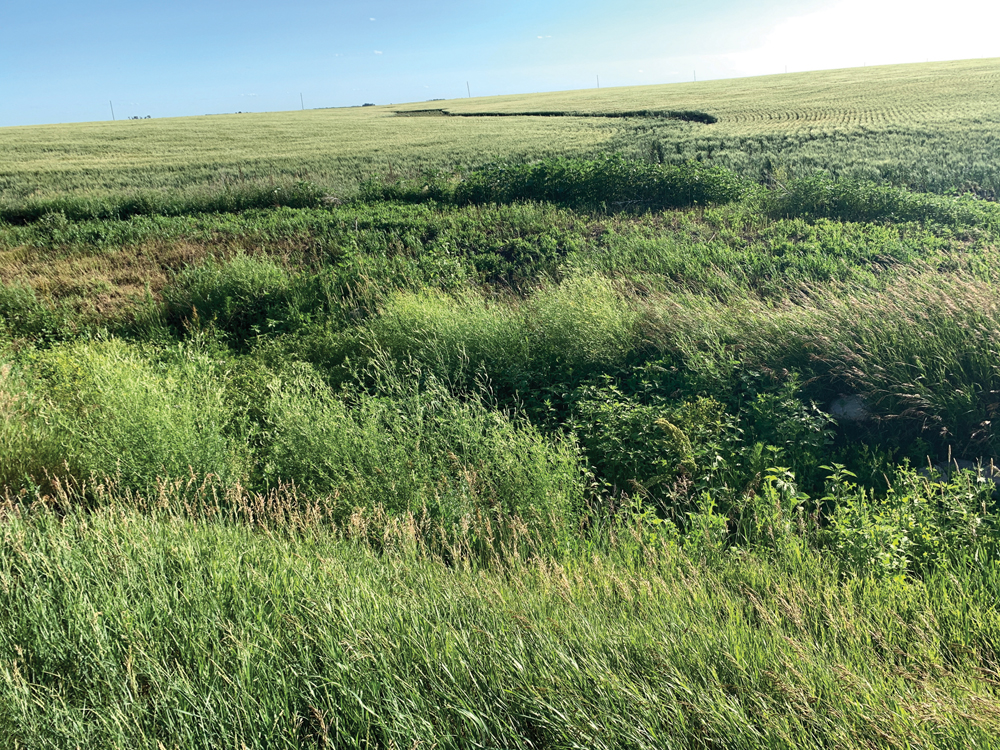
Projects eligible for ALUS funding fall into three categories: the transitioning of low-lying or flood-prone cultivated land to perennial grasses, like the Gosselin project; field erosion control, like the Vermette project; and water retention projects.
The annual payment for water retention projects is based on compensation for areas that will be back-flooded because of the water retention structure.
Pankiw says the ability to compensate farmers has been effective in getting buy-in from farmers.
“I don’t think many people would sign up if there wasn’t that payment, especially in terms of transitioning low-lying areas to perennials.”
He notes that many perennial grass projects are similar to the Gosselin project, in that it’s possible to get a crop from the land in some years, over the course of the 10-year contract for ALUS funding.
“The annual payment kind of takes all that risk away now, and it kind of just levels it out, so you get that consistent income from the property,” says Pankiw.