
Experts are calling for environmental targets to better position Canada in markets at home and abroad.
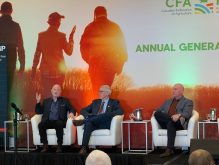
Agri-Food Sustainability Targets is a report authored by David McInnes, who is working with Agriculture and Agri-Food Canada (AAFC), the Canadian Federation of Agriculture (CFA) and others.
“What’s happening globally and nationally is that there is a wholesale shift to better benchmarking performance across the sector, whether it’s on environmental sustainability, or food safety, or in any number of areas,” said McInnes.
At the same time, there is an effort across the world to meet other benchmarks, like the United Nations’ Sustainable Development goals, or the commitments of the Paris Accord.
Read Also
PHOTOS: Farming in focus at Royal Manitoba Winter Fair
The 2026 Royal Manitoba Winter Fair once again brought farm education, thrilling horse sports and livestock events to Brandon.
“There is a major shift taking place to assess performance and be transparent,” he said.
That shift is forcing McInnes and his partners to identify benchmarks and metrics to demonstrate how Canada’s agri-food industry is sustainable, or helping meet international commitments.
“How do we truly know we are being sustainable? Or are delivering the highest, most safe and sustainably produced food?” said McInnes.
To that end, McInnes and the project’s partners are calling for a consolidated picture to express Canada’s agri-food leadership.
“This builds on, or should build on, the efforts being taken at the commodity, sector and company levels across Canada,” he said. “But the question is, how do you roll this up for a consolidated view, so that we can defend our interests in global markets… ?”
The challenge now is to find out how best to roll up all the pre-existing efforts and metrics into a consolidated view of performance across all sectors of Canadian agriculture.
“Our process is not going to come up with the final decision with all the detail on individual indicators or metrics that we’ll be working with,” said McInnes, noting wading into that world is a complex landscape that’s rapidly changing. “But we do need to point the way.”
McInnes contends that “if we don’t measure ourselves, we will be measured” by someone else, and by trying to adopt metrics to be used in Canada, other countries may follow suit.
The expectation is to complete the next phase of the work by early 2021.