The number of cattle going through Manitoba cattle auction sites continued to increase during the week ended Feb. 1.
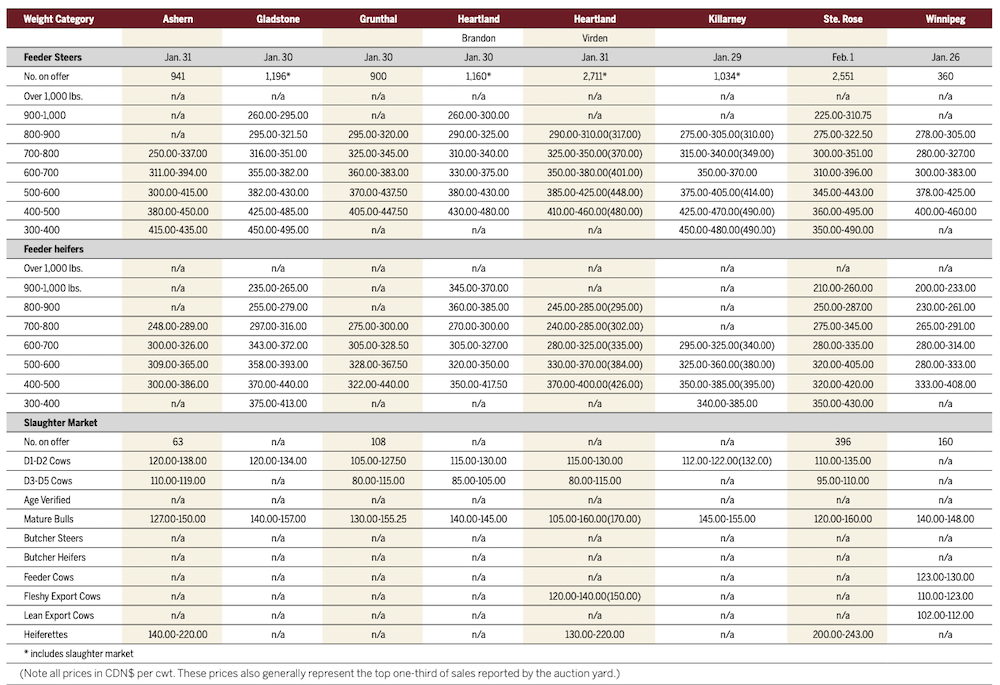
Two weeks after frigid temperatures kept many buyers and sellers at home, warmer-than-normal temperatures to end January attracted more than 1,000 animals to the weekly sales at every site except Winnipeg Livestock Sales. In total, 11,580 cattle were sold during the week.
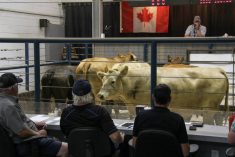
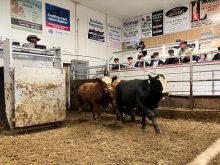
Heartland Livestock Sales (HLS) in Virden saw 2,711 cattle at auction Jan. 31, compared to 1,620 one week earlier. Brennin Jack, HLS Virden general manager, said it was a welcome sight to see so many cattle at a sale early in the year.
Read Also
Calves in the feedlot: Feed additives to beat out coccidiosis
Adding ionophores to the calf feed ration can prevent cattle disease like coccidiosis and improve digestive efficiency in Canadian feeder calves.
“I think with the lack of numbers around, it’s very important for consignors to get their cattle into these larger sales,” he added. “You can tell by the prices that we achieved (the sale) was extremely strong. They were stronger than what we’ve seen (recently).”
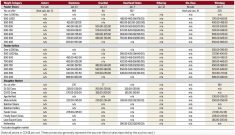
The highest prices for steers at each site ranged from $447.50 to $490 per hundredweight, compared to $437 to $470/cwt. during the previous week. High prices for heifers were from $386 to $440/cwt., higher than the $364 to $393 range from one week earlier. D1 and D2 slaughter cows ranged from $105 to $138/cwt., not much changed from the previous week’s range of $105 to $134.
“Anything under 700 (pounds) was very, very active. These little (400- to 500-lb.) calves are bringing in almost as many dollars as the (600-lb. calves). There is huge demand for the lighter cattle,” Jack said.
Warmer temperatures brought more cattle to auction, but there were drawbacks.
“It creates some issues in pens with some mud and some breakup that we don’t often see this time of year. It does throw some cattle off of feed when (the temperature) gets to these extremely warm levels,” Jack said. “I’m sure hoping it gets to -5 C to -15 C, which would be perfect weather for feeders from December to the end of March.”
Cattle prices at the Chicago Mercantile Exchange reacted bullishly to new data from the United States Department of Agriculture released Feb. 1. The agency’s semi-annual Cattle Inventory Report counted 87.157 million cattle in the U.S. as of Jan. 1, a yearly decline of 2.6 per cent and twice the reduction expected. The U.S. cattle herd is the smallest since 1951.
The April live cattle contract ended the week at US$183.175/cwt. on Feb. 1, three days after reaching $183.450, the contract’s highest price since Nov. 7. The March feeder cattle contract closed at $244.875/cwt. Earlier in the day, the price peaked at $245.600, which hadn’t been seen since Oct. 20.
Jack said up to 40 per cent of the cattle sold at HLS Virden stayed local, while 15 per cent went to the U.S., 30 per cent went to Ontario and the rest to Saskatchewan and Alberta.
He believes cattle prices will remain at current levels over the next few weeks.
“With the futures market being stronger and the futures on grain being softer, it has fuelled some positivity and a cattle-on-feed report that certainly is showing there are less cattle out there. (It’s) really starting to get folks pretty active in the market,” Jack said.