A Rapid City beef producer’s winter grazing strategies are reducing reliance on stored feed, but an expert warned cost-saving measures don’t always meet cattle’s nutritional needs.
Producers got a close look at several of those approaches during a Jan. 12 winter grazing tour at the Bos family farm. Jordan Bos demonstrated how cover crops, straw and silage pile grazing fit into the operation’s winter feeding plan.
Rather than relying heavily on chopped silage, the operation is grazing a mix of feed sources through the winter. These include pea straw, barley straw and hay at roughly 20 pounds of dry matter per head per day.
Read Also
CALVING 2026: Keep those newborn beef calves healthy
Healthy beef calves don’t happen by accident: Biosecurity, vaccines, vitamin injections and colostrum play a part in newborn calf care.
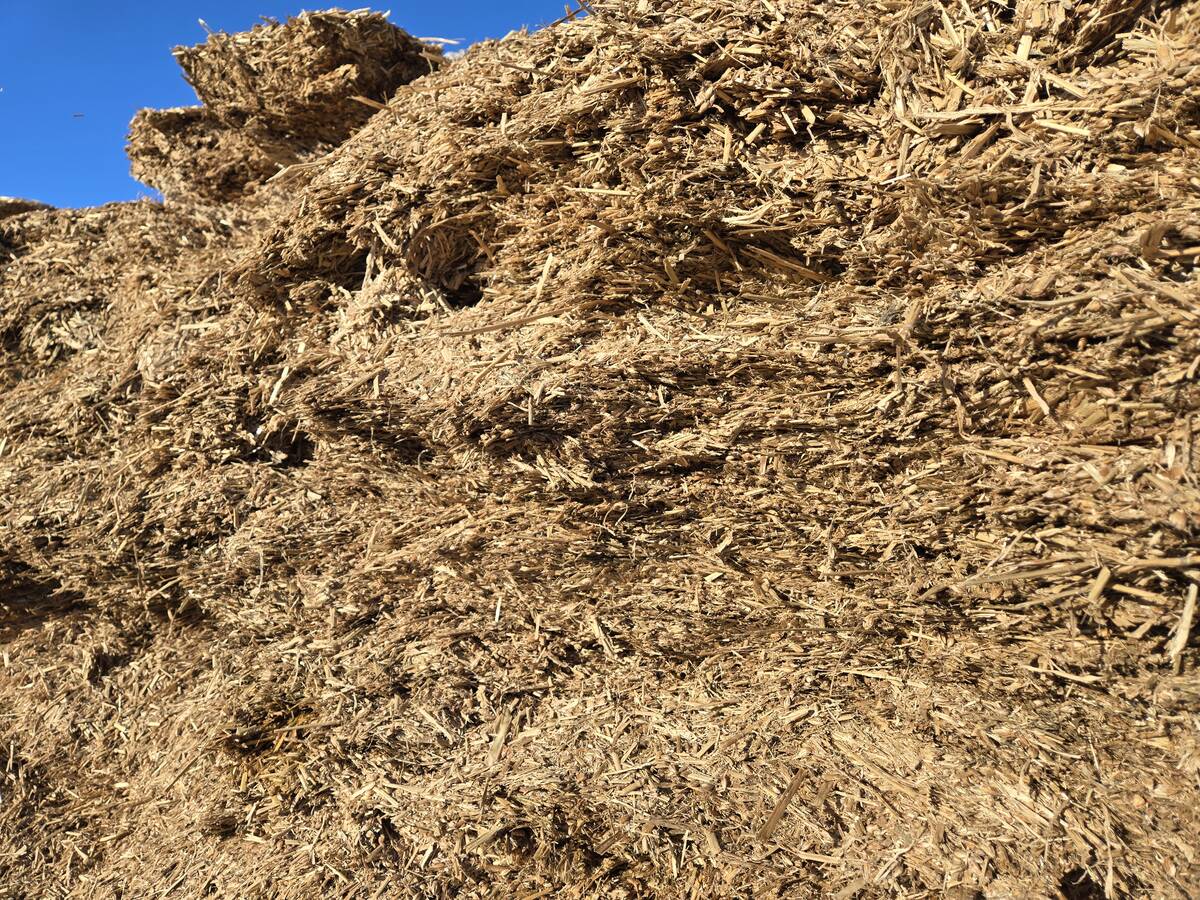
“Three times a week we come out with a rack of straw and just roll it out for them so they all have access,” Bos said.
WHY IT MATTERS: Experts say that using cover crops, straw and silage grazing can help cattle producers manage winter feed costs, as long as rations are carefully balanced to meet herd nutritional needs.
Cover crops on the Bos farm cost about $35 an acre to establish, with funding support for a water site provided by a local watershed district.
“It’s nice if you can get some funding and cut the cost,” Bos said.
The farm typically fertilizes its corn but not its cover crop.
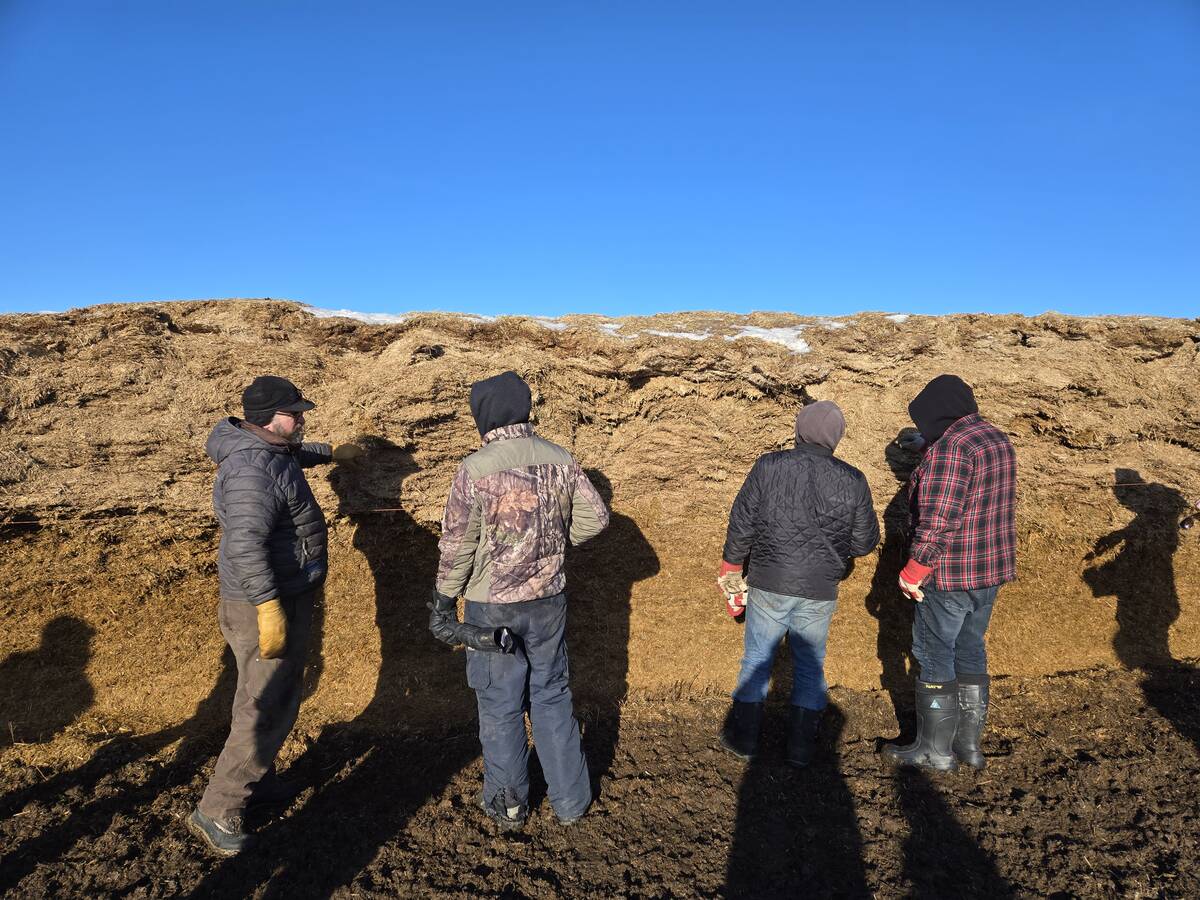
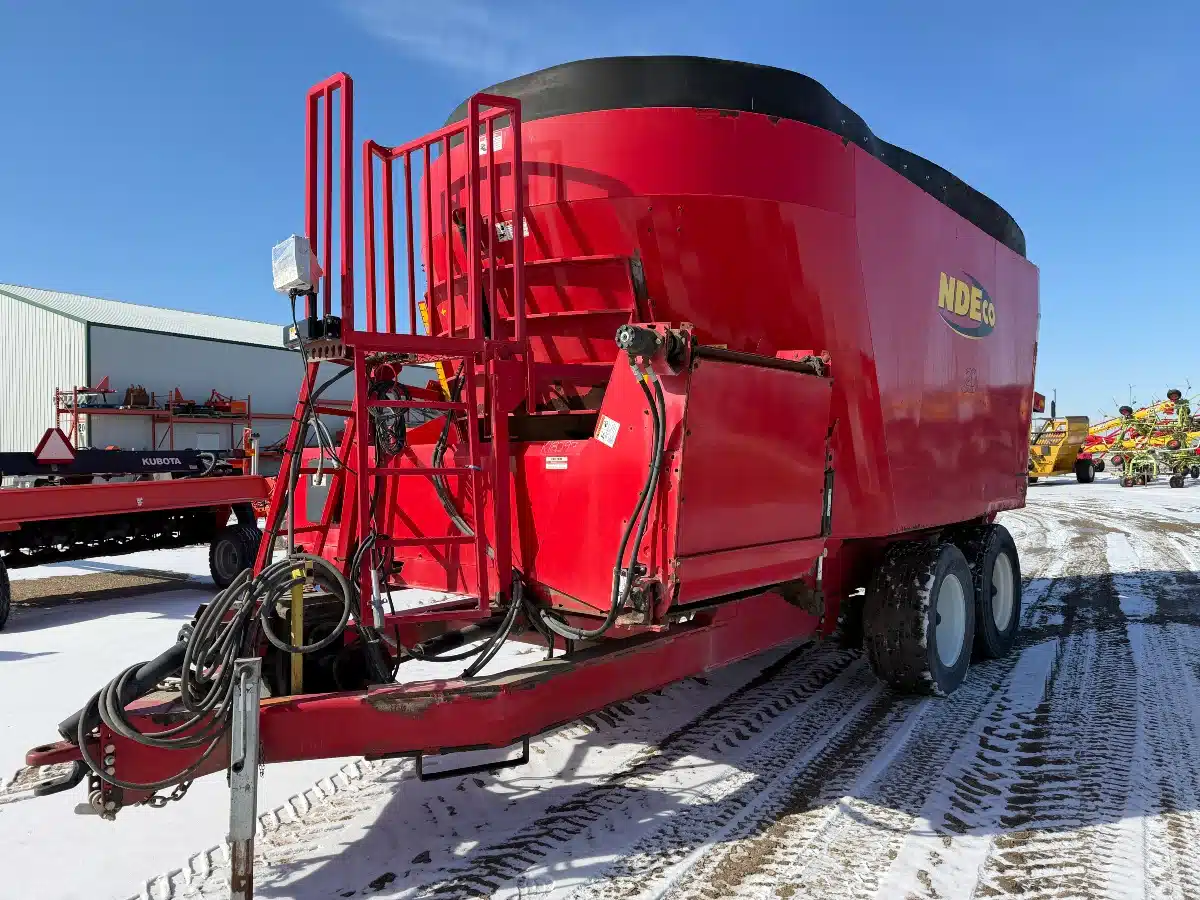
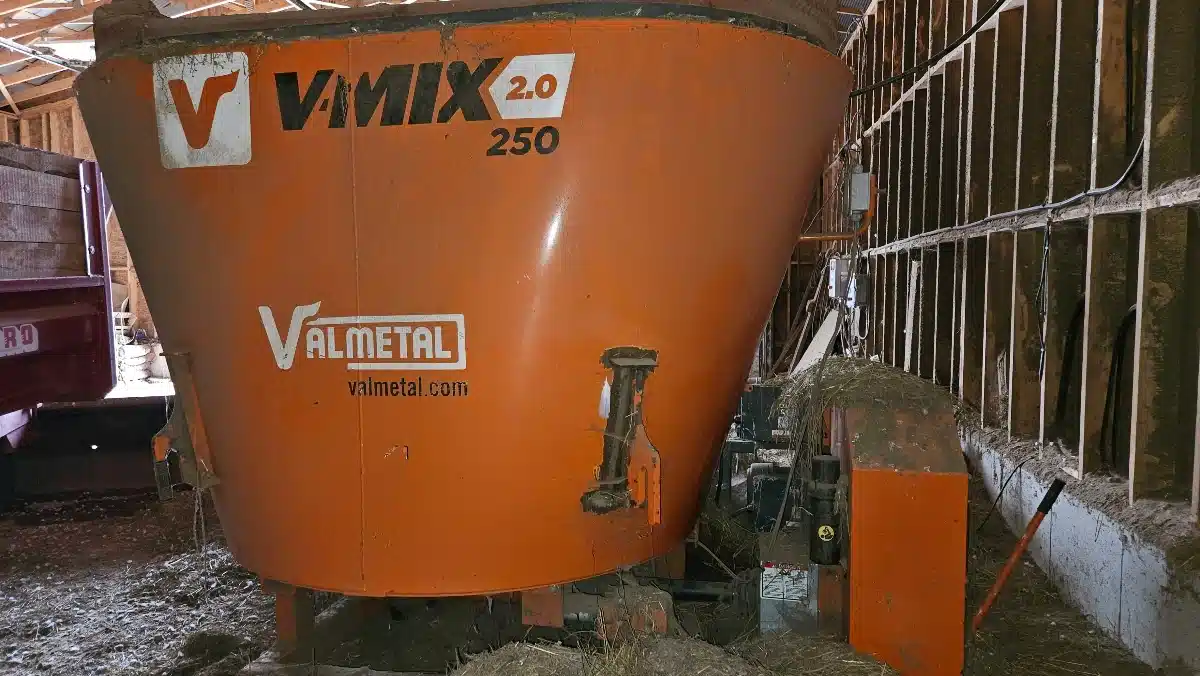
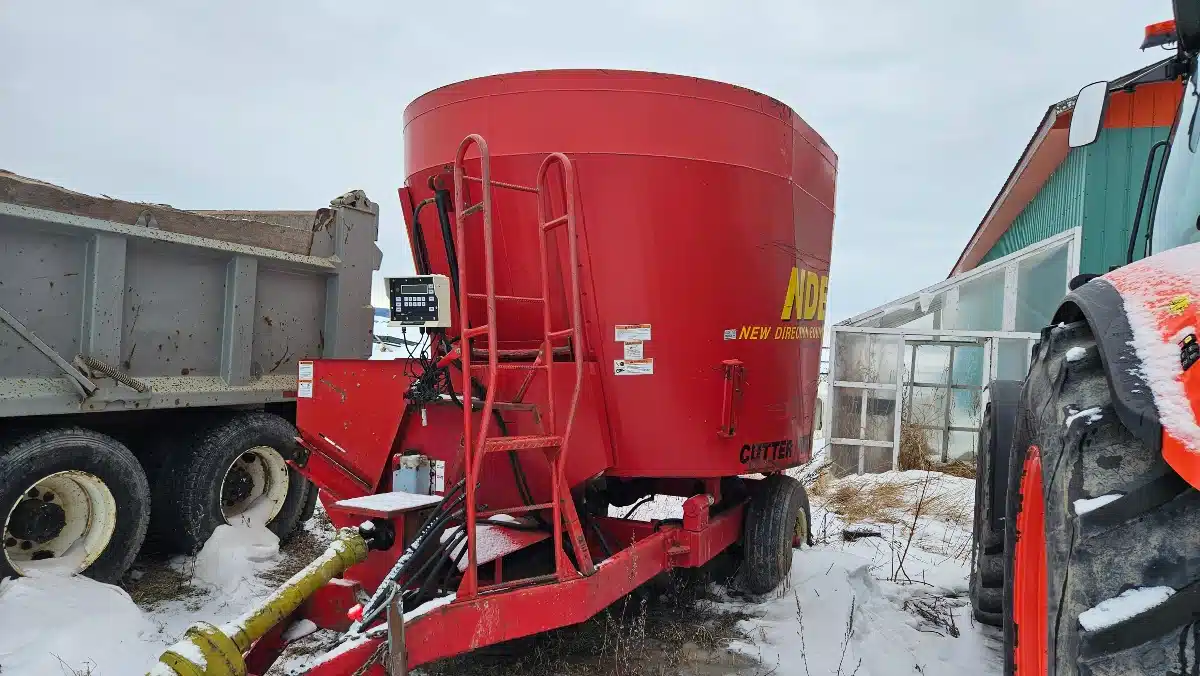
The tour included a demonstration of the farm’s feed truck and TMR mixer, which they call “Mad Max.” The truck reduces labour during the winter.
“The idea is to use that truck as much as we can for a good part of the winter,” Bos said.
Silage pile grazing in practice
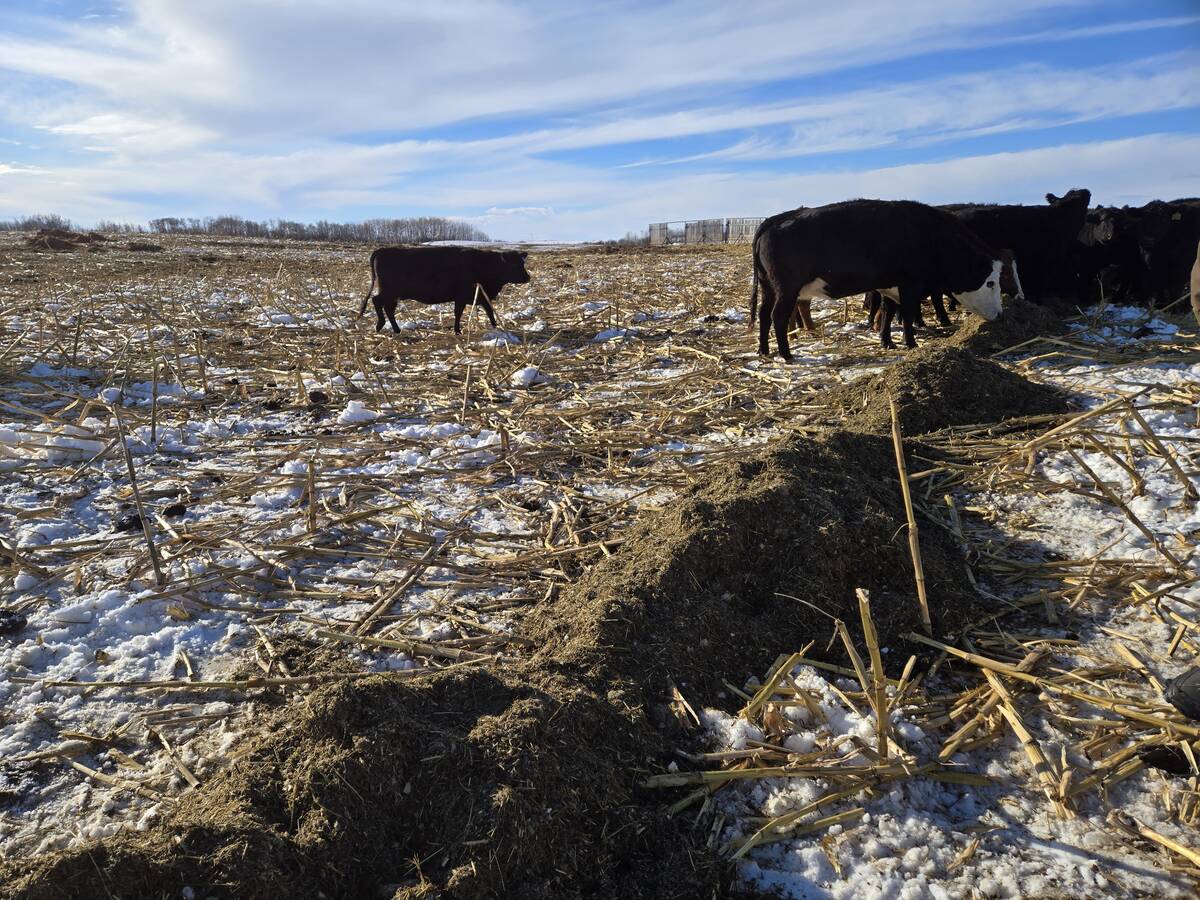
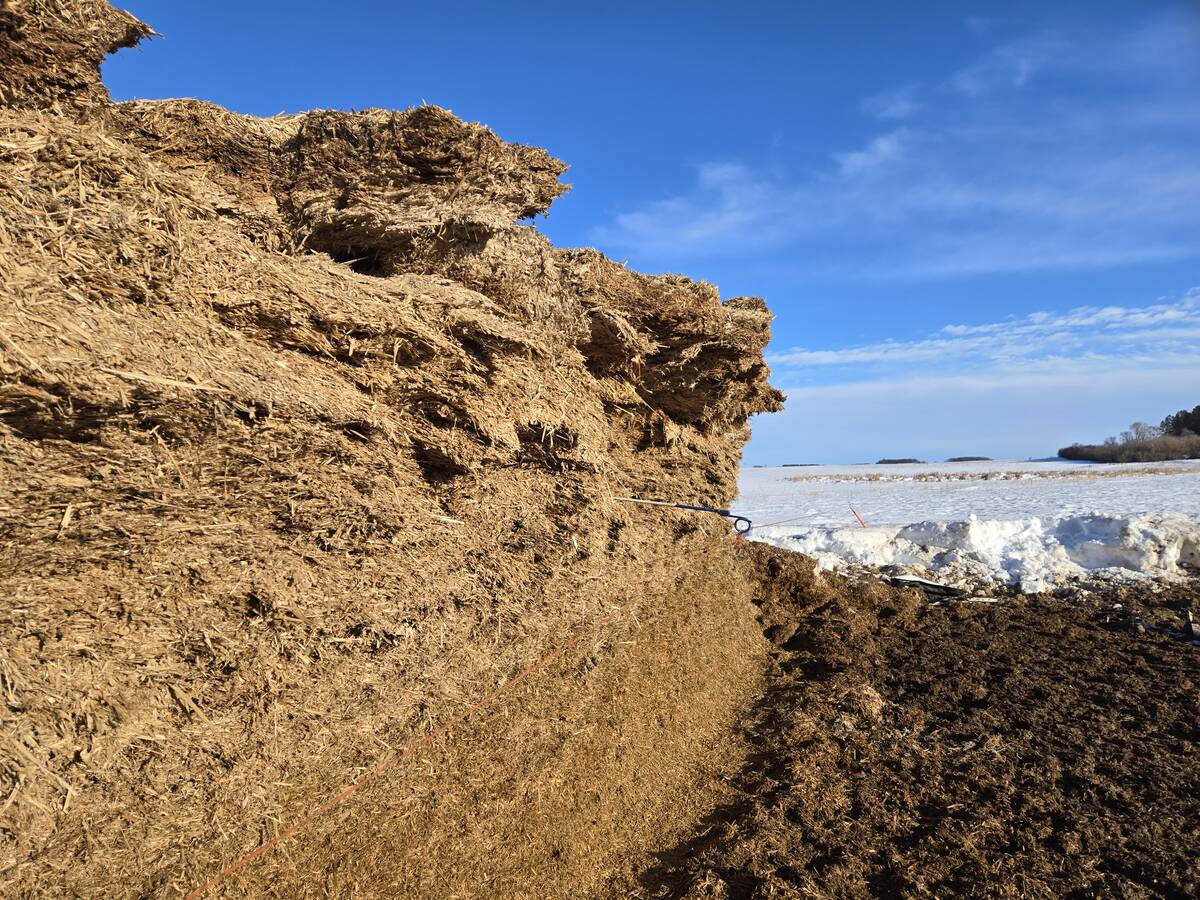
Silage pile grazing was another stop on the tour. Cattle are grazing the pile with minimal waste, Bos said.
“I don’t think they’re wasting much. They’re eating it right down to the dirt,” he said. “It seems to be working good.”
The silage pile is about 70 feet wide, with both sides exposed, providing roughly 140 feet of space for about 300 head. Electric wire is adjusted daily to control access and manage utilization.
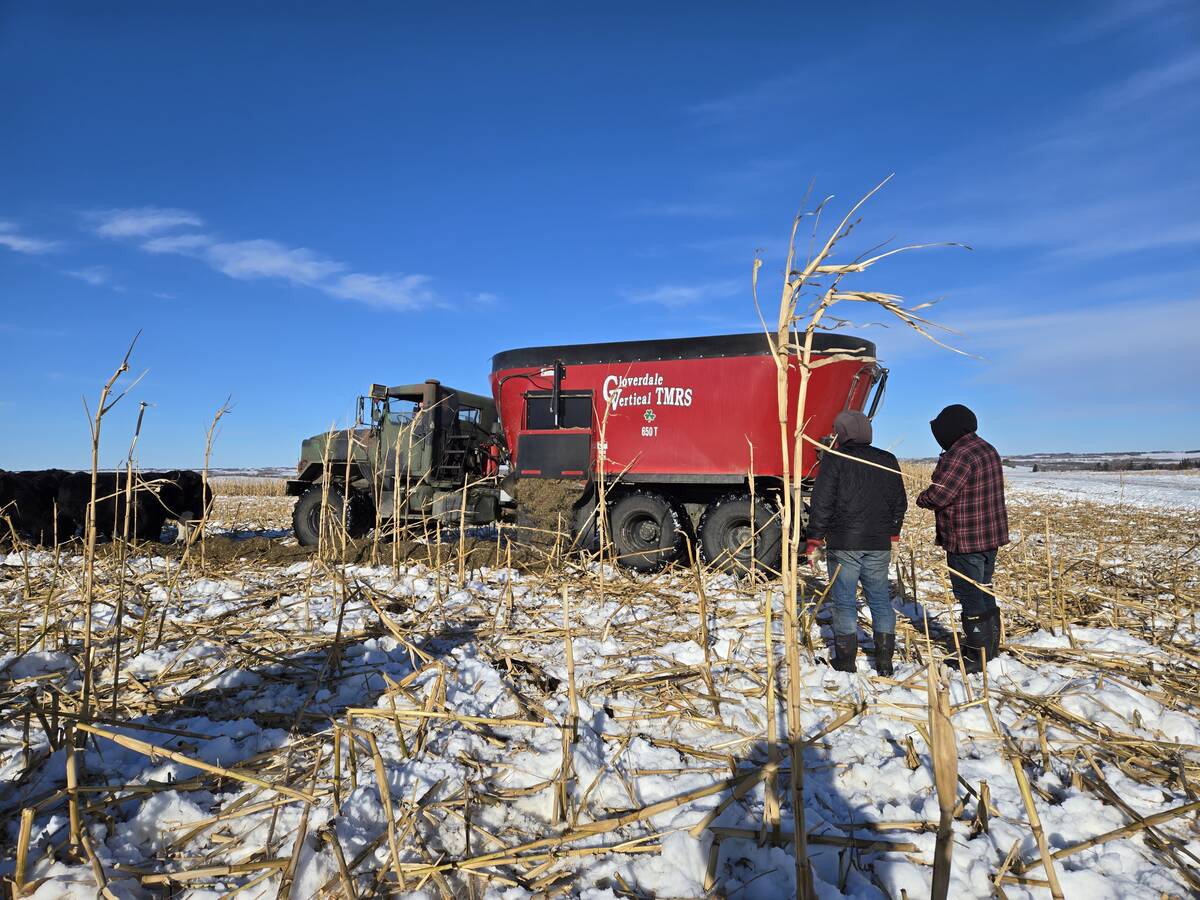
“You get pretty good utilization like this,” Bos said. “It’s cheaper than hauling it out.”
The winter feeding system appears to be meeting cattle needs, Bos said.
“The animals seem pretty content and full.”
Importance of feed testing and balanced rations
While alternative feed sources like pea and barley straw can help manage costs when available, provincial livestock and forage extension specialist Kristen Bouchard-Teasdale said that it’s important to ensure proper feed testing and balanced rations.
“Winter feed supplies are our biggest expense in these cattle productions,” she said. “How people feed and what proportions they’re able to mix into their ration is going to be dictated by the quality of the feed ingredients that they have on hand.”
Producers incorporating straw into winter rations need to ensure cattle receive sufficient protein and energy, particularly during extreme cold periods like the one that has been gripping most of Manitoba for the last few weeks.
“Cows can’t eat enough of those fibrous feeds, like the pea straw and the barley straw, to be able to meet those energy requirements in particular,” she said.
That’s why feed testing is so critical for developing effective winter feeding strategies, she added.
“Get your feed tested, know how much you have of something and exactly what’s in it, and then you have that information. It makes it much easier to be able to change your strategy if need be,” Bouchard-Teasdale said.