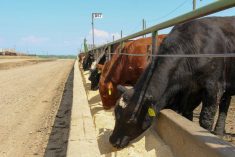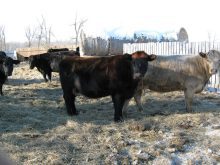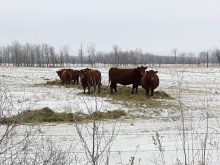

Intercropping can have significant benefits for extended grazing cattle on shoulder seasons, said Emma McGeough, associate professor in the department of animal sciences at the University of Manitoba. She and her research team of graduate students have been working for the last number of years on the intercropping of corn for fall and winter grazing.
“Realistically, we think of intercropping as a practice of growing two or more forages or crops together in the same field,” she said at the Western Canada Soil Health and Grazing Conference in Edmonton in late 2024.
Why it matters: Corn grazing has garnered popularity for its high energy, but low protein is a problem. Researchers and early adopting farmers are looking at intercrops as a possible improvement to the system.
Read Also
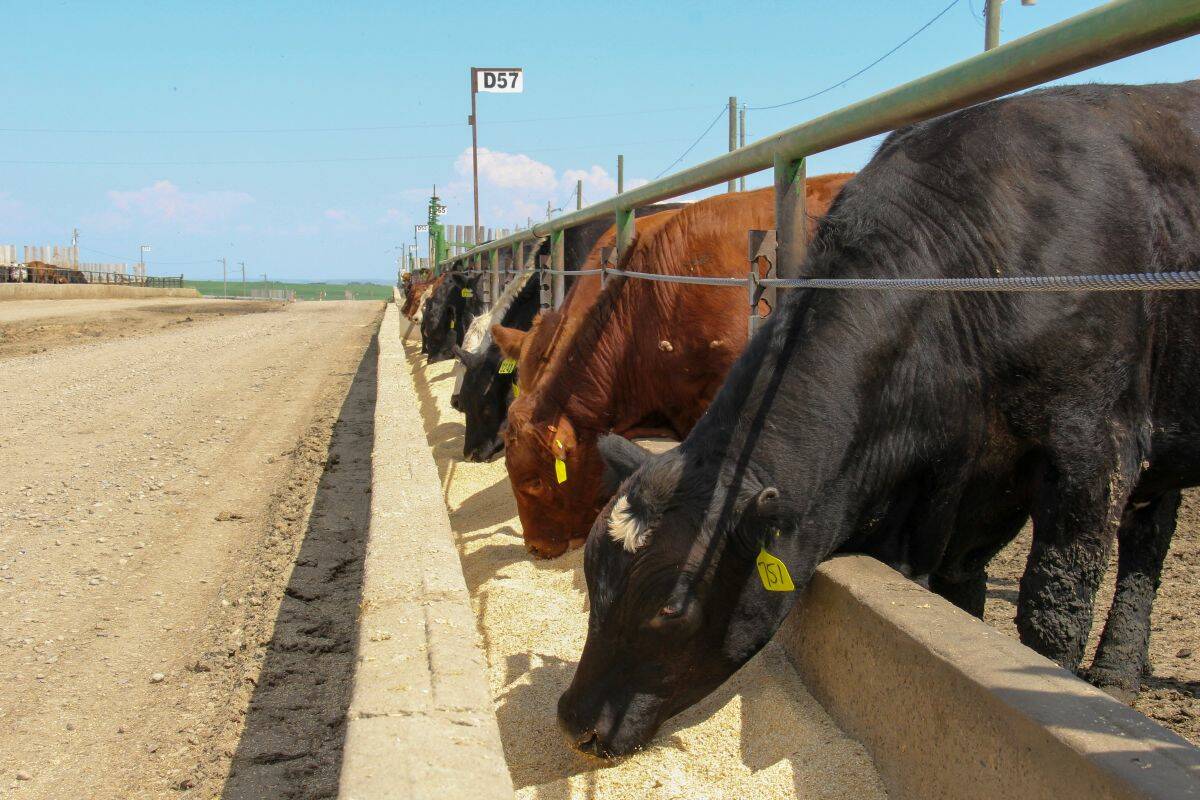
Calves in the feedlot: Feed additives to beat out coccidiosis
Adding ionophores to the calf feed ration can prevent cattle disease like coccidiosis and improve digestive efficiency in Canadian feeder calves.
She said there is growing interest in the utilization of intercropping. What additional species actually get put down and how the farmer approaches the intercrop is going to depend on what they want to achieve. It can be used for extended grazing in the fall or winter or to have a potentially high-yielding crop come spring.
“This is not news for anyone in the room, but overwintering is a very significant feed cost for producers. Approximately two-thirds of costs associated with cow-calf production in Western Canada do arise from feed. We are seeing an increased reliance on lower costs for marginal or less productive lands to meet forage needs,” she said.
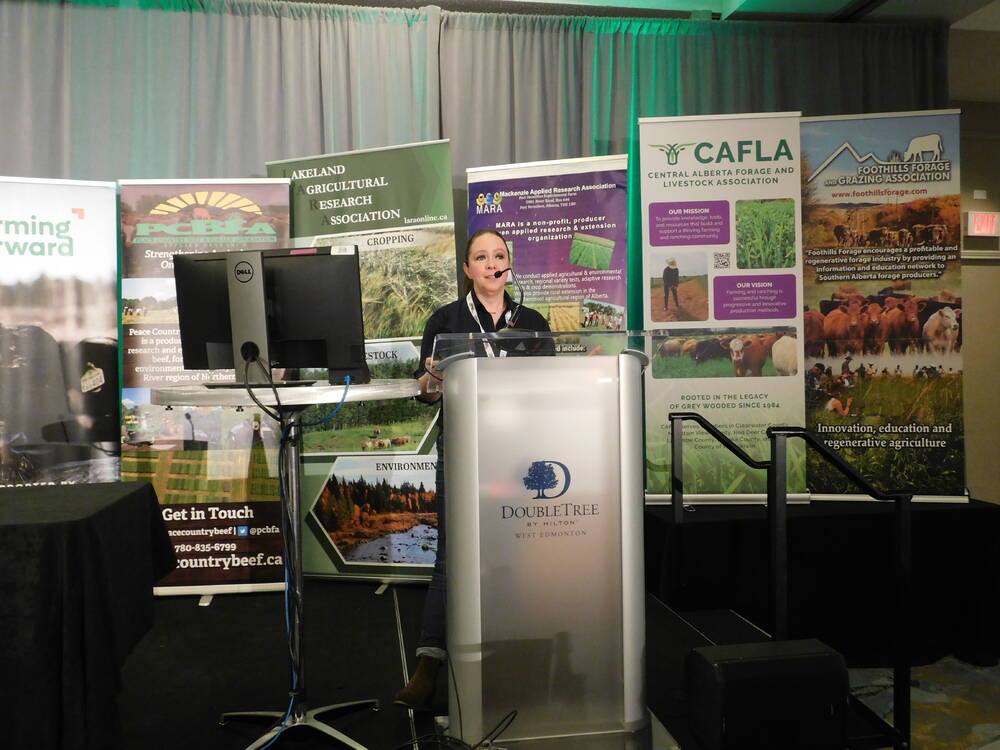
McGeough moved to Winnipeg 10 years ago and noticed that weather patterns have changed a lot since then. Rain is now more unpredictable. Extended grazing offers a reduced cost in feed compared to feeding in confinement. It also distributes nutrients from cattle to the soil and offers a flexibility of location depending on fencing and watering. Other benefits include lower labour and time requirements, improved animal health, environmental benefits and potential agronomic benefits.
For Prairie farmers looking to lower their feed bill, even in the depths of winter, corn grazing has become a popular option.
Corn can be a high yielding crop and produce a lot of feed per acre. It can also be an effective windbreak. However, corn is not cheap, and corn alone does not fill the nutrition needs of cattle.
“Corn is low on protein, but it is not short on energy,” said McGeough.
If corn has a protein level of seven or eight per cent, that’s not going to be good for growing cattle, or for cows later in gestation.
In pure corn grazing systems, suplementation with feeds like alfalfa are key in making the system work, as well as avoiding bloat. Producers are typically advised to make sure cattle are full prior to entering a new corn paddock, for example, to avoid gorging on cobs.
There is also the cold weather, and its impact on metabolic requirements to consider. Extension staff with Manitoba Agriculture advise that feed intake can jump up to 30 per cent in prolongued cold, while faster digestive passage also means that the amount of energy cattle get from a set amount of forage can be reduced. They suggest that, for every 10 degrees under 15C, energy requirements jump by 10 per cent.
Other forage crops might help round out the grazing, but the concept left many unanswered questions. Would the crops establish properly between the corn rows? Would there be enough to make a significant difference to supplementation needs?
Putting it to the test
McGeough talked about a study she worked on with multiple sites across the Prairies. Some of the sites were seeded early, but others were just bone dry.
“So we said, ‘okay we have the seed. We got good rain, and we ended up getting a pretty good crop out of it,’” she said. It’s not necessary to give it up if the crop doesn’t work at the precise time you planned. “Again, we will see different competitiveness depending on the crop and depending on the cleanliness of the field when we start. But that can be something that will mitigate the success of our potential intercropping. Whether it’s a small cereal or whether it’s a forage or legume, we do have to give them the best possible chance.”
McGeough and her team planted corn on two sites in Manitoba on a standard row spacing, about 30 inches apart. They interseeded that with a variety of crops, including Italian rye, red clover, hairy vetch and radish. The crops established, but they were tight.
The team then embarked on a Prairie-wide study. They wanted to see if they could establish intercrops with grazing corn at multiple sites across the Prairies. Sites included multiple sites across all three Prairie provinces.
At the sites, they doubled the row spacing and started with 60-inch spacing. They also had a control on a 30-inch spacing. Corn was seeded in early to mid-May, and then the crop was interseeded. This was done in 2021, 2022 and 2023.
In their studies, the research team saw the corn was unharmed by any crop except radish. In terms of crude protein, crimson clover was the lowest from 10 to 13 per cent overall. Radish and hairy vetch had the highest crude protein. The intercrop offered higher protein potential than corn alone, at all sites.
In terms of total digestible nutrients of the intercrops, crimson clover came in low, while radish came in at 20 to 30 per cent higher digestible nutrient. Knowing the true picture of your feed is why feed testing is so important, she said.
The nitrate concentration of some of the crops, the radish in particular, did exceed the threshold. That was partly dependent on the year and the site, because drought stress causes nitrates to spike. This research proved that intercropping worked on a small plot.

Planning a corn intercrop
McGeough said there are many things to consider when planning a corn intercrop, and only some are under a producer’s control. Rain is a very important factor. “The complementarity and the competitiveness of the species that are in the mix, that is going to influence if you seed something and it’s just going to be choked out. Then it’s not a good use of your money,” McGeough said.
There are many agronomic choices to consider such as seeding rate, seeding depth and dealing with seeds that are not be the same size.
McGeough is frequently asked about weed control, due to sometimes limited herbicide options when more than one crop is in the mix. Her answer is that its important to think about strategies before the crop is seeded, to really set it up for success.
Nitrate toxicity can be another problem, McGeough said. “If we are heavy with nitrogen fertilizer, yes, we may see an increase in yield and protein concentration. But if that spikes our nitrates, that’s something we need to be considerate of.”
Fortunately, nitrate toxicity is not that common, but it is a consideration for mixes that include things like brassicas.
“It doesn’t mean that all brassicas are going to have high nitrates in all conditions. We do know tthey decrease over time as well,” she said.
She stressed the importance of feed tests and soil tests. “If we’re thinking about nitrogen toxicity, if we’re at about 0.5 per cent, that’s generally considered our safe limit. If we go to 0.5 to one per cent again, we advise caution. And for over more than one per cent, we do have to be a bit worried about that,” she said.
Nitrogen toxicity is complex, because starch in the diet can reduce the impact of high nitrate feed. Those high nitrates in feed can cause fatalities, asphyxiation or abortions. That’s why it’s doubly important to do soil tests.
Cattle management can also be key in limiting the risk, attendees heard.