Producers across the Prairies are rethinking how they manage stock water after years of drought, high sulfates and hard lessons in the field.
Water quality, not just quantity, can quietly erode herd health, reproduction and performance, according to Dr. Cheryl Waldner, the Beef Cattle Research Council (BCRC) research chair at the Western College of Veterinary Medicine.
WHY IT MATTERS: Poor water quality could be quietly costing you calves, weight and cows, and a $35 metre might be the first step to finding out.
Poor water quality can mean fewer calves on the ground, lighter weaning weights and, in some cases, sudden death on pasture.
“We can’t simply look at a water sample and determine whether or not it’s safe for our animals to drink,” Waldner said at a webinar hosted by the BCRC on Feb. 18.
Read Also

VIDEO: New Claas Cubix baler aims for high feed output
Claas shows its square baler concept called the Cubix at Agritechnica last November, designed to output as much as 70 tonnes of baled forage per hour.
Testing and timing matter
According to the 2022-2023 Canadian Cow-Calf Survey, 38 per cent of producers had tested their water at least once in the previous three years, Waldner said. Sixty-two per cent had not tested at all.
But routine lab testing is essential, especially with surface water sources that concentrate salts as summer wears on, Waldner said.
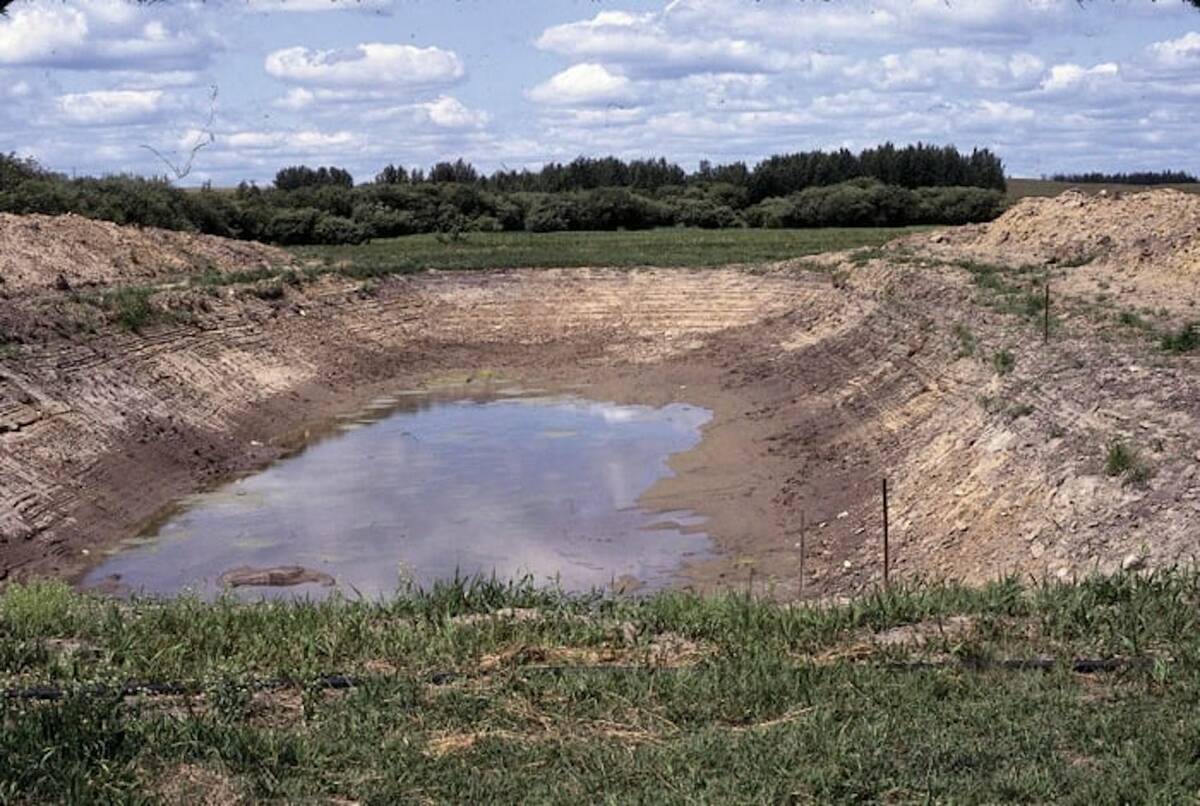
Government monitoring in southern Saskatchewan has shown sulfate levels in dugouts climbing sharply through the grazing season as evaporation concentrates minerals.
“If we were just to have sampled these dugouts at the beginning of the grazing season, we would have potentially been misled into thinking we had perfectly safe water for the entire grazing season,” Waldner said.
High total dissolved solids (TDS), particularly sulfates, are a growing concern in much of Western Canada. Sulfates can contribute to polio in cattle under extreme conditions and interfere with copper absorption even at lower levels.
Repeated drought cycles have worsened the problem, Waldner said.
On-site screening tools
Producers don’t necessarily need to send samples to a lab every week. Electrical conductivity (EC) metres, available online for about $35, can provide quick screening.
“Basically, the higher the electrical conductivity is, the higher the TDS,” Waldner said, noting EC values above 2,000 indicate it’s time to send a sample for full lab analysis.
Sulfate levels remain the key number to watch.
Water with a lot of sulfates doesn’t always make cattle eat less, but it does cause problems inside their stomachs. It creates more harmful gas and lowers the amount of copper in their bodies, which isn’t good for their health.
Copper deficiency is already widespread across Western Canada. The issue is often compounded by sulfur in water tying up already-limited copper in forage, Waldner said.
“We do have strong evidence of an association between low serum copper and high open rates in cows, two to three years old, especially,” she added.
Free choice versus controlled supplementation
While most producers rely on free-choice mineral, intake can be uneven.
In one Alberta study, only 61 per cent of cows visited a mineral feeder even once over a six-day period.
“If the serum sample is coming back deficient, that cow is deficient,” Waldner said, adding that when fine-tuning mineral programs, liver biopsies may be needed to get an accurate picture.
Water and feed must be considered together, she added.
“If we want to look at total impacts on animal health, we can’t just look at water and isolation.”
Trial by drought
For rancher Karla Hicks and her family near Parkbeg, Sask., water management has become central to their grazing plan.
They ranch within Palliser’s Triangle, an area known for low precipitation and high evaporation. After 2017, conditions deteriorated quickly. By 2021, drought and high-sulfate water were taking a visible toll.
“We had diarrhea, flickering eyes, neurological symptoms and pneumonia, symptoms without pneumonia. We had some cattle walking in circles,” Hicks said.
Weaning weights dropped sharply over successive years. Water tests from some dugouts came back with total dissolved solids in the high teens.
The family began testing routinely and watching for natural indicators.
“Are we seeing wildlife tracks? Are we seeing any wildlife at all? Because wildlife is way smarter than our cows are, and wildlife won’t drink out of bad water,” Hicks said.
They purchased an excavator and water truck, installed solar pumping systems and eventually expanded from 10 to 32 dugouts across their grazing system.
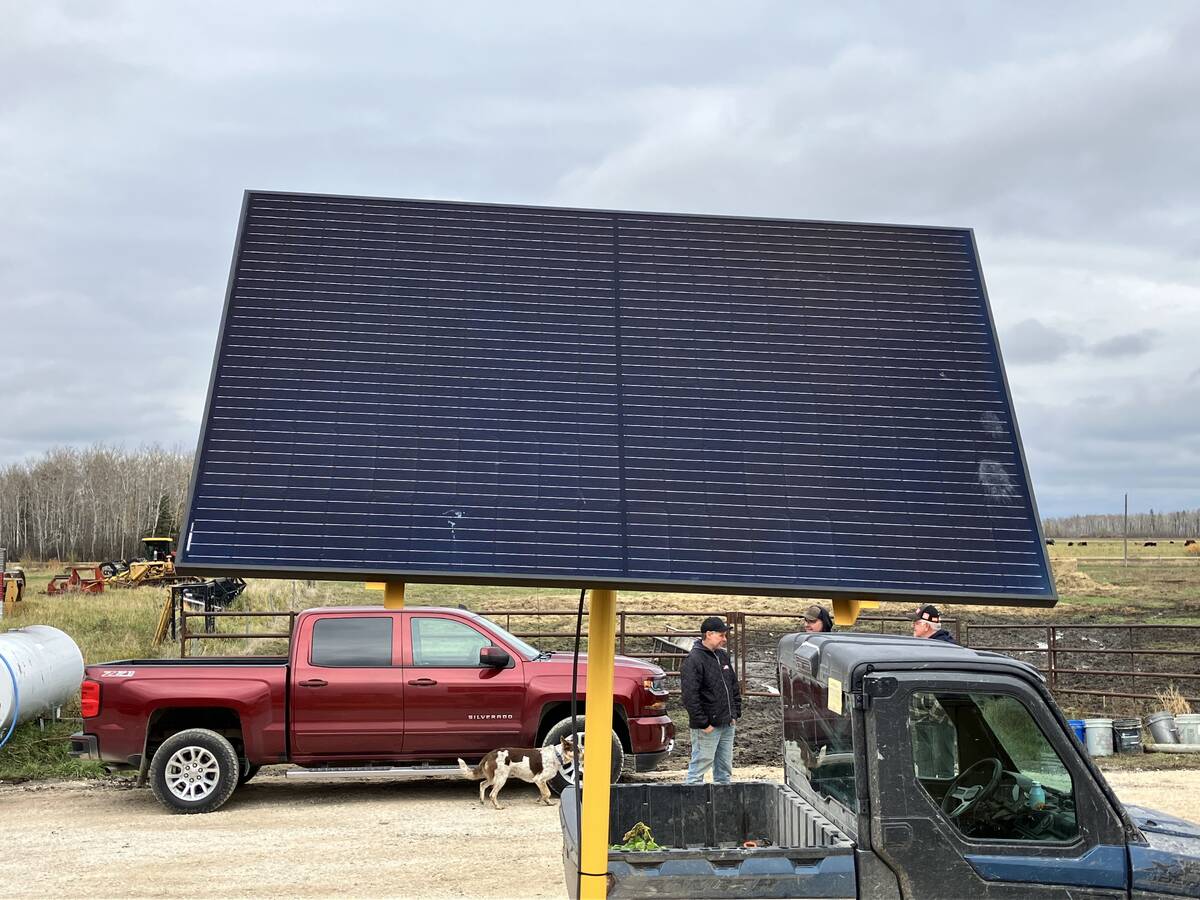
Solar systems required constant monitoring, especially during smoky conditions that reduced panel output.
“The thing that we learned right away, especially on this set of cows, was some cows just have a taste for bad water. They’re stupid, and you can’t help them,” Hicks said.
In 2023, despite improved moisture, reproductive losses surfaced. After preg-checking a group of cows, Hicks said open rates were far higher than expected.
“We had realized, even in 2022, we had six-year-old home-raised cows that had never calved on green grass,” she said.
She believes years of stress, from drought, poor water and limited forage, pushed cows into survival mode.
The family made the decision to keep most of the open cows rather than sell. Calving the following year was strong.
“We bet the ranch on keeping those cows, and it paid off this year, thank goodness,” Hicks said.
Planning ahead
Today, Hicks tests water whenever cattle move into a field and regularly through the grazing season. A handheld EC meter rides in the glove box.
With dugouts strategically placed and monitoring part of daily chores, water management now drives grazing decisions, she said.