Avix, Bird Control Group’s (BCG) automated laser bird control system, was once accessible to Canadian producers.
“When I first started, we were selling into Canada like crazy,” Craig Duhr, BCG’s regional sales manager for the Americas, said of the market in 2020. “Agriculture, all your vineyards, whatever it took.”
Suddenly, Health Canada told them that the 487-milliwatt Class 3 B laser was no longer eligible for import, despite certifications from the U.S. Environmental Protection Agency and U.S. Department of Agriculture, among others that allow its sale in 100 countries — including the Netherlands, where it was developed.
Read Also
Manitoba farmers want in on strychnine exception
Western Manitoba ranchers say gopher damage rivals conditions in Saskatchewan but province has yet to request a federal strychnine exemption.
WHY IT MATTERS: The Canadian Food Inspection Agency estimates 17.2 million domestic birds have died or been humanely depopulated due to avian flu in Canada since 2021.
Canada’s current Pest Control Product Act deems laser devices such as the Avix to be a pest repellent, requiring registration.
However, Health Canada said Feb. 3 via email, a proposal to exempt certain specific laser devices from the registration requirement — if they meet certain regulatory requirements for low-energy emissions — was published last March.
A 90-day pre-consultation on that proposal ended in June, ahead of a formal consultation that’s expected to be announced later this year, Health Canada said.
The laser has been successfully tested in various sectors and under different weather conditions worldwide to ensure the non-lethal, animal-friendly bird control solution remains effective over the long term.
Fight to stay in Canada
BCG didn’t fly off without a fight, Duhr said. The small start-up company employed attorneys and submitted to every Health Canada request over a two- to three-year period, before costs and constant government hurdles forced them to walk away.
Duhr said requests from Canadian producers run into the thousands, with increased interest particularly since avian influenza began to spike in 2021.

“Every show we got to that is poultry,” he said. “We’re inundated with (interested) Canadian people; it’s very unfortunate.”
Wade Stark, vineyard operations manager for Andrew Peller Ltd., was among the operations fortunate enough to purchase the system before the moratorium took effect.
Stark told Glacier FarmMedia via email he’s been pleased with the Avix’s performance since installing the units at the vineyard in August 2020. Aside from replacing a control box and a few cables due to environmental exposure, the units have had no issues, he added.
Stark indicated he intends to follow up with Health Canada on the laser’s import availability status.
“We would certainly recommend their use and would like to order more units for other farms where we have bird pressure and have to use netting, which is labour-intensive and expensive,” Stark wrote. “Not to mention birds actually getting trapped in the netting from time to time.”
Highly efficient
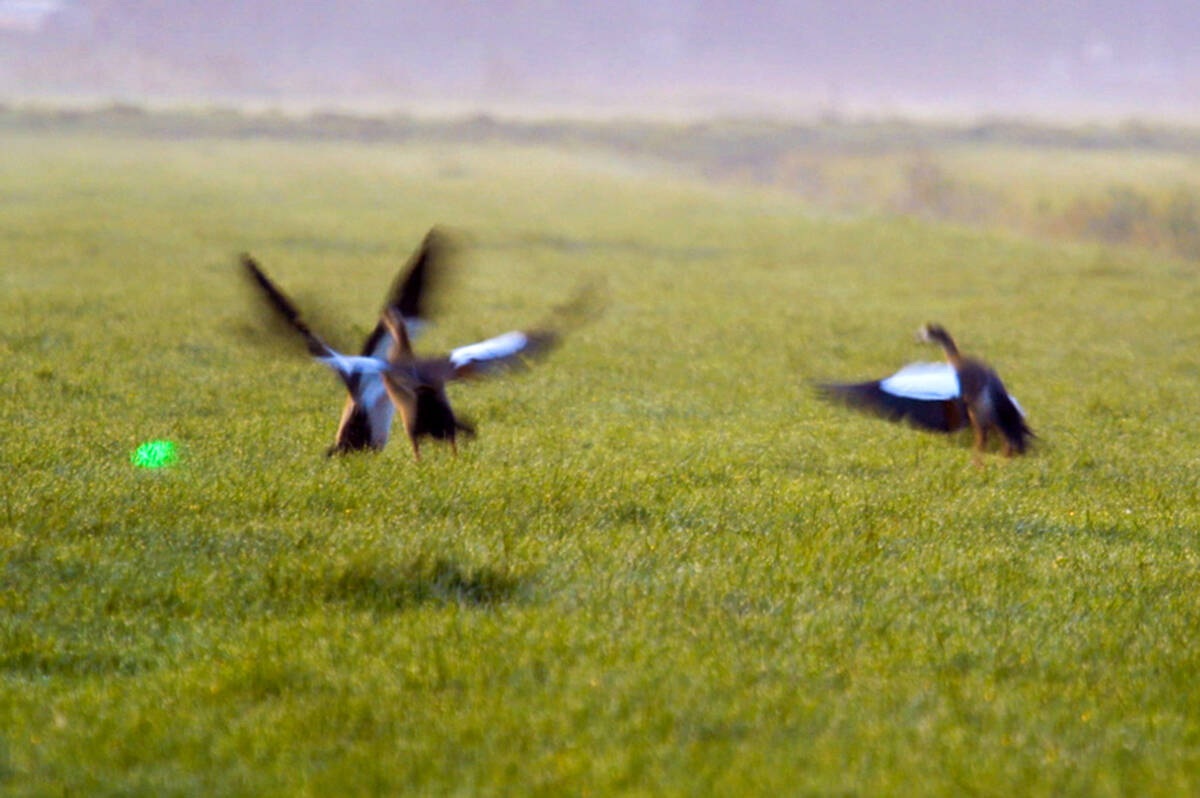
In 2021, Wageningen University published data on the effectiveness of BCG’s Avix Autonomic Mark II Class III B laser on a free-range layer farm next to a poultry barn in a Dutch region heavily impacted by avian flu.
The study collected video footage for a month before installing the lasers, which operated from 5 p.m. to 10 a.m. within the 1.5-hectare free-range area when poultry were inside, and from 10 a.m. to 5 p.m. in the surrounding grass pasture when the birds were outside.
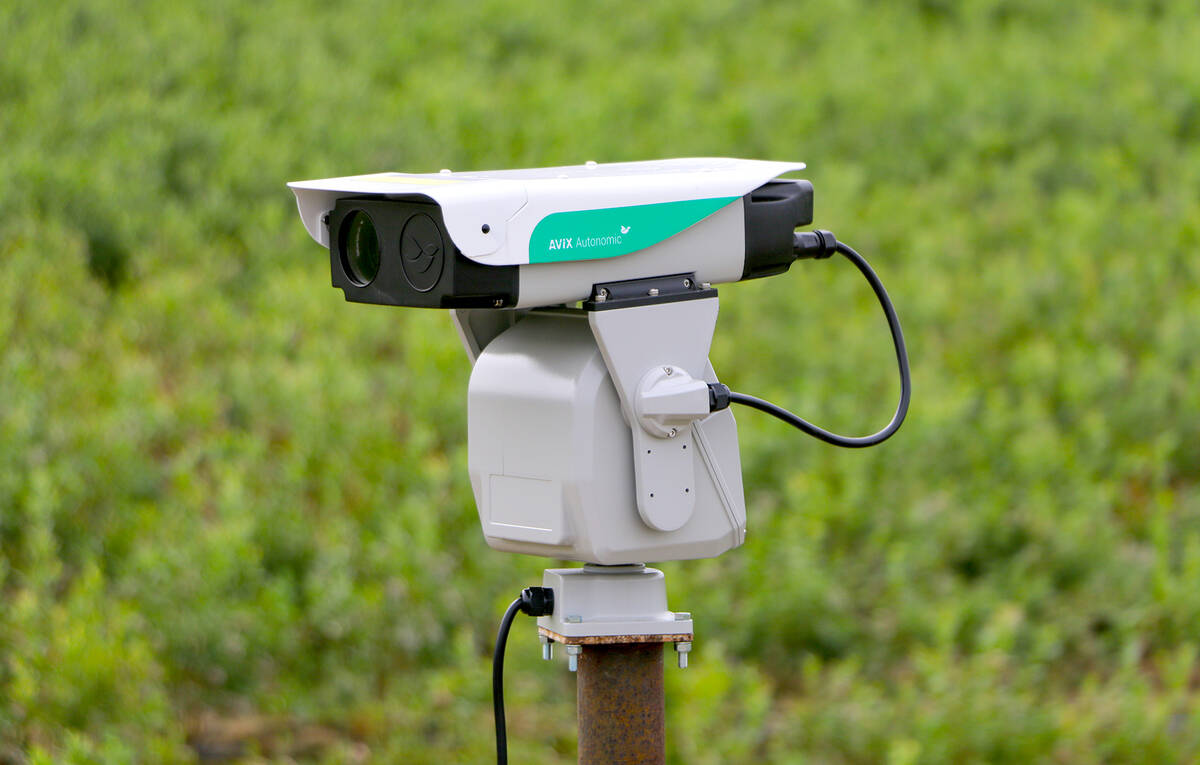
It found the laser had a 98.3 per cent efficacy at reducing wild bird interactions within the free-range area and concluded the laser was “highly proficient at keeping wild birds, in particular waterfowl” away from farms along the winter migration flyway.
While the study focused on free-range operations, researcher Armin Elbers speculated on the BCG website that, during high-risk periods, laser use could help on strictly-indoor operations that had experienced or were at risk of avian influenza, by keeping wild fowl away from barns.
Cattle sector applications
When highly pathogenic avian influenza (HPAI) was detected in U.S. dairy cattle in March 2024, leading to a significant drop in production and spikes in fever, lethargy and decreased appetite, calls began to roll in.
“When that happened, then we got really busy in the dairy industry and feedlots,” Duhr said, adding that while HPAI doesn’t kill cattle, it’s a drain on those operations.
He said BCG will continue to focus on expanding its U.S. as well as Central and South American markets — but Canada isn’t completely off the table.