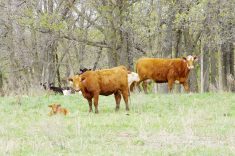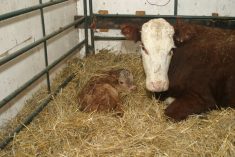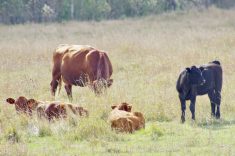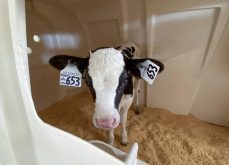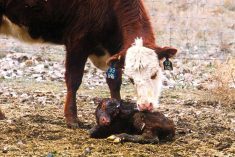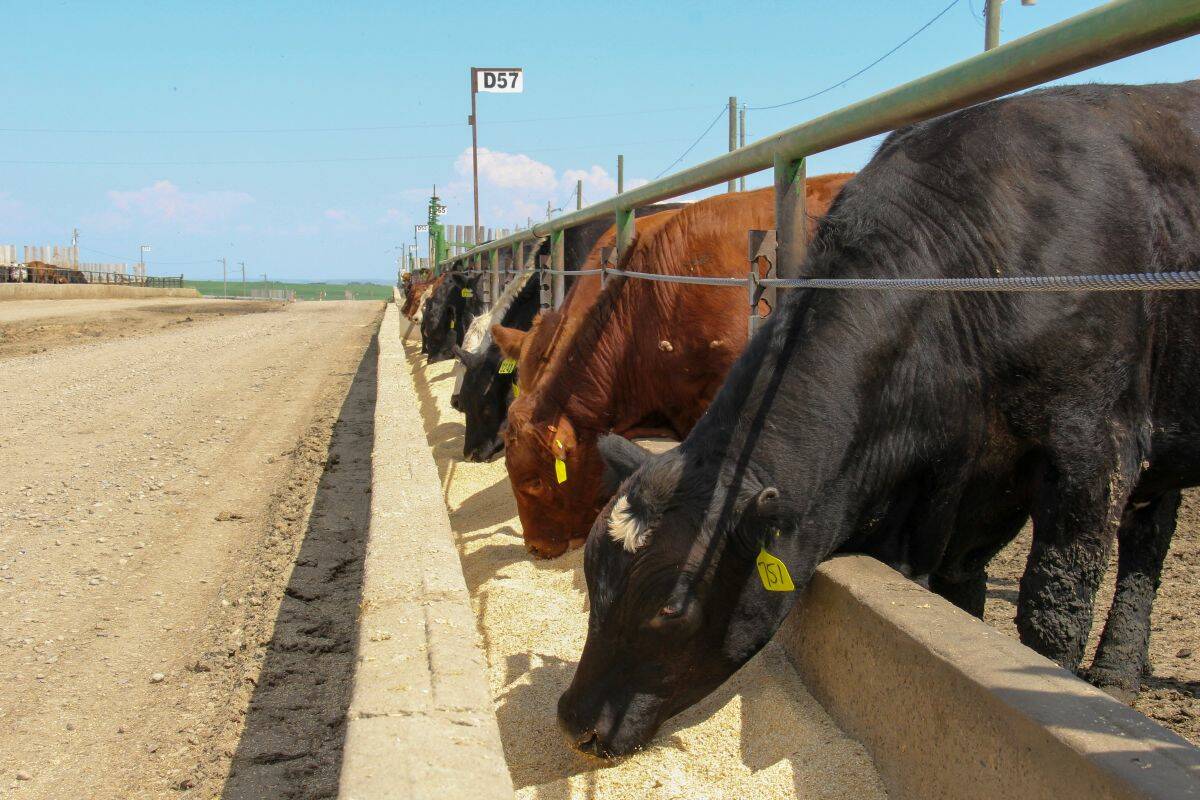
Young calves face many challenges in the first few months in the feedlot. For diseases such as coccidiosis, feed additives can make all the difference.
Coccidiosis is caused by the coccidia parasite that leads to diarrhea, intestinal inflammation and hemorrhaging. It’s commonly found in feedlot cattle.
“Calves and yearlings are definitely more likely to get a severe infection compared to mature cows and bulls,” said Dr. Kent Fenton, a veterinarian with Telus Agriculture who works mainly with feedlot cattle.
Read Also
THROWBACK: Pasture danger – keeping farmers safe after calving
Stay safe this calving season with expert cow handling, exit strategies, and well-being tips to protect your farm’s team.
WHY IT MATTERS: Young cattle can suffer from parasitic infections like coccidiosis. Smaller feedlot operations are more likely to have the problem.
Feedlots can create the perfect growing conditions for the disease, and “under suitable conditions of oxygen, moisture and temperature, infective sporulated oocysts (the infectious form of a parasite) are produced in days,” the Merck Veterinary Manual said.
But feedlot operators can mitigate coccidiosis with ionophores.
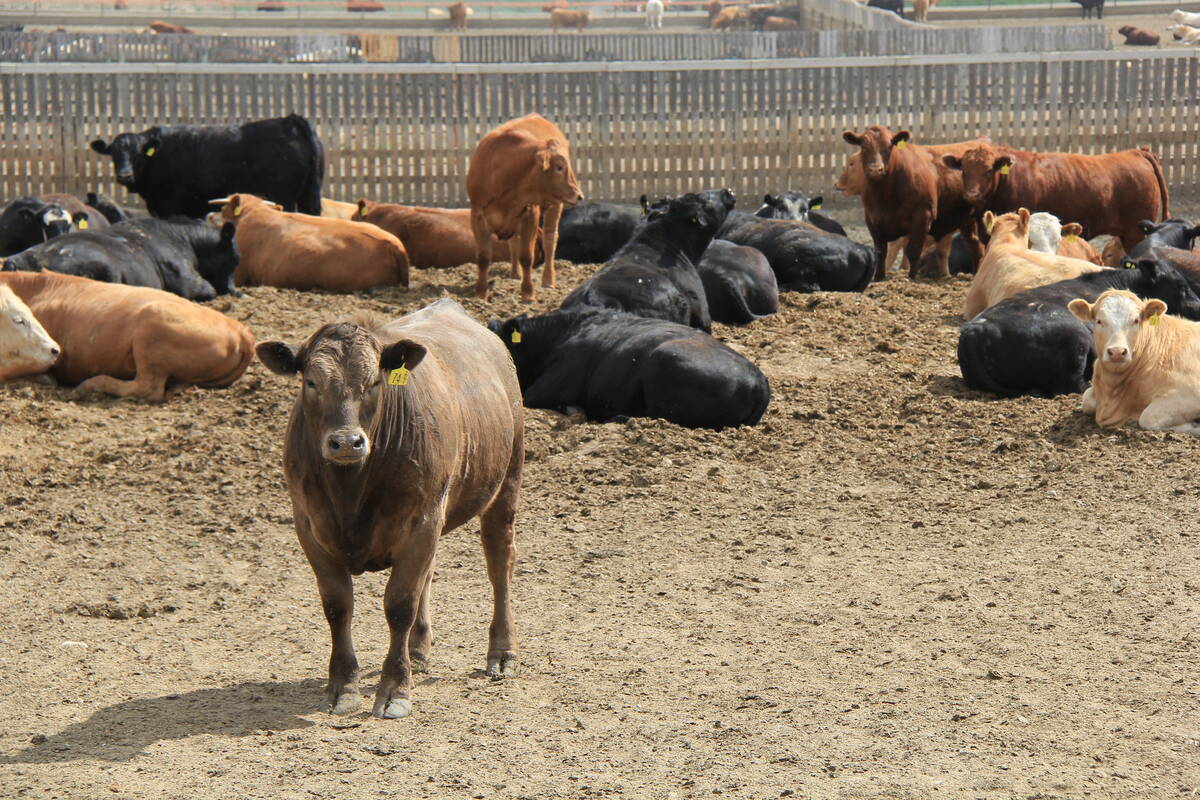
Ionophores are a feed additive that alters the microbial population of the rumen, which in turn improves the digestive system’s efficiency. The ionophores selectively inhibit certain bacteria in the rumen, which reduces waste and creates more energy-efficient fermentation.
An ionophore feed additive “prevents the micro-organism from maintaining appropriate metabolism, leading to antimicrobial effects,” according to Merck Animal Health.
Since feeding ionophores became a common practice, feedlots haven’t seen the same level of infection, said Fenton.
Mass medication of herds has been an efficient way for producers to both stay on top of nutritional needs and manage diseases. In feedlots, this usually occurs as soon as the cattle arrive.
Fenton rarely sees a feedlot that isn’t mass medicating its herds with ionophores, and coccidiosis has become a much more preventable problem since then.
Challenges of feeding ionophores
Fenton said there are two common problems that are much more concerning in smaller cattle operations:
- Not using any ionophores in feed mixtures
- Using too many ionophores in feed mixtures
Smaller operations can have more difficulty introducing the proper dosages in their feed mixes, which can lead to toxicity problems. This is because of issues such as not having the equipment to mix the ionophores into feed mixtures, said Fenton. For example, producers lacking the equipment might top-dress ionophores, but that’s a risky practice.
“They might just sprinkle the supplement across the top without mixing it in. … There’s more risk of one animal eating more than it should.”
But smaller operations that don’t include ionophores in their mixes leave animals at risk, especially if they are buying from auction marts without knowing an animal’s medical history.
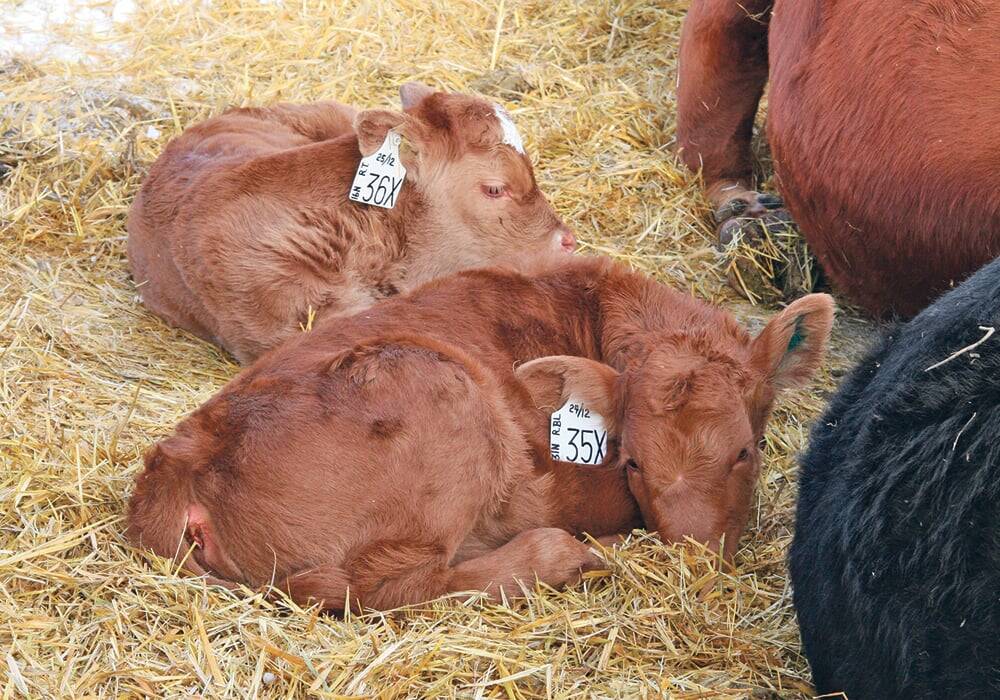
Fenton doesn’t see the same dosage problems on larger operations.
Other animals are more susceptible to ionophore toxicity. For example, ionophores in any dose are highly toxic to horses. Many feedlots use pen-rider horses, and accidental exposure can lead to progressive heart failure and sudden death, said Dr. Nathan Erickson, who works in the large animal clinical sciences department at the Western College of Veterinary Medicine and is a disease investigator for the Saskatchewan Ministry of Agriculture.
“Horses are much more sensitive to ionophores, so we need to be very cautious that we don’t feed, accidentally or on purpose, any feed that has ionophores in it to horses,” said Erickson.
Fenton warned dogs exposed to ionophores can fall victim to the same problems as horses.
Ionophore benefits
Despite the risks, Fenton still recommends ionophore use. There is clear evidence it works to prevent coccidiosis. Now he’s only seeing one or two cases of coccidiosis at a time, and they’re sometimes a sign of a bigger health concern. Large outbreaks have become a thing of the past.
“In feedlots, some individual animals will still get coccidiosis. Maybe they didn’t eat enough of the feed, or maybe it didn’t work for them for reasons we don’t understand. … I can’t really identify why. It could be a stressor, like a weather event. There are some corticosteroids, like dexamethasone, that weaken the immune system and can cause coccidiosis.”
No vaccine has been developed for coccidiosis, but when yearlings and weaned calves are at their most vulnerable, Fenton strongly encourages mixing ionophores into the total mixed rations. When moving new animals to a feedlot, he said infections can occur within the first 60 days. Eventually, cattle grow up to shed the disease most of the time.
Unlike antibiotics, ionophores stay in the intestinal tract of the animal and are not absorbed by the meat. Without the need for a withdrawal time, animals fed with ionophores can go straight to market and be safe for human consumption, Fenton said.
“That’s a real advantage than having to wait 30 days after slaughter. Some drugs, you have to wait 60 days after administration to send the animal to slaughter. … That’s not the case with ionophores.”
Disease prevention
Since the disease spreads through manure and fecal oral transmission, overcrowding and contaminated environments are the most common cause of outbreaks, the Merck Veterinary Manual said. Erickson recommended managing manure, proper sloping of fecal runoff and disinfecting used pens when emptying and populating pens.
This can be a challenge in dirt feedlots, Fenton said, since you can’t disinfect the dirt. Hospital pens for sick animals can keep the infectious loads contained, but full isolation can be difficult as well.
“Hospital pens themselves might have animals with different sicknesses in them. You wouldn’t have a pen for just coccidiosis cases. … You are taking some chance that they’re going to be contagious to other animals in the hospital.”
For questions on coccidiosis management, prevention or treatment in your cattle herd, please speak with your local veterinarian.
Becky Zimmer is a freelance journalist. Her farming and small-town background has given her a passion for journalism, provincial and national government policies, civic politics, community events and thechallenges of rural healthcare and infrastructure.