In southern Manitoba, winter is often the best time to view owls.
With leaves no longer obstructing vision, it is easier to catch sight of the many owl species found here. Of these, eight species are found year-round in various parts of our province, while four others migrate and are here only from spring to fall.
Because the snowy owl visits southern Manitoba only in the colder months, it is probably the one people watch for most often at this time. For many bird-lovers, sighting a snowy owl brings excitement, and has come to symbolize our winters.
This species spends more of its time north of the Arctic Circle, on the breeding grounds of the tundra. But with the coming of colder weather, snowy owls frequently migrate farther south.
Some years the migrants are plentiful enough to be classed as “an irruption.” These numbers may be due to a very successful nesting period, with many young raised, or sometimes it might be because of a scarcity of lemmings, voles and ptarmigan on which they feed. Alternatively, early, deep snows in the Arctic might lead to greater numbers heading south.
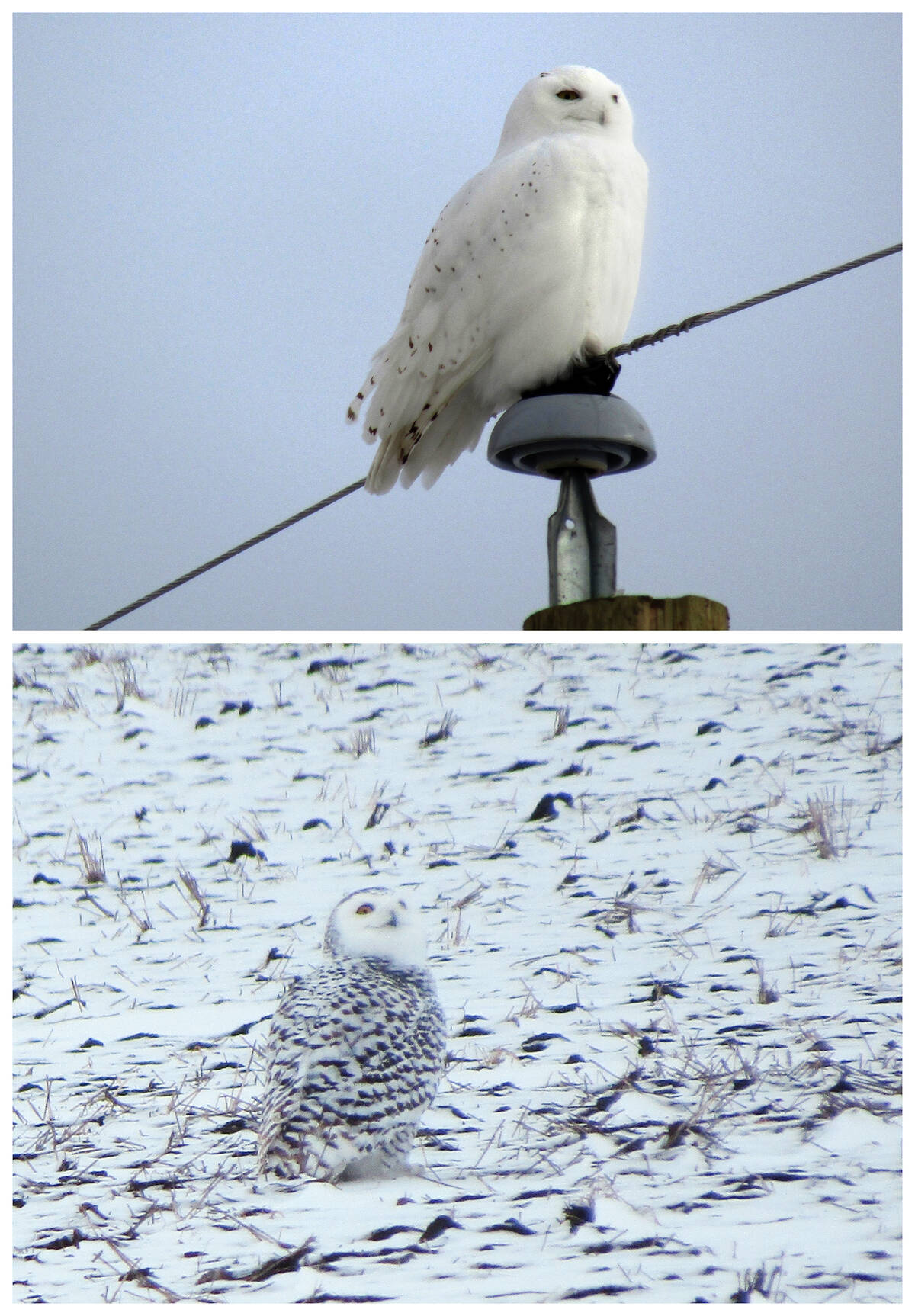
Watch for snowy owls in open fields or pastures, or along power lines. Accustomed to the treeless tundra, they tend to avoid trees. Birders often watch from inside a car, so as not to disturb the birds. Male snowies are smaller than females and lighter in colour, tending to become almost pure white as they get older. The females are usually heavily speckled or barred with black. This colouring acts as a camouflage on the summer nesting grounds but may increase visibility in winter.
Other greats
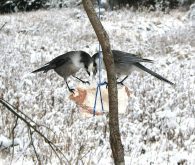
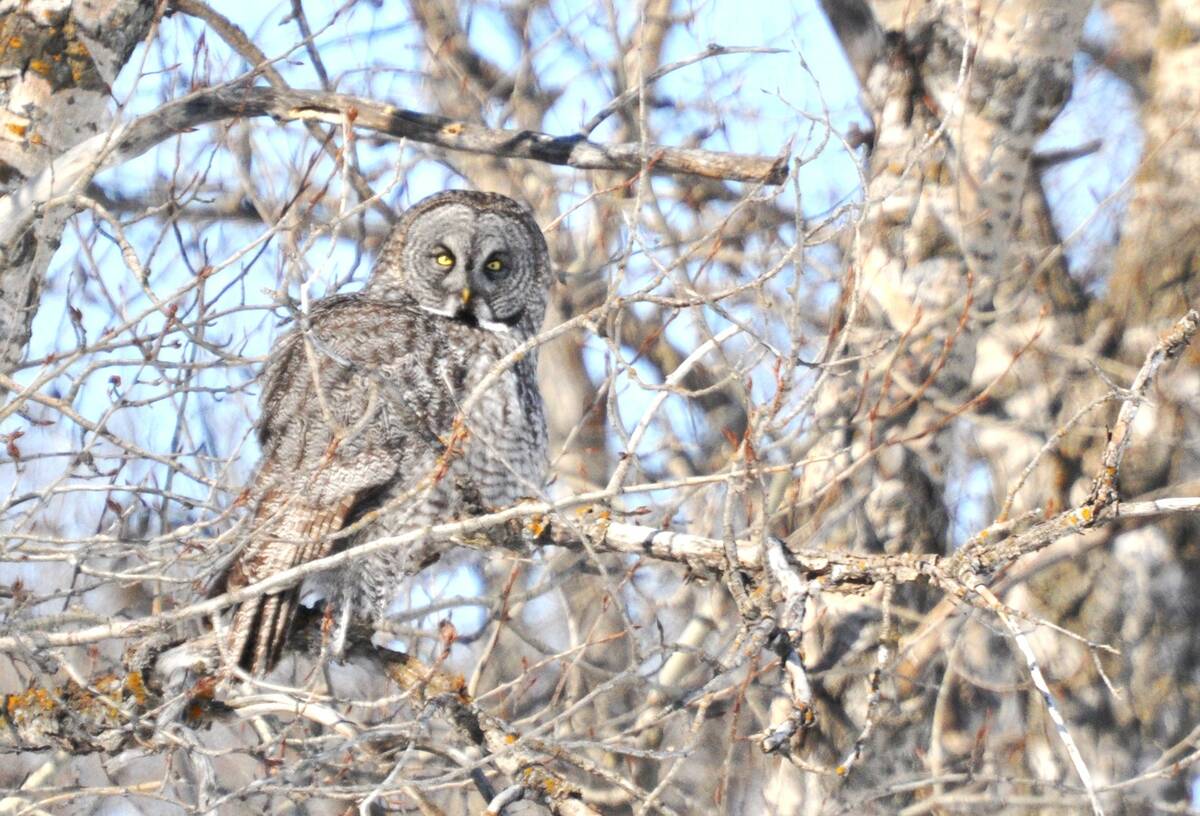
A second owl species more commonly seen in winter is the great grey owl (photo up top). This large owl spends the warmer months in the boreal forest sections, so it is not as noticeable then, but winter often brings it to the edges of the forests and a little farther south into mixed open/forested areas. Although it is our provincial bird, this species is not sighted often in the southwestern part of Manitoba, but can be seen in Riding Mountain National Park, and especially in and around Whiteshell Provincial Park and the eastern forested sections. Its large size is impressive for those lucky enough to see it.
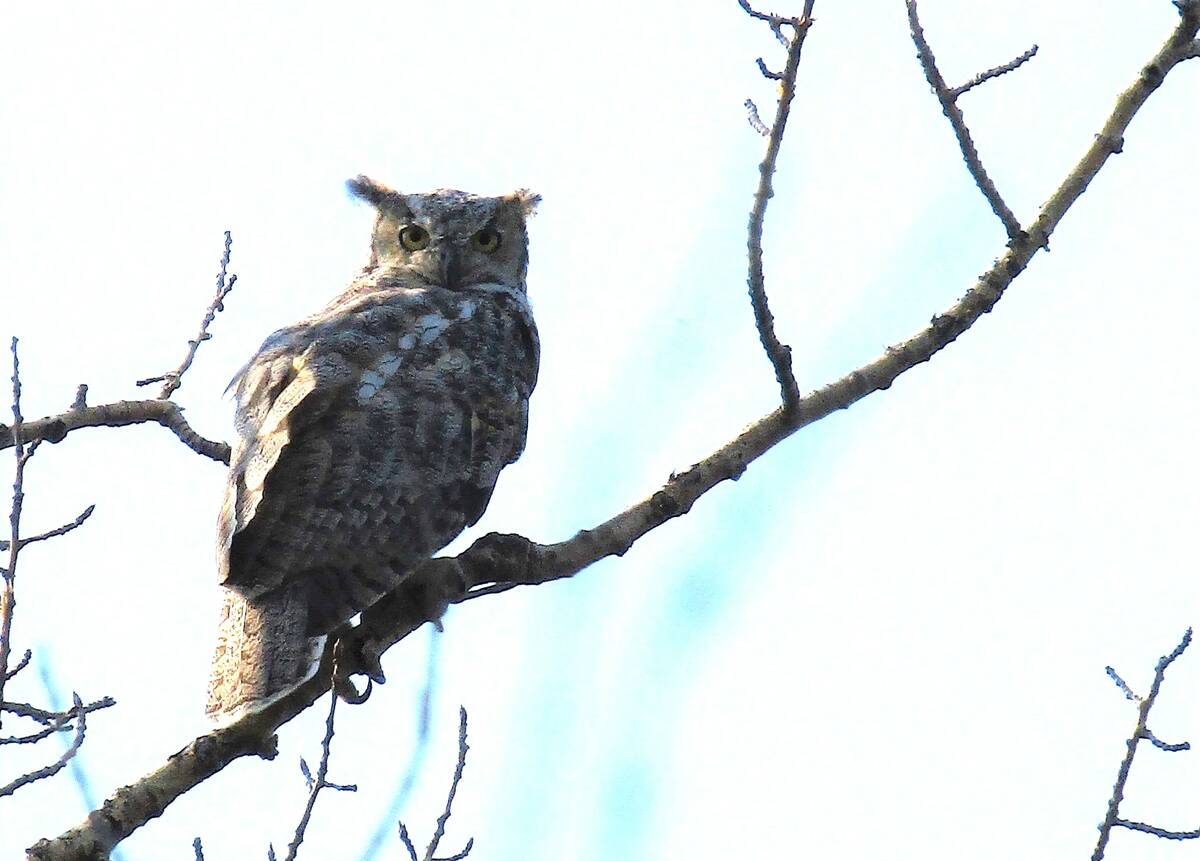
A third common owl species, the great horned owl, is perhaps more often heard than seen in winter. This is the owl whose signature call of “Hoo, hoo, HOO, hoo, hoooo” is recognizable to many people. Surprisingly, these owls often begin nesting as early as February. Sometimes even in January, birders-in-the-know may locate a great horned owl sitting on a nest. This is another large species, although smaller than the great grey.
Night owls and day owls
Other owls that live year-round in Manitoba include eastern screech owl, northern hawk owl, barred owl, boreal owl and northern saw-whet owl. Most of these hunt mainly at night or early evening and will be resting in treed areas during the day.
Conversely, the hawk owl is primarily diurnal (hunting during daylight hours) so it may be sighted gliding over open fields or perched on a prominent tree beside an open area. This species tends to be farther north in summer but frequents southern Manitoba in winter. Visitors to Oak Hammock Marsh often report seeing this bird.
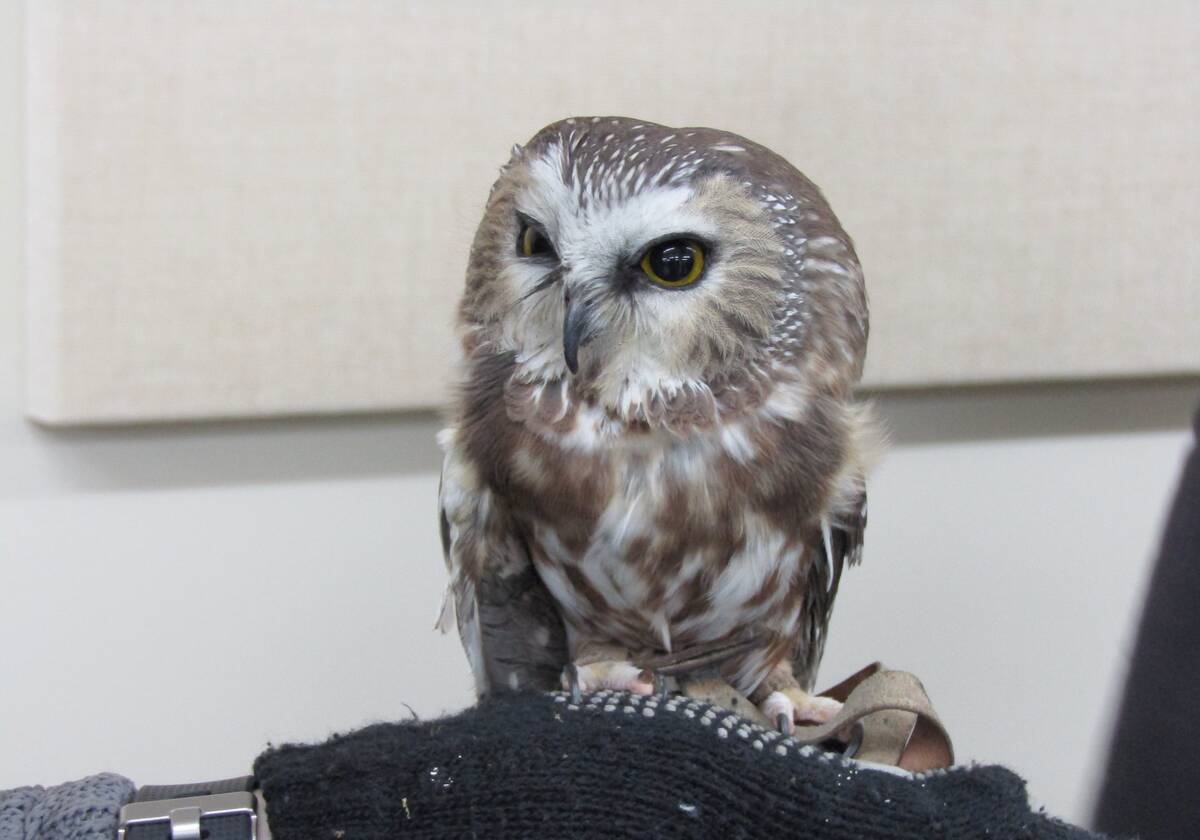
Other owl species are less likely to be seen because they are smaller, spend their time in treed areas, hunt at night, and/or are well camouflaged. The barred owl and boreal owl live mostly in boreal forests so are more hidden. The screech owl and saw-whet owl are both quite small at about seven to nine inches (18-21 cm) and may be heard more than seen.
Owl species that are usually here only in warmer months include the long-eared owl, short-eared owl, burrowing owl, and only very occasionally the barn owl. Of these, the burrowing owl is usually in the very southwest grasslands corner of Manitoba, and is classed as endangered.
For anyone with a real interest in owls, winter tours are offered through agencies or individuals, although some of these will be fully booked already. Search the Internet for these. Or join the birding group at [email protected] to see pictures and general locations. Exact locations are usually not given to avoid crowds bothering the birds.
Remember: if you do locate an owl, do not approach too closely or disturb it if it is resting or hunting, and especially not on a nest.