Chicago | Reuters — Chicago Mercantile Exchange lean hog futures closed higher on Monday, driven by short-covering and fund buying after contracts broke through technical resistance levels, traders said.
They said last Friday’s U.S. Department of Agriculture quarterly hog report stirred additional deferred-month buying.
The survey showed modest U.S. herd growth during the December-February quarter compared with the same period a year earlier.
Bullish investors cited the morning’s wholesale pork price bounce after most plants closed on Easter Monday, which reduced the amount of product available to retailers.
Read Also
CBOT Weekly: April supply and demand report a ‘nothing burger’
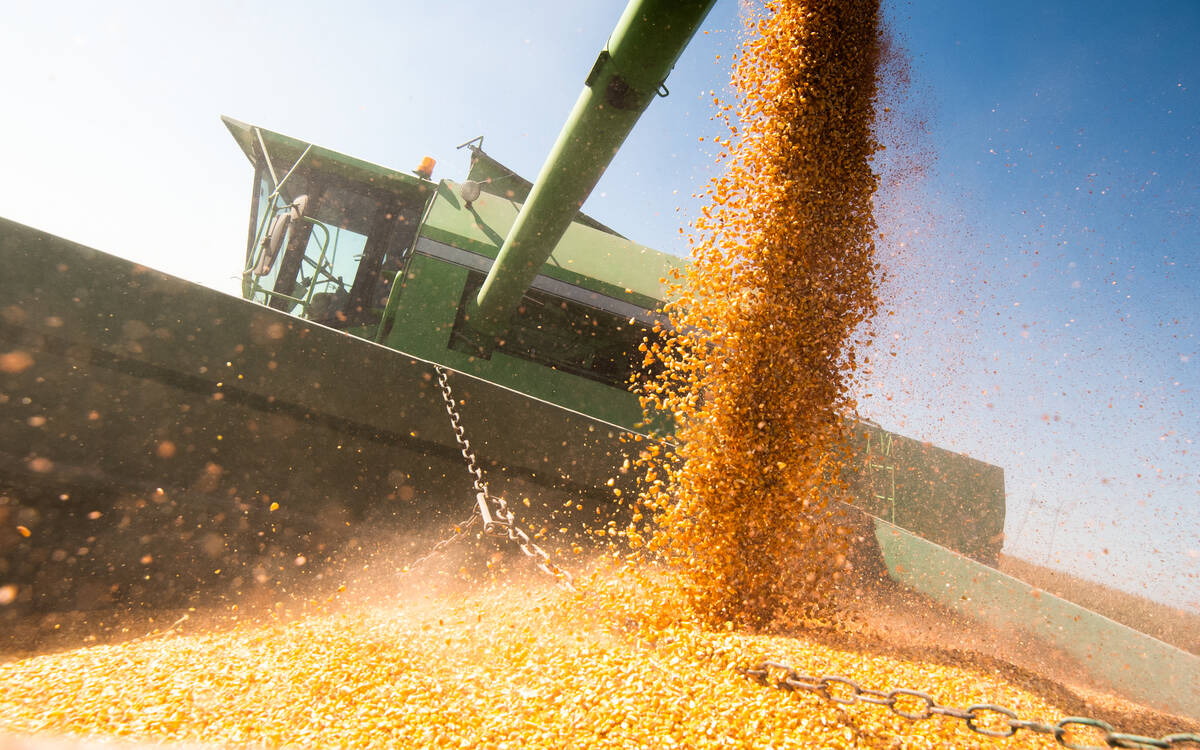
There was very little change in the April supply and demand estimates from the United States Department of Agriculture on April 9, with the report essentially being a carbon copy of the March estimates.
USDA estimated that packers on Monday processed 292,000 hogs.
The morning wholesale pork price on Monday jumped $1.74/cwt from Friday to $77.01, USDA said (all figures US$).
April lean hogs closed up 0.3 cent/lb., to 69.925 cents.
May ended 1.625 cents higher at 78.275 cents and above the 20-day moving average of 78.17 cents. June finished 1.6 cents/lb. higher at 82.45 cents and surpassed the 20-day moving average of 82.2 cents.
Generally firm live cattle futures
Most CME live cattle contracts gained modestly after traders bought deferred months and simultaneously sold the April contract following last week’s disappointing cash prices, traders said.
A week ago, the bulk of market-ready, or cash, cattle in the U.S. Plains brought $136/cwt, $3 lower than the previous week.
Packers avoided paying more for cattle given their dwindling profits, heavier animal weights and last week’s lacklustre wholesale beef movement, said traders.
Steve Wagner, an analyst with CHS Hedging, said the onset of spring grilling may at some point generate more beef demand, thereby increasing packer competition for cattle.
“But we’re not there yet. He’ll (packers) push to get cattle when he knows he can sell the meat at a higher level,” said Wagner.
The morning’s wholesale choice beef price, or cutout, rose $1.12 per cwt from Friday to $225.48 with extremely low sales volume. Select cuts were $1.94 higher at $216.83, USDA said.
April led losses after it drifted below the 40-day moving average of 135.74 cents, which triggered fund selling and sell stops.
April live cattle ended 0.75 cent/lb. lower at 135.1. June finished up 0.15 cent to 125.525 and August closed 0.525 cent higher at 121.35 cents.
Steady to $3/cwt lower cash feeder cattle prices pressured CME feeder cattle futures. April closed down 0.25 cent/lb. to 155.575 cents.
— Theopolis Waters reports on livestock markets for Reuters from Chicago.