Chicago | Reuters – Chicago Mercantile Exchange (CME) livestock futures turned higher on Tuesday, as wholesale prices firmed and the slaughter pace temporarily shrank as some plants shuttered over the holiday weekend, analysts said.
Strong boxed beef prices continued to underpin cattle markets, traders said.
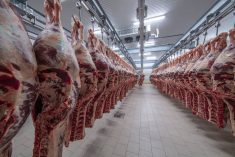
Select boxed beef prices rose on Tuesday morning, with prices up $3.80 at $299.62 per hundredweight (cwt), U.S. Department of Agriculture data showed. Choice boxed beef cutouts were also higher, up $2.14 at $311.48 per cwt.
And a jump in pork cutout values gave lean hog futures a boost, with carcass prices up $3.22 at $100.45 per cwt, according to USDA data.
Read Also

Speculators add to bullish bets in canola
The speculative net long position in canola continues to grow, hitting its largest level in eight months according to the latest Commitments of Traders report from the United States Commodity Futures Trading Commission (CFTC) released Friday, March 20.
“The higher beef cutout, and the sharply higher pork cutout – brought in extra buying in the pork market, and some support in the cattle market. Whether that will hold until tomorrow, that’s what the market will be watching.
Most-active CME October lean hog futures LHV24 settled up 0.300 cent at 82.525 cents per pound.
Most-active CME October live cattle LCV24 closed up 0.675 cent at 179.275 cents per pound. Most-active CME October feeder cattle FCV24 finished up 1.575 cents at 239.325 cents per pound.
Still, the day’s rally in feed grains dampened both cattle and hog markets on the day, traders said. GRA/
And market participants continue to wrestle with uncertainty over how consumer meat demand – and particularly their appetite for pricier beef – will look now that the U.S. Labor Day holiday is past. The holiday on Monday traditionally is considered the end of the summer season.
“That uncertainty really hampered livestock futures across the board today, and kept prices somewhat in check,” said Karl Setzer, partner at Consus Ag Consulting.