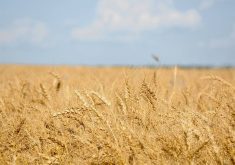
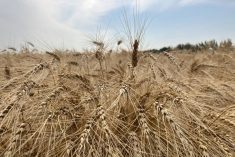
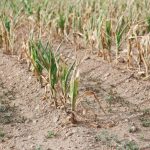
Chicago | Reuters – The spring wheat crop in North Dakota, the top U.S. producer of the grain, should yield less than last year due to a mix of dry June weather in the state’s western area and excessive rain in the southeast, crop experts said on Tuesday.
The United States is projected as the world’s No. 3 wheat exporter.
The U.S. Department of Agriculture this month projected North Dakota’s spring wheat yield at 45 bushels per acre (bpa), down from 49 bpa a year ago, putting total production at 263 million bushels. North Dakota produces about half of all U.S. spring wheat.
Read Also

ICE weekly: War news driving canola markets
Canola futures broke below their nearby trading range as a selloff in crude oil weighed on prices. While seasonal price trends point higher, direction will continue to come from developments in the Middle East.
“I think that 45 (bpa) would be maybe even an upper limit,” said Joel Ransom, a small grains specialist with North Dakota State University. He spoke on a call organized by trade groups the North Dakota Wheat Commission and North Dakota Grain Growers.
Spring wheat in Montana, the No. 2 U.S. producer, is in good shape following ample spring rains and timely June showers.
“Most producers are expecting a pretty good yield here; USDA expects (Montana) to be at 38 (bpa). … We are hoping that holds tight,” Sam Anderson, with the Montana Wheat & Barley Committee, said on the call.
Production prospects were also strong in South Dakota, the No. 4 state by acreage, where the USDA has projected a spring wheat yield of 41 bpa. “I think it’s likely that we will exceed that,” Reid Christopherson of the South Dakota Wheat Commission said on the call.
However, crops were struggling with wet soils in Minnesota, the No. 3 producer, where the USDA projected a yield of 57 bpa, unchanged from 2019.
“We are going to see a lot of direct yield losses and drown-outs,” said Jochum Wiersma, a University of Minnesota agronomist who was on the call.