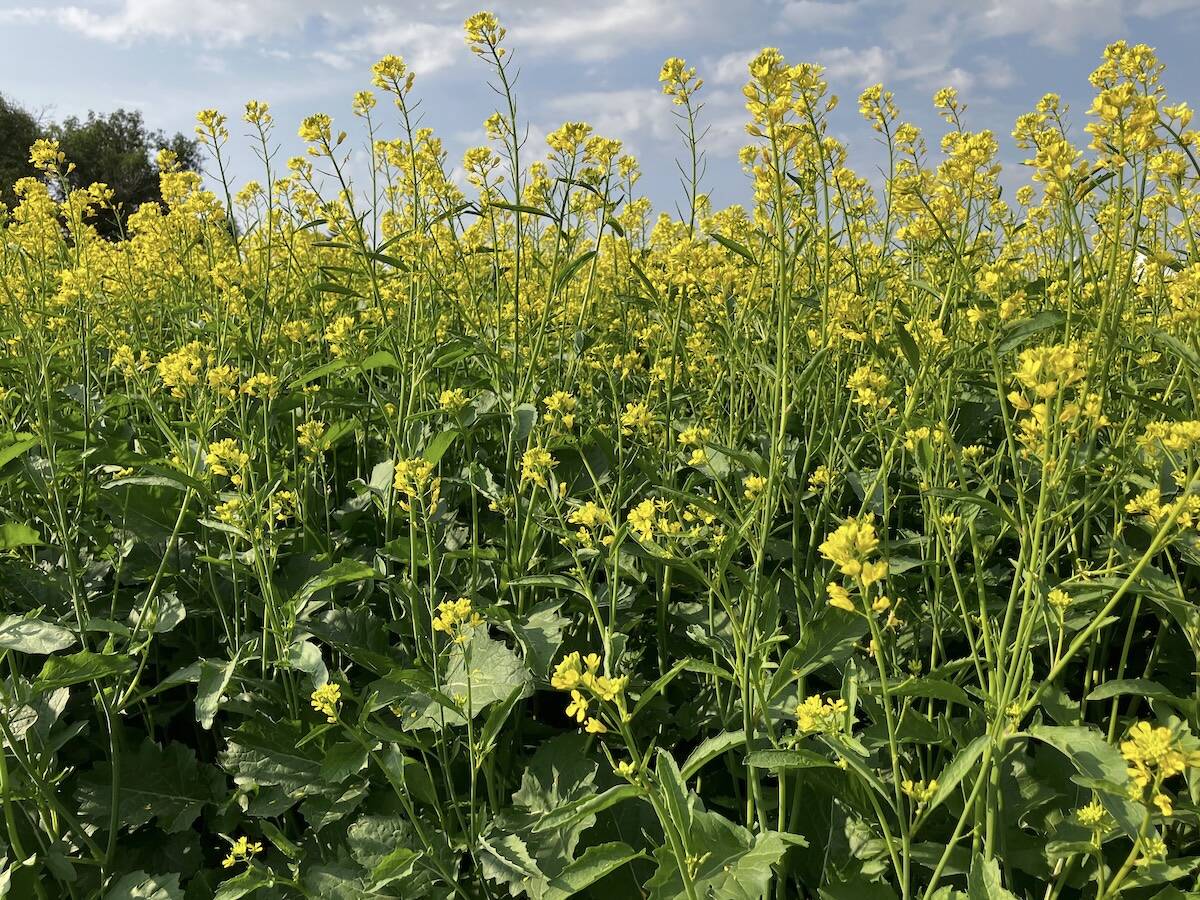
Glacier FarmMedia — Mustard markets in Western Canada are showing little movement this winter, said Norm Hall, board chair of the Saskatchewan Mustard Development Commission.
Up a penny, down a penny
“Oriental (mustard) dropped a little bit in the last few days, less than one per cent,” said Hall, who farms near Wynyard, Sask. “They’re just moving around a little bit here and there, up a cent or down a cent per pound.”
Prairie Ag Hotwire reported that as of Feb, yellow mustard tacked on one cent at 40 to 42 cents/lb. delivered. Oriental was up a penny as well at 46 to 47 cents/lb. while brown was down a penny at 31 to 35 cents.
Read Also

USDA attachés forecast some changes in China’s oilseeds, cereals
As China heads into the 2026/27 marketing year, the United States Department of Agriculture attachés in Beijing projected a few minor to moderate changes in the country’s soybean, canola, corn and wheat crops.
Hall said Saskatchewan farmers are still dealing with a large harvest from 2024.
Nearly 140,000 tonnes harvested
Statistics Canada placed mustard production for that year at 192,300 tonnes, followed by this year’s crop of 139,800 tonnes. In Saskatchewan, mustard growers gleaned around 89,700 tonnes, down from 136,100 the previous year. Alberta is the only other province that produces enough reportable amounts of the oilseed.
“The majority of Saskatchewan mustard is grown in the Palliser Triangle,” Hall said. “Depending on when (farmers) seeded … there were some rains that the later crops benefited from. They got some handsome yields. Then there were others who got virtually nothing.”
Hall cited a private report that deemed this year’s mustard crop to be average overall.
With StatCan production figures, the five-year average for the total mustard output is a little more than 137,000 tonnes and about 98,000 tonnes for Saskatchewan.
Looking for more planted area
As spring approaches, Hall is hopeful that mustard prices climb higher as that should lead to more planted area.
In Agriculture and Agri-Food Canada’s January supply and demand estimates, its initial mustard projection for planted area was 175,000 hectares in 2026/27 compared to 146,200 this year. AAFC predicted harvested area to be 170,000 hectares versus 144,700 in 2025/26. However, the agency forecast the yield to drop from 0.97 t/ha. down to 0.79 t/ha.
AAFC estimated next year’s mustard exports to hold at 95,000 tonnes and domestic use to bump up to 54,000 tonnes. Ending stocks are to step back from 145,000 tonnes to 140,000.