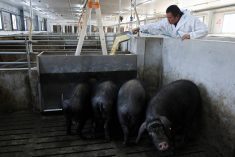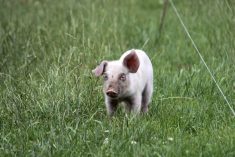
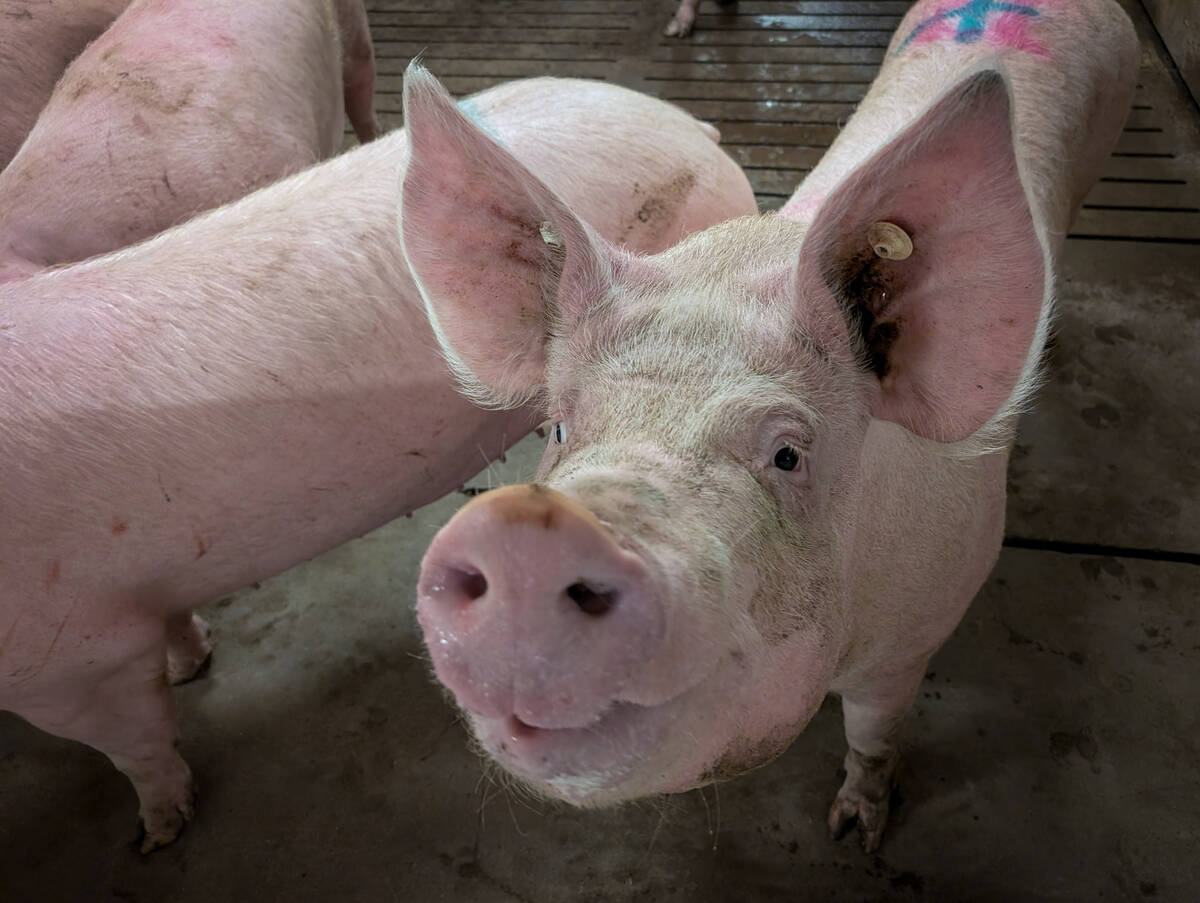
Strong demand for Canadian pork and lower feed costs seem set to support hog margins in 2026, says Farm Credit Canada.
The farm lender is forecasting hog prices slightly above 2025 figures and well above five-year averages, wrote FCC senior economist Justin Shepherd in a Jan. 28 report.
Cattle prices support hogs
Cattle futures set new records in 2025 and continue to hover near highs.
“With cattle futures near record levels, this provides support for the hog market as a substitute protein,” Shepherd wrote.
Read Also
Canadian Agricultural Safety Association promotes new vision for farm safety
The Canadian Agriculture Safety Association announced a new vision and mission statement of promoting a “culture of agricultural safety that protects people through knowledge sharing, support, and meaningful connections” during Canadian Agricultural Safety Week, March 15-21.
“Demand for hogs is being fueled in part by domestic hog slaughter that increased in 2025 after multiple years of consolidation and is expected to be up slightly again this year.”
Pork prices have not risen as quickly as beef at the grocery store, which has made it a more affordable protein choice for shoppers. Since 2022, pork prices have risen by more than 13 per cent, chicken prices rose by almost 22 per cent, and beef prices rose by nearly 38 per cent.
“That at least partially explains the uptick in pork consumption last year,” Shepherd said.
Meat prices are expected to remain high in 2026 according to Canada’s Food Price Report, released in early December. Report lead Sylvain Charlebois noted that Canada was short of chicken at the time, which he attributed to high beef prices. However, he said he expected the poultry sector to recover “eventually.”
Lower feed costs improve margins
Ample feed grain supplies are expected to hold prices below the five year average throughout 2026, FCC predicted.
Canadian farmers produced record crops in 2025, which is pushing grain and oilseed prices down. Cheap American corn may also become competitive in some regions.
Additionally, large domestic supplies and trade restrictions with India are likely to lead to some peas being diverted into the feed market, Shepherd said.
“When we add in strong hog prices, it suggests Manitoba and Ontario farrow to finish hog margins could reach their highest levels in five years.”
Risks ahead
Shepherd noted that disease is an ever-present threat for Canadian hog farmers. Other parts of the world are dealing with outbreaks of African swine fever (ASF), porcine epidemic diarrhea (PED) and porcine reproductive and respiratory syndrome (PRRS).
“If Canada can continue to keep PED and PRRS under control, and keep ASF out of the country, producers can feel optimistic given strong hog prices and manageable feed costs,” he said.
The sector also faces potential effects of U.S. voluntary country of origin labelling rules, which took effect on Jan. 1. FCC said live hog exports to the U.S. look to remain steady for now.
In November, a Manitoba pork marketer said some U.S. processors had already shut their doors to Canadian pigs. Pigs were moving, but it wasn’t always easy.
The renegotiation of the Canada-U.S.-Mexico trade agreement (CUSMA) also remains a wildcard.
Exports were also down in the first 10 months of 2025 — falling six per cent below the five-year average.
“This is highlighted by the large drop in shipments to China,” wrote Shepherd.
China imposed a 25 per cent tariff on Canadian pork in early 2025, along with duties on canola, peas and seafood. An agreement between Beijing and Canada has led to tariffs being dropped or eased on those products, but the levy on pork remains.
“Continued success is being found, however, in Japan, Mexico and South Korea where Canada’s pork exports continue to grow at a solid pace,” Shepherd said. He noted trade to the U.S. has been “strong and stable” year to year.