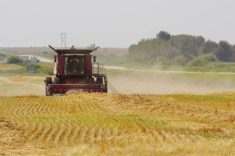
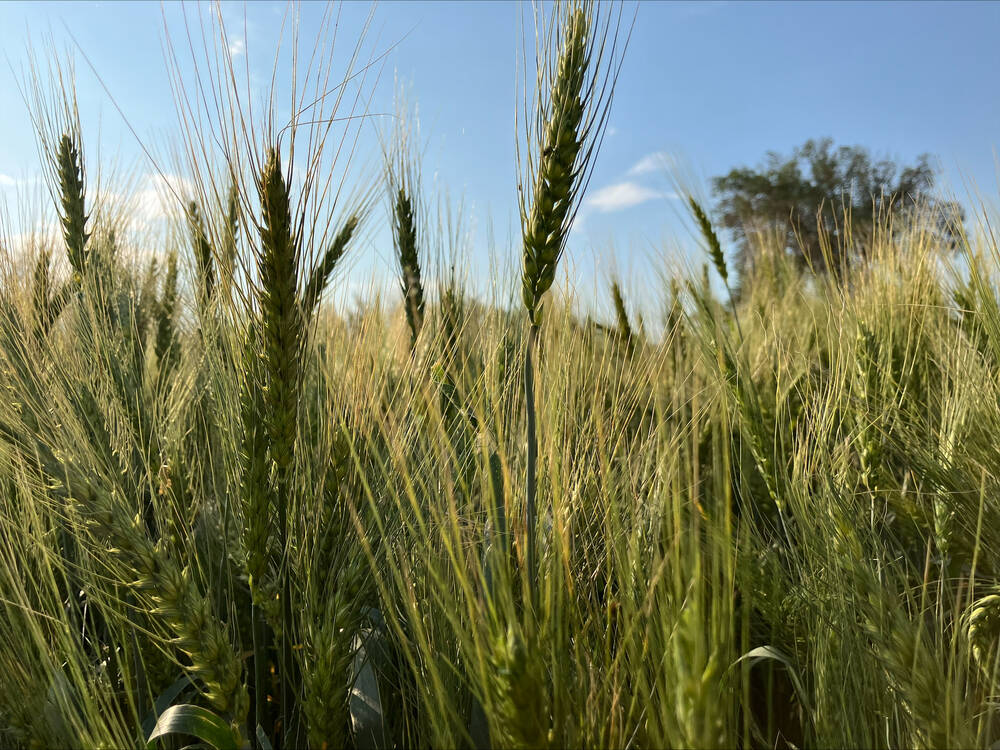
Western Canadian farmers are sitting on a bumper crop, according to a leading grain analyst.
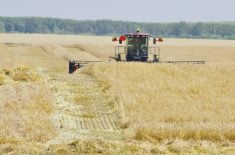
“If we have a nice harvest period, we have the potential for having a close to record crop on the Prairies this year,” said Bruce Burnett of MarketsFarm, who recently completed a 3,500-kilometre crop tour of the Prairies.
Burnett’s trip missed the Peace River region of Alberta but covered most other main grain-growing regions of Western Canada.
Read Also
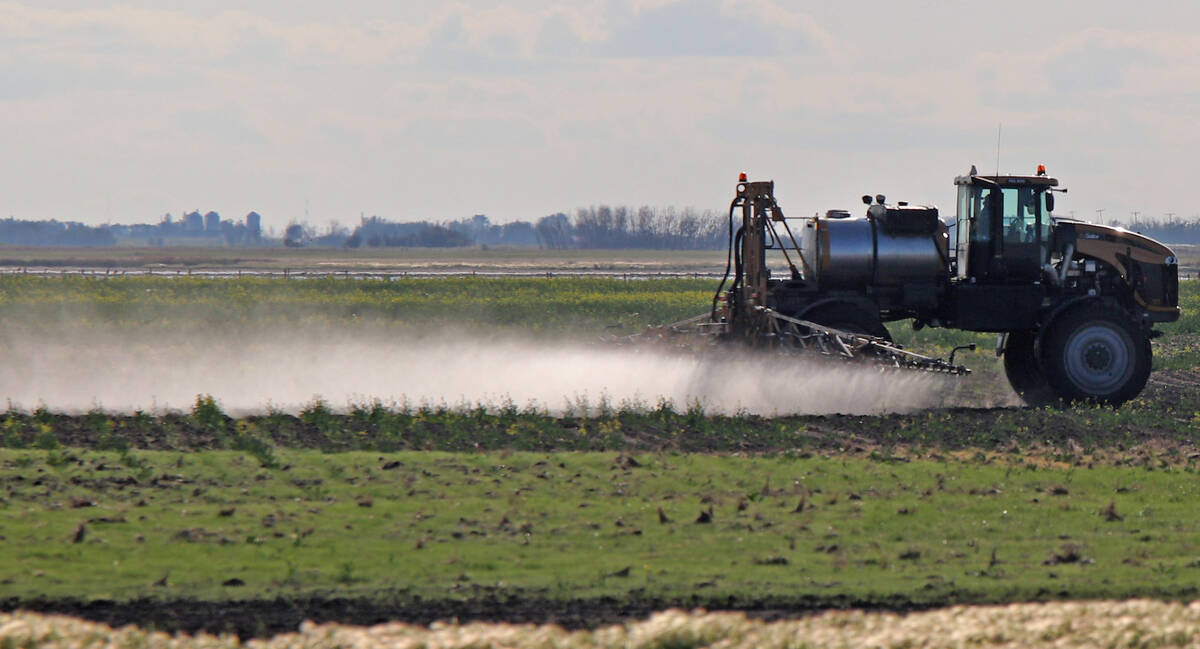
Herbicide-resistant weeds now on 72 per cent of surveyed Manitoba fields, costing farmers $77M a year
About 72 per cent of Manitoba fields last surveyed have herbicide resistance, says report — and that’s costing farmers big money.
Cereal crops look particularly good.
“Both spring wheat and durum are a lot better than they were last year, especially durum,” Burnett said.
Durum yields are estimated to reach 44 bushels per acre, an 18-bu. improvement over last year. Using Statistics Canada’s June acreage estimate and average abandonment, that would translate into a 7.4-million-tonne crop, the second largest in the last decade, just behind 2016 harvest numbers.
“That’s a big recovery in the durum crop,” Burnett noted.
Spring wheat yield averages may reach 57 bu. per acre, 10 bu. higher than last year and a new record for Western Canada. Spring wheat production is forecast at 27.8 million tonnes, a 3.4-million-tonne improvement over 2023.
“The biggest surprise to me in spring wheat was the lack of disease in the crops,” Burnett said. “With all this wet weather, I thought we’d see a lot more leaf diseases.”
Most of the fields he walked were “very, very clean.”
Burnett isn’t the only analyst forecasting a bumper crop. Stephen Nicholson, global sector strategist of grains and oilseeds with Rabobank, recently toured the Prairie grain growing region with a contingent of Australian farmers.
“There’s unbelievable looking crops,” he said.
He spoke to several Canadian producers during the journey.
“They’re all saying, ‘this looks like one of the best crops we’ve ever produced,’” said Nicholson, noting growers think it will rival or exceed the crop of 2022.
Breen Neeser, general manager of Canada for Farmers Business Network, agreed that crops are in good shape halfway through the growing season. The network is forecasting a one to two per cent increase in yields over last year in Alberta and four to seven per cent in the rest of the Prairie region.
“That means all the work and all the money (growers) spent putting the crop in the ground was well worth it,” Neeser said.
Input costs are at a low point in the five-year cycle, while crop prices are still high and yields are up.
“That’s a recipe for a good year.”
Neeser also pointed to wheat as a standout crop.
“As you drive by, the density on some of the wheat fields is obviously very (good),” he said, although he is concerned about the recent run of hot weather and the forecast for more of the same.
“We’re in that period where it’s either going to stay great or it could start to trend off a little bit.”
Burnett agreed that the heat forecast for the second half of July is worrisome, especially for south-central Saskatchewan, where there is little remaining soil moisture.
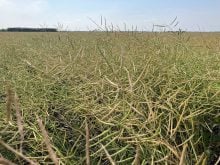
This year’s canola crop is a tale of two planting dates. Early-seeded acres looks fantastic. Most of those fields are just coming off bloom in the south and are in full bloom in the central and northern Prairies.
Late-seeded canola in wetter areas is poorly established and struggling with excess moisture.
Burnett forecasts an average canola yield of 42 bu. per acre, about five bushels better than last year. Using 21.9 million acres and average abandonment, he predicts a crop of 20.6 million tonnes, a 2.3-million-tonne improvement over last year.
Barley yields are forecast at 74 bu. per acre, up 12.6 bu. from last year. Production is estimated at 8.1 million tonnes.
Burnett did not have yield estimates for pulses, but the outlook for lentils is optimistic. He saw a lot of nice looking pea crops, although Manitoba Agriculture reported that field peas in some regions are struggling with the extended wet conditions.
“Generally speaking, the pulses look very, very good,” Burnett said.
He did not see much disease, but farmers were actively spraying their pulse crops.
“This has been an excellent growing season this year, especially given how dry it was and how concerned we were about drought,” he said.