
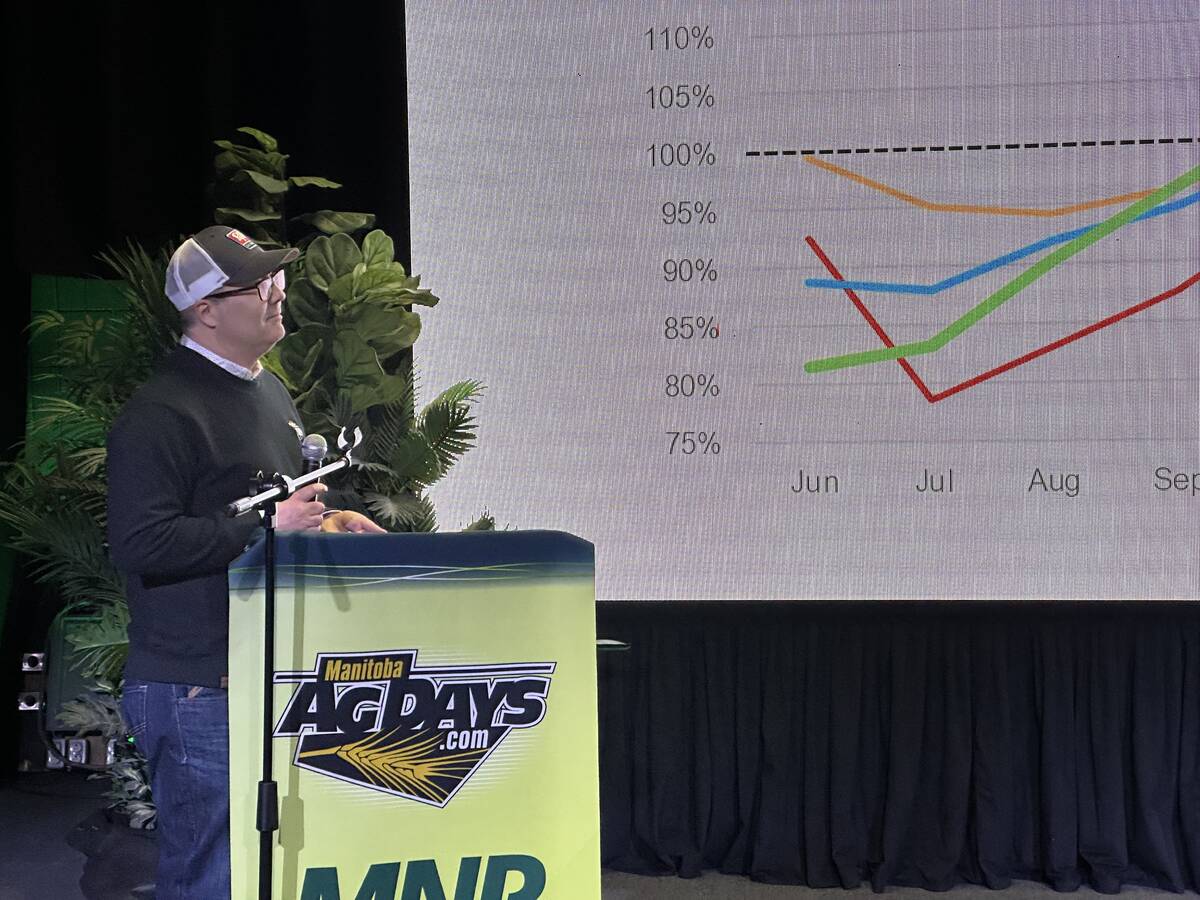
Farmers who still need fertilizer for the coming season may want to lock in tonnes sooner rather than later, Tyler Freeman, head of market analysis for Parrish & Heimbecker, told an audience at Manitoba Ag Days on Jan. 21.
WHY IT MATTERS: Farmers flocked to Manitoba Ag Days Jan. 20-22 in Brandon for the usual trade booths, as well as an expert speaker lineup tackling everything from global trade to nitty-gritty farm management advice.
The outlook as of early 2026 is driven partly by seasonality.
Read Also
VIDEO: Manitoba farmer tests controlled traffic farming to fight soil compaction and flooding
Manitoba farmer Alex Boersch wants to improve the stability of his crop yields. He’s been experimenting with controlled equipment traffic on his fields
“This shouldn’t be a big surprise to anyone who’s been in the industry any time,” said Freeman. “You tend to get the cheapest fertilizer values in the summer months, and you tend to pay the highest values in the spring season.”
This year, however, the usual summer dip failed to materialize. There were fewer tonnes moved into farm storage ahead of winter, increasing the risk of tighter supplies as planting nears.
Freeman said global events are adding pressure on both supply and demand, including the ongoing war in Ukraine, export restrictions from China and renewed tensions in the Middle East that have disrupted urea production and natural gas flows in key exporting countries such as Iran and Egypt.
Freeman also pointed to current protests in Iran, and uncertainty around U.S. President Donald Trump’s reaction to the situation.
“Regardless of your opinion of him, I think we can all agree he’s good at causing chaos, and he has the ability to move markets based on whatever he puts out on social media,” the analyst said.
Large-scale buying by major importers has also played a role in the current landscape. India, one of the world’s biggest urea buyers, stepped aggressively into the market this summer to rebuild their stocks, helping push global prices higher and preventing the usual seasonal reset.
Western Canada is now a net importer of urea and remains heavily dependent on U.S. and offshore supply, making local prices more sensitive to global disruptions.
Freeman warned that delaying purchases closer to spring can reduce farmers’ negotiating leverage. Those who wait may end up having to accept whatever prices the market is offering.
“If you’re still looking to lock in tonnes, you’re probably going to get a much more attractive offer if you can take those tonnes today or tomorrow or next week,” said Freeman.
For more Manitoba Ag Days coverage, check out the Manitoba Co-operator’s Ag Days landing page.