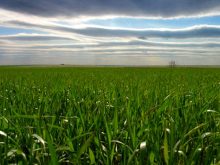
This year’s relatively early canola harvest will let Manitoba farmers seed winter wheat earlier too, but Lionel Kaskiw warns growers to break the “green bridge” to prevent wheat streak mosaic infections.
Most often winter wheat is seeded in early September into canola stubble.
“We’re definitely at a stage this year where we can get out and get some winter wheat acres planted,” Kaskiw, a farm production adviser with Manitoba Agriculture in Souris, said Aug. 30 during the Crop Talk Westman webinar. “(It would be) some of the earlier plantings we’ve had in the last few years.”
Read Also
Canada’s cereal breeding system is failing. Who fills the gap?
Agriculture Canada breeds 80 per cent of Canada’s wheat varieties. A new report says that system in no longer sustainable — and without a transition, some crops could quietly disappear from Prairie fields.
Wheat streak mosaic is a viral disease that attacks barley, corn and some grasses, but is most common, and potentially damaging, on winter and spring wheat.
While oats and rye can be infected they don’t appear to be seriously damaged, according to Manitoba Agriculture’s website.
- Read more: Time to plant winter wheat
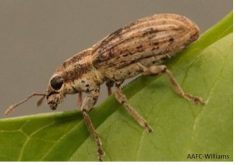
Wheat streak mosaic is spread by the wheat curl mite. Killing the mite’s host plants before the newly seeded winter wheat emerges in fall is key to preventing wheat streak mosaic infection.
To that end, Kaskiw advises spraying herbicides to control weeds, including volunteer cereals, in canola fields right after the canola has been harvested and before the winter wheat is seeded.
“You need seven to 12 days of time where there’s no green (host plant) material for the mite to live on for it (mite) to actually die off,” Kaskiw said.
“Some (herbicide-tolerant) canola fields that only got one application of Liberty or one or two applications of Roundup, still might have some patches in the field where you might have volunteer cereals that maybe germinated later on… so these mites can be living on these plants right now.”
There are no pesticides to control wheat streak mosaic or the mite that spread it.
Infected wheat plants may die, fail to set seed, be stunted or be unaffected, depending on when they are infected, Manitoba Agriculture’s website says. Damage usually ranges from noticeable yield losses to crop failure.
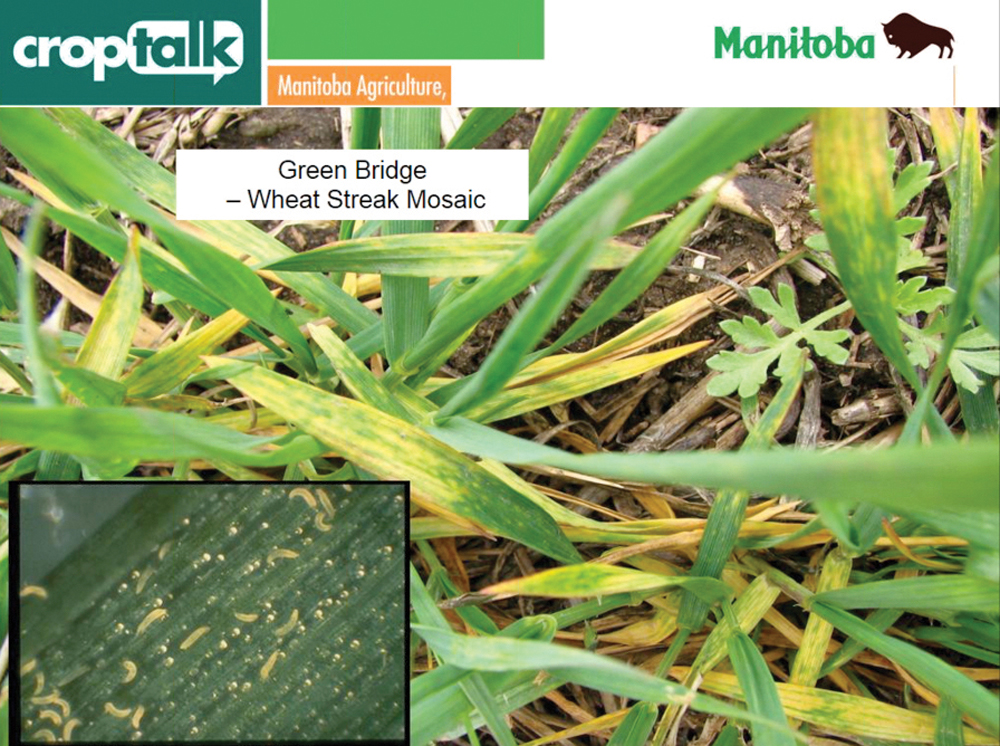
In winter wheat the symptoms — leaves with dashes, streaks or yellow stripes parallel to the veins — rarely show up until spring.
Leaves become increasingly mottled until the green areas disappear and the leaves die. Infected plants are stunted. The amount depends on how early the infection took place.
Wheat infected at the early-tillering stage stops growing and produces few or no heads. Infection at late-tillering to early-jointing stages results in head formation but the flowers may be sterile. With late-season infection during jointing to boot stage, the flowers are fertile but kernels are smaller.
Fall-infected winter wheat plants do not produce grain the following season. One study found that stunted and diseased plants yielded 78 per cent less than healthy plants, and seed milling quality was reduced substantially, Manitoba Agriculture’s website says.