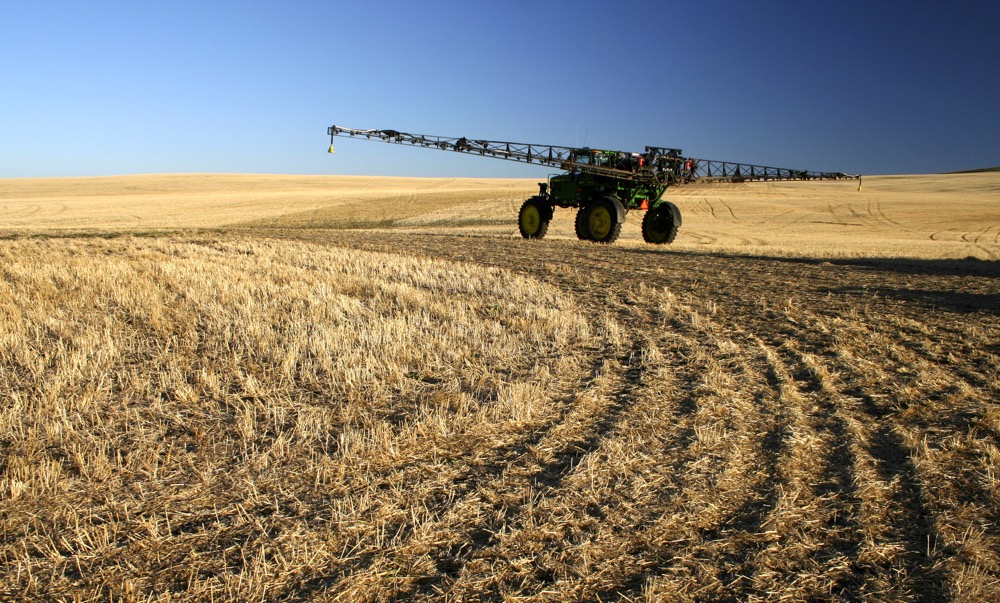
That spring burn off may not be doing what it’s supposed to if temperatures stay low.
Lionel Kaskiw, farm production advisor with the province, is reminding farmers to watch their thermometers when deciding if and when to do a pre-emergent herbicide pass.
Why it matters: A cold spring has stunted weed growth, but it also means that herbicide may not be as effective since plants may not be taking in the chemical.
The so-far chilly spring has not been friendly to herbicides in general. Average temperatures have stayed below 10 C for large blocks of April and May, according to Manitoba Agriculture’s weather monitoring network.
Read Also

VIDEO: Seed less canola, harvest more? Bourgault field trials say it’s possible
Bourgault field trials tested canola seeding rates as low as 1.25 pounds per acre and found individual plants grew larger with stronger roots.
That has meant poor growing conditions for weeds, something that might be a double-edged sword for anyone pondering a spray pass. Plants largely shut down from cold will have low herbicide uptake, Kaskiw said, and what herbicide that is taken will not move properly through the plant.
“If you’re looking at getting control of quack grass, let’s say, or some of the other winter annuals like dandelion, you’re not going to get far into those root systems, so you’re not going to get as good of control,” he said.
Weeds should be 60 per cent green and actively growing for a good herbicide response, according to Kaskiw.
The advice, drawn from one of the province’s first Crop Talk webinars of the season, was well timed, given the province’s cold snap. The May 8 webinar came in the midst of nearly a week straight of below freezing overnight lows. In western Manitoba, communities reported minimum temperatures near -5 C, dipping below -7 C in some areas. Regions in the Red River Valley faired better, but still reported dips down to -5 C in the first week of May, while about half of daytime highs in the region have failed to hit double digits since the last week of April.
Kaskiw urged farmers to hold off spraying for one to two days if temperatures hit -5 C. Daylight highs should be 8 C at minimum, and holding that peak for two to four hours with no risk of overnight frost, before farmers look to spray glyphosate, Kaskiw said. Ideally, temperatures would be closer to 15 C for spraying, he said, although planting season realities may not allow farmers to wait.
“I don’t think we’ve been able to spray comfortably over the last week, without saying that we’re having the potential of frost overnight,” he said May 8.
The weeds are out, despite farmers arguing that they may not need a burn off this year due to low weed pressure. Weed growth has been slow this spring, Kaskiw noted, and proper scouting will be key to make a decision on whether to spray or not.
“A lot of times you may not think the weeds are there; we’re not seeing them five inches tall or really standing out on the field right now. You have to get out there and really look because they have germinated. A lot of them are just breaking ground,” he said.
Crop stage will also determine whether a farmer can afford to wait for more favourable weather, he noted, and farmers should dig up a seed or two to confirm their status before locking plans to spray.
Farmers may also want to use a surfactant or adjuvant this year.
“Anything that you can use to help get the product into the plant is going to be a benefit for you at this time,” Kaskiw said. “Especially if conditions stay the same over the next, say, week’s time period, because I think within the next week, we’re going to be seeing crop coming up.”