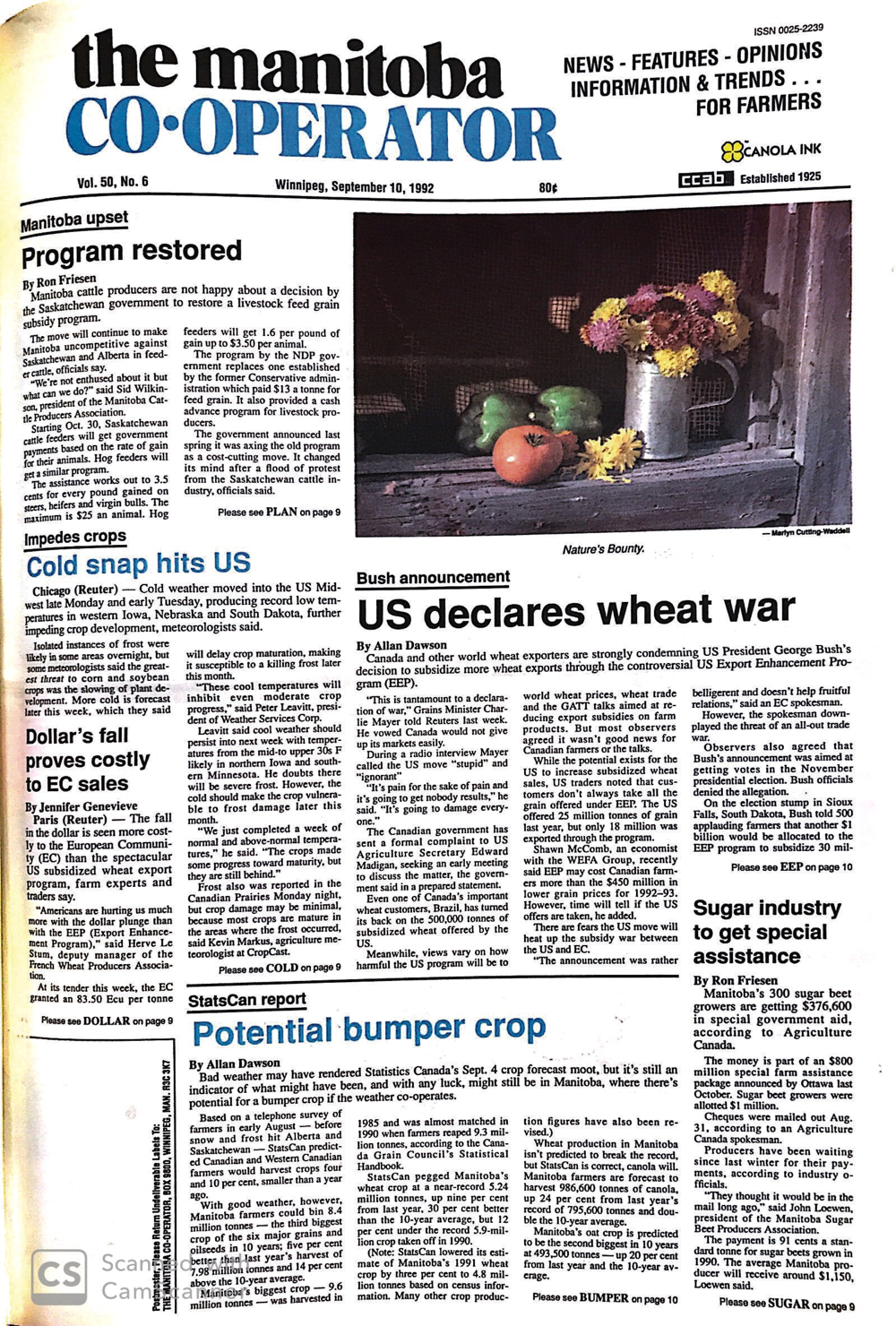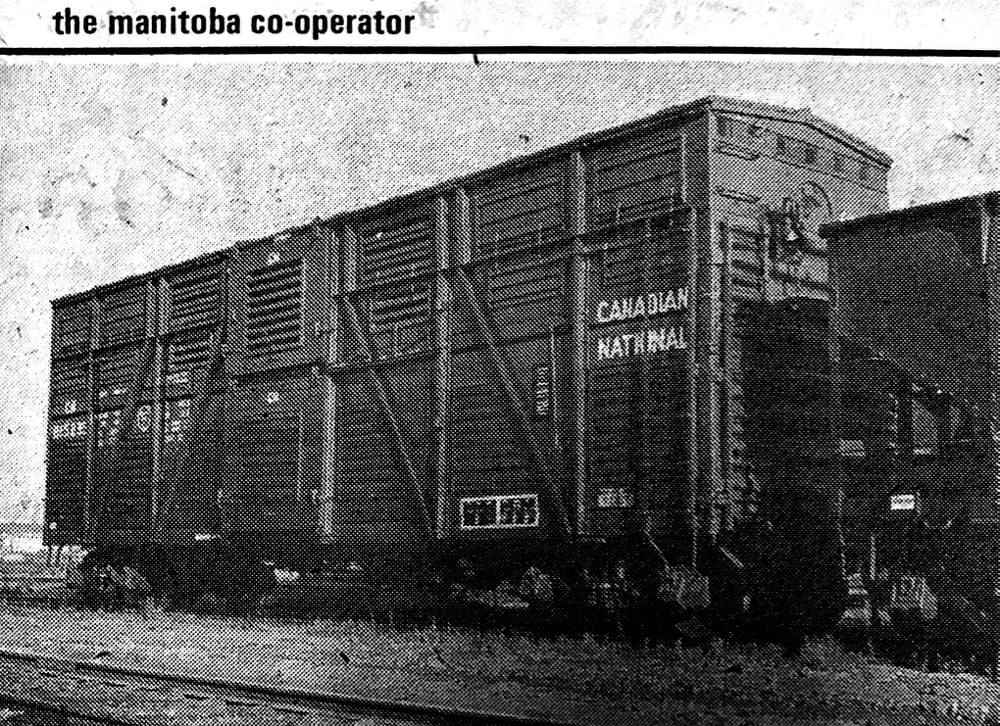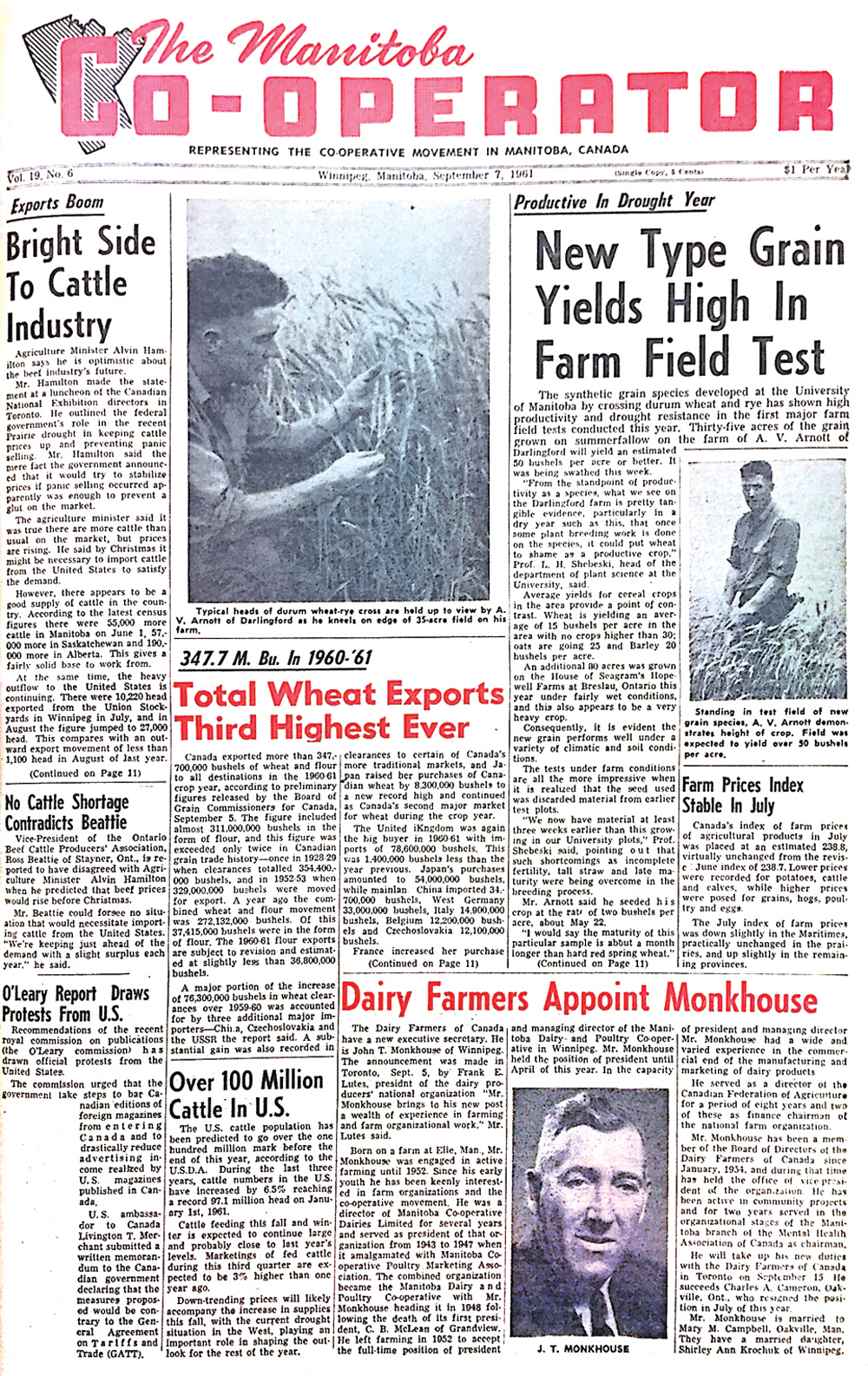
Our Sept. 7, 1961 issue reported on “high productivity and drought resistance” on a new “synthetic grain species” developed at the University of Manitoba. The cross between durum wheat and rye, later named triticale, had been grown on 35 acres on the farm of A.V. Arnott at Darlingford, and it was estimated it would yield 50 bushels per acre. The year had been the driest on record in Western Canada, and wheat in the same area was yielding only 15 bushels.
A large advertisement from Carling Breweries (beer was not mentioned) touted Churchill’s merits as a seaport.
Read Also
VIDEO: Spring weed control means plans, and back-up plans for those plans
It’s time for Manitoba farmers to get locked and loaded against spring weeds, with enough room to adapt if early 2026 field conditions don’t co-operate.
“In late July, the first ocean ships come down The Bay, and tie up at Churchill. From then until early October, the port hums with activity. Cars, tractors, china and other goods arriving from Europe are loaded for their 1,000-mile rail journey south to Winnipeg and their connection with transcontinental railways.”
It also said, “In addition to being a busy seaport, Churchill is also one of Canada’s leading whaling centres.”
The editorial in the following week’s issue was titled “Rapeseed is here to stay,” noting 1960-61 crop year exports of 485 million pounds (9.7 million bushels, 220,000 tonnes) and forecasting that plantings could reach two million acres in the next few years.