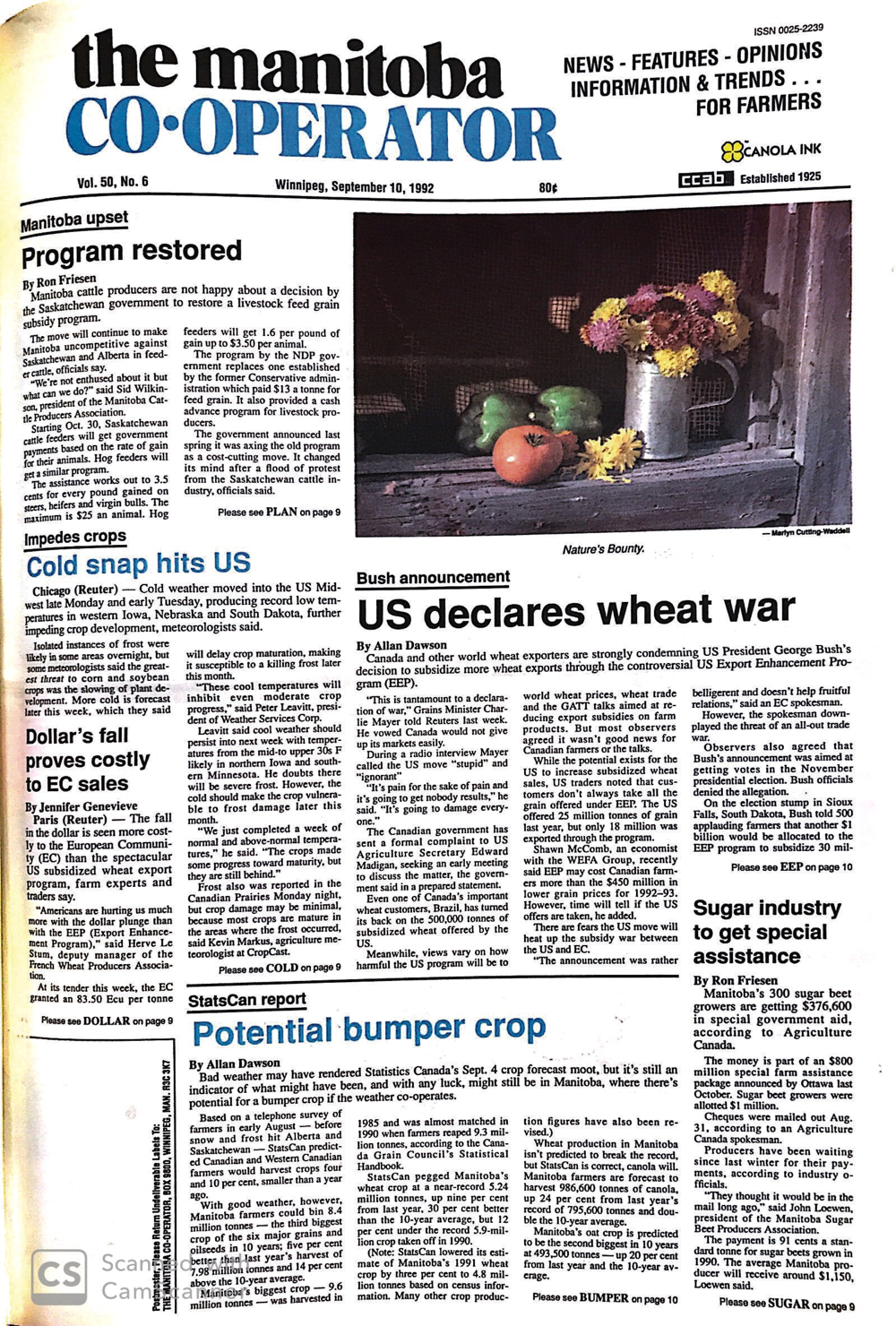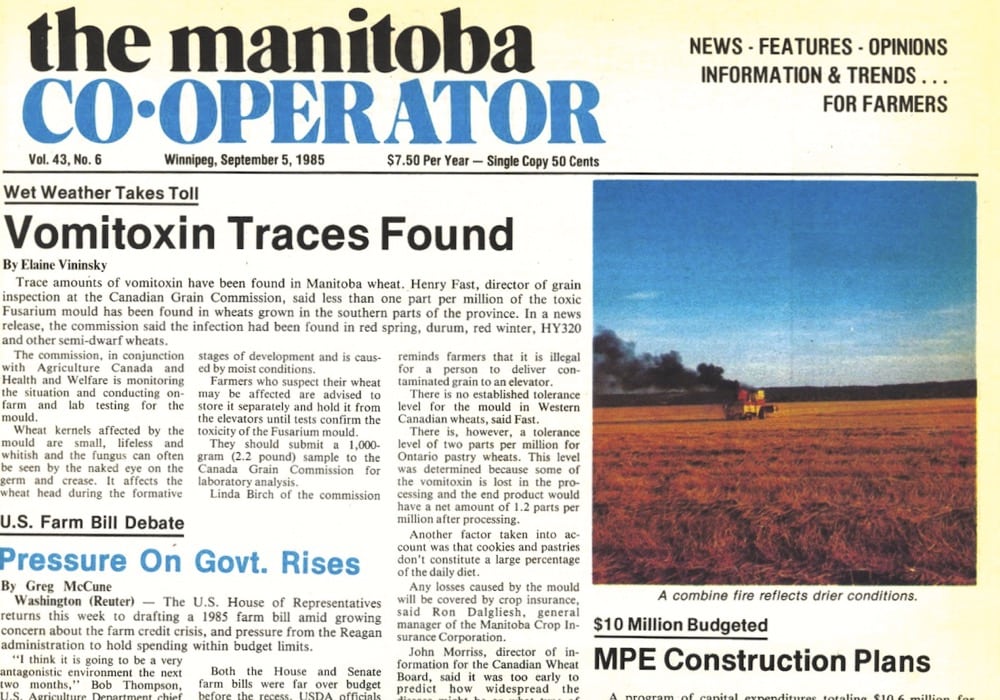
The front page of the Sept. 5, 1985 issue reported that trace amounts of fusarium and vomitoxin were being found in Manitoba wheat after a wet, cool growing season.
Wet weather was to continue and harvesting was delayed, with particular damage reported to that year’s potato crop. On Sept. 19 we reported that there had been 20 inches of rain in the Edwin-Carman-Rossendale area over the previous month.
Farmers with time on their hands could pull out a pencil and go through a special feature in the issue. The Co-operator had commissioned a University of Manitoba grad student to calculate the effect on different types of farms if there were a change in the method of paying the Crow benefit. Some farm groups wanted freight rates to rise to commercial levels, with the equivalent Crow benefit to be paid directly to farmers. That meant all farmers, including livestock producers would receive the benefit. Other groups wanted the payment to continue to go to the railways, meaning grain producers only would have the benefit. Farmers could fill out a worksheet for their own farm, but there were 12 theoretical examples showing the net cost and benefit for different combinations of grain and livestock operations. The issue became moot 10 years later when the Crow benefit was terminated completely.
Read Also

Students push for Manitoba road upgrades
Manitoba’s lack of higher-rated RTAC roads creates irritating highway detours and weight restrictions for farmers, University of Manitoba students told KAP.
There was gloomy news from south of the border, the Farm Credit Corporation was becoming one of the largest landowners in the U.S. as it continued to foreclose on mortgages. The situation was a reflection on the state of the farm economy, said to be the worst since the Great Depression.