


Living in rural households decreases a person’s risk of developing inflammatory bowel disease (IBD), particularly for young children and adolescents, according to a new study by researchers at the Children’s Hospital of Eastern Ontario (CHEO) Research Institute, Institute for Clinical Evaluative Sciences (ICES), and the Canadian Gastro-Intestinal Epidemiology Consortium (CanGIEC). “Our findings show that children,

Rural living good for your gut
Canadian researchers say children raised in the country have lower rates of inflammatory bowel disease
Manitoba’s wildfire risk elevated
As Manitobans prepare for the August long weekend, Manitoba Sustainable Development and the Office of the Fire Commissioner are advising that hot and dry conditions have elevated the wildfire danger levels in many areas of Manitoba. People should exercise extreme caution with any outdoor activities to reduce the risk of fires. In areas where ATV’s are

PHOTOS: Manitoba’s agricultural history on display in Austin
Once again, the Manitoba Threshermen's Reunion and Stampede was a hit with attendees
The Manitoba Threshermen’s Reunion and Stampede, which took place July 27-30 in Austin, Man., was a great opportunity for visitors to see some of Manitoba’s agricultural history and experience it in action.

Cigi’s first executive director dead at 97
Teaching himself as he went along, Victor Martens quickly rose through the grain industry
The man who conceived the Canadian International Grains Institute and was the organization’s first executive director died on July 26. Victor Martens was 97 and had a formidable career in the agriculture sector, all without the benefit of formal post-secondary education. In 1938 he visited the Grain Research Laboratory in Winnipeg searching for a job.

Year of “The Big Wet” drowns a million acres
Our History: July 1999
It was called the year of “The Big Wet” — in 1999 the normally dryish southwest corner of the province suffered repeated deluges which drowned almost a million acres of cropland. Unfortunately it was the precursor of more wet years. The bad news that week was that federal Agriculture Minister Lyle Vanclief had told Manitoba

Send them out to the barn
Compound found in animals but not humans sparks immunity against asthma
It’s already known that farm kids are less prone to asthma, but a new study by immunologists from the University of Zurich has identified sialic acid found in farm animals as the reason. A university release said this substance is widespread in vertebrates and therefore in many farm animals, but missing in the human organism.

PHOTOS: This Old Elevator: July 2017
The Manitoba Historical Society wants to gather information about all the grain elevators in Manitoba
In the 1950s, there were over 700 grain elevators in Manitoba. Today, there are fewer than 200. You can help to preserve the legacy of these disappearing “Prairie sentinels.” The Manitoba Historical Society (MHS) is gathering information about all elevators that ever stood in Manitoba, regardless of their present status. Collaborating with the Manitoba Co-operator it is
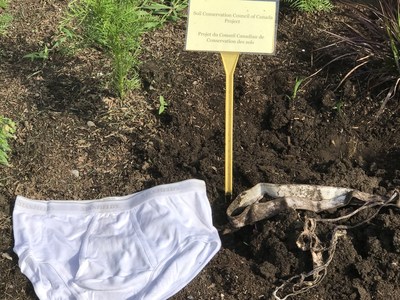
It’s time for Canadians to dig up their undies
It’s time for Canadians to grab their shovels, head into their gardens, flowerbeds or fields and reveal their underwear. Part 2 of the Soil Conservation Council of Canada’s (SCCC) experiment to help gauge the health of soils has come to an end, and if you buried a pair of cotton briefs, now is the time to retrieve them. “The Council was

Grain grading changes for Western Canada
The Canadian Grain Commission has announced several grain grading changes for the 2017 to 2018 crop year in Western Canada that will take effect August 1, 2017: It has added an ergot tolerance of 0.05 per cent in all grades of fababeans and chickpeas; Changed the tolerance for grasshopper and army worm damage from eight

Warmer Arctic linked to weaker vegetation growth in North America
The effects of climate change in the extreme north can be felt far away, researchers say
Warmer temperatures in the Arctic are having an unexpected effect elsewhere in North America climate, scientists say. Researchers from Korea’s Pohang University and the South University of Science and Technology of China say their analysis suggests the northernmost regions of the continent may be warming and becoming more productive. But that’s being offset by effects